
A new chapter in Uzbekistan’s financial integration with Asian capital markets opened in May 2026, when a delegation of the country’s leading commercial banks held formal negotiations with the Hong Kong Association of Banks (HKAB) during a meeting in China. The talks, coordinated by the Chamber of Commerce and Industry of Uzbekistan, produced two tangible outcomes: an agreement to establish a permanent communication platform between the banking communities of both jurisdictions, and a commitment to develop a detailed roadmap for joint initiatives. These results elevate the relationship from exploratory dialogue to structured institutional engagement — a distinction that carries meaningful implications for investment flows, technology transfer, and the development of correspondent banking networks between Uzbekistan and one of Asia’s most established financial centers.
Structured Dialogue Replaces Informal Contacts as Banking Sectors Formalize Ties
The significance of the meeting lies not merely in the topics discussed but in the institutional framework that emerged from it. Previous interactions between Uzbek financial institutions and their Asian counterparts have typically taken the form of bilateral conversations at conferences or ad hoc introductions through diplomatic channels. The agreement to create a permanent communication platform represents a qualitative shift: it establishes a standing mechanism through which banks on both sides can coordinate projects, share market intelligence, and resolve operational questions without the logistical overhead of organizing delegation visits for each new initiative.
The Hong Kong Association of Banks, which has served as the territory’s primary banking industry body since its founding in 1981, requires membership from all licensed banks operating in Hong Kong. Its participation in the dialogue lends the process a level of institutional credibility that individual bank-to-bank conversations cannot replicate. When HKAB engages with a foreign banking delegation, it signals to its membership — which includes some of the world’s largest financial institutions — that the counterpart market merits serious consideration. For Uzbekistan’s banks, this endorsement is a strategic asset that extends well beyond the immediate scope of the meeting’s agenda.
Digital Transformation and Investment Financing Dominate the Cooperation Agenda
The negotiation agenda centered on three interconnected pillars: digital transformation of banking services, support for investment projects, and the exchange of professional expertise between financial institutions. Each of these areas addresses a specific dimension of Uzbekistan’s development trajectory. The digital transformation component reflects the rapid modernization of the country’s banking infrastructure, where mobile-first platforms, AI-driven customer service, and automated lending processes have become competitive necessities rather than optional enhancements.
The investment financing dimension speaks to a more fundamental economic need. Uzbekistan’s infrastructure development pipeline — spanning energy, transportation, telecommunications, and urban development — requires capital volumes that domestic banking liquidity alone cannot sustain. Hong Kong’s role as a gateway to Asian institutional capital makes it a natural partner for co-financing arrangements, syndicated lending structures, and the development of investment vehicles tailored to Central Asian infrastructure opportunities. The professional expertise exchange component connects the other two: effective digital transformation requires knowledge transfer in areas such as regulatory technology, cybersecurity frameworks, and data governance — domains where Hong Kong’s banking community has decades of accumulated experience.
Euro Exchange Rate Monitoring Gains Urgency as Trade Partners Diversify
The formalization of banking ties with Asian financial centers is occurring against a backdrop of broadening international economic engagement that extends well beyond the Asia-Pacific region. Uzbekistan’s trade relationships with European markets have expanded significantly in recent years, driving increased demand for real-time European currency data among both businesses and individual consumers. Search analytics confirm this shift, with queries such as “курс евро в узбекистане” and “yevro kursi bugun” showing sustained growth across major search platforms. The pattern reflects practical necessity: as Uzbek importers source goods from EU suppliers, as families receive remittances from relatives working in European countries, and as cross-border e-commerce transactions increasingly involve euro-denominated payments, access to current and accurate exchange rate information becomes an essential component of everyday financial decision-making.
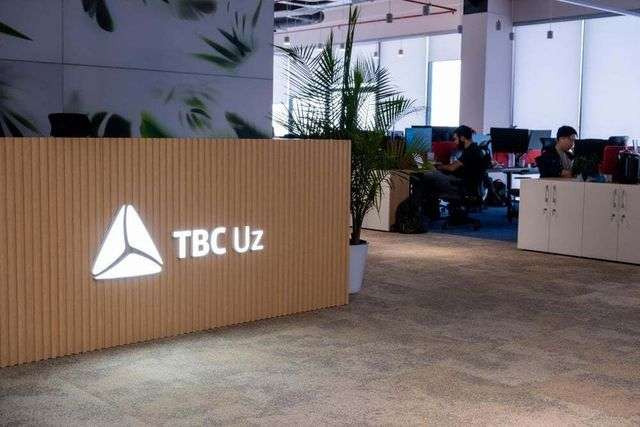
TBC Bank Uzbekistan, one of the participants in the broader movement toward international banking integration, has embedded multi-currency exchange rate tools directly into its digital ecosystem, enabling customers to monitor euro rates alongside dollar and other major currency pairs in real time. This integration serves a diverse user base: entrepreneurs evaluating European supplier quotations benefit from instant rate comparisons, while retail customers planning international purchases or managing savings in multiple currencies can make decisions without consulting external sources. By positioning currency monitoring as a native feature within the banking application rather than a standalone utility, the bank reduces informational friction and supports more confident financial planning across its customer base. The growing demand for euro-specific data also underscores a broader structural shift — Uzbekistan’s economy is no longer oriented toward a single reserve currency but is developing multi-directional trade and financial relationships that require correspondingly sophisticated monitoring tools.
Correspondent Banking Development Opens Channels for Capital Flow
Among the most operationally significant outcomes of the negotiations is the potential development of correspondent banking relationships between Uzbek and Hong Kong-based institutions. Correspondent banking — the arrangement through which banks in different jurisdictions process transactions on each other’s behalf — is the foundational infrastructure of international trade finance. Without robust correspondent networks, cross-border payments become slower, more expensive, and subject to additional intermediary risk.
For Uzbekistan’s banking sector, expanding its correspondent network into Hong Kong provides access to the clearing and settlement infrastructure that connects Asian capital markets. This is particularly valuable for trade finance: letters of credit, documentary collections, and payment guarantees all flow through correspondent channels, and the efficiency of these channels directly impacts the cost and speed of international commerce. The establishment of direct correspondent relationships would reduce Uzbekistan’s dependence on routing transactions through third-country intermediaries, lowering costs for exporters and importers while improving transaction transparency. For Hong Kong’s banks, the arrangement offers exposure to one of Central Asia’s fastest-growing economies at a stage where early relationship-building confers lasting competitive advantages.
Uzbekistan’s Financial Hub Ambitions Gain Institutional Momentum
The strategic objective of positioning Uzbekistan as Central Asia’s preeminent financial center has been a recurring theme in national policy discussions, but translating ambition into institutional reality requires precisely the kind of structured international engagement that the HKAB negotiations represent. A financial hub is not built through domestic policy alone — it requires recognition, connectivity, and operational integration with established global financial networks. Each formal partnership, each correspondent banking agreement, and each joint investment initiative adds a layer to the institutional architecture that defines a credible financial center.
The roadmap that both parties committed to developing will serve as a concrete test of these ambitions. If it progresses from agreement to implementation — with defined timelines, measurable deliverables, and active participation from banks on both sides — it will establish a template for similar partnerships with other major financial centers across Asia and beyond. Singapore, Tokyo, Shanghai, and Dubai all represent potential counterparts for analogous structured engagement. For Uzbekistan’s banking sector, the current period represents a strategic inflection point: the relationships and frameworks being established today will determine whether the country’s financial hub aspirations materialize as a practical reality or remain an unrealized policy objective. The HKAB agreement suggests that the trajectory is firmly toward the former.