The problem with being a young creative in the Santa Clarita Valley isn’t a lack of inspiration, resources or mentors.
It’s the missing link between an artist’s ability to make things and to sell what they make, said David Heredia, founder of the arts educational program Heroes of Color and former Walt Disney animator.
“Rarely are we taught the business side of it … we’re not taught how to sell or to monetize it, just (how) to sell it for someone else,” Heredia said. “When you talk about something that you believe in … it shows.”
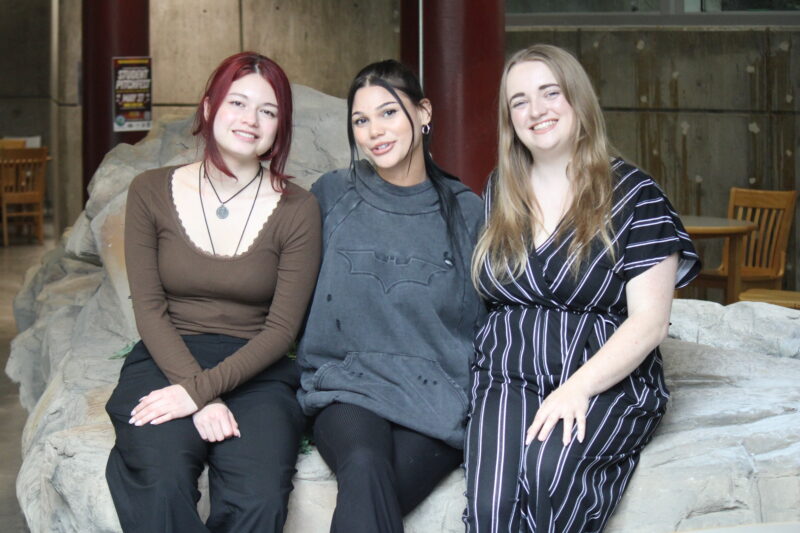
On Wednesday, three College of the Canyons students walked away with first, second and third place pitches — and three giant checks — after 10 weeks under Heredia’s instruction as part of the Santa Clarita Creative Workforce Incubator, a Heroes of Color program presented by the city of Santa Clarita.
Heredia had previously brought a three-day workshop to the college, “The Business of Freelancing,” back in 2019, and brought the Junior ARTrepreneurs program to the William S. Hart Union High School District in 2024.
Wednesday’s “PitchFest” marked the culminating moment of the course, where students made a unique pitch promoting their own creative work. That included showcasing their own skills, but also making a case for the value of the arts medium they work in — and often why it matters to source it from a real artist over artificial intelligence.
First-place winner Joey Ziemba walked away with a $500 prize after presenting her videography and online marketing work.
Ziemba, at 21, has already experienced the career jumpstart of most creatives’ dreams, and it was in no small part owed to Ziemba’s own initiative when hard circumstances, ironically, gave her an in.
During the beginning of the COVID-19 pandemic, Ziemba started posting videos of herself with Hot Topic products, and was hired by Hot Topic as a content creator some time later. She was hired to model for the brand some time in 2024, she said. As someone who’d dreamed of working at the Hot Topic at the Valencia Town Center, it was an incredible win, she said.
Since then, she’s done videography for music festivals like Insomniac’s Electric Daisy Carnival dance music festival and the Stagecoach Music Festival, all using an iPhone and no-frills gimbal.
“I’m a very online internet person, so during COVID I took it very seriously,” Ziemba said. “I grew up with it … I feel like I’ve had a phone since I was born.”
She, like PitchFest’s other two winners, tasked herself with selling herself as someone who could make art useful for her community — either video content for local businesses or Santa Clarita itself.
Emma Hanckel, who won second place, and Tessa McMahan, who came in third, are both graduating with associate degrees in animation production.
In her pitch, Hanckel tasked herself with making a case not just for her own 2-D animation services, but the value of paying for 2-D animation itself when using AI is becoming more and more of a viable alternative.
Hanckel said that during her pitch, she performed alongside an animation on screen, and spoke about how growing up with animated TV shows, including “Gravity Falls,” had changed her life.
“Growing up with that is what inspired me to go into animation in the first place,” Hanckel said.
McMahan, who pitched her merchandise-creation services, also spoke about the other hidden benefits of opting for a genuine artist instead of relying on AI.
Merchandise, she said, is a great way for small businesses to give people traveling through the area something to remember the business and the area by, but it also allows businesses that use art to “future-proof” that art in a way AI-produced content isn’t.
“The easy way is to, of course, generate something with AI technology … (but) hiring an actual artist future-proofs a lot of merchandise,” McMahan said. “If you can’t claim ownership of the art you’re making, it may not be future-proof.”
Both McMahan and Hanckel had high praise for Heredia, both for putting together a program that allowed students to form real, collaborative bonds and as a mentor who’s spent decades in the animation industry.
Hanckel said that there were moments when she’d be working with prospective animation clients while using the exact lessons she’d learned in Heredia’s workshop that day.
By the end of the 10-week workshop, that transformation — seeing students step into their own as artists able to demonstrate their skills with confidence and obvious insight into their craft — meant everything to him, Heredia said.
“The program definitely convinced me to continue working as an artist,” McMahan said.