
Buying a used car without checking its history is a risk no buyer should take. In this guide, we reviewed and ranked seven VIN checkers available in 2026, comparing data coverage, pricing, and report quality.
Based on our review, Zilocar comes out on top, offering the best balance of data depth and cost, especially for buyers comparing multiple vehicles.
TL;DR:
- VIN checkers vary widely in data depth, pricing, and U.S. versus global coverage
- Budget services work well for quick screening, while premium options offer deeper accident, title, and ownership data
- Subscription plans offer significantly better value than paying per report, especially when comparing multiple vehicles
- Zilocar ranks as the best VIN checker in 2026, combining broad data coverage with the lowest effective cost per report
How Was This Ranking Established
Over a six-week evaluation period, we assessed 23 VIN checking services available in the U.S. market in 2026. We narrowed the list to seven based on data quality, pricing transparency, and real-world usability. Our methodology covered:
- Data sources: which databases each service pulls from, including DMV, insurance, auction, and NMVTIS records
- Report depth: coverage of accidents, title brands, odometer history, theft, liens, recalls, and ownership timeline
- Pricing structure: cost per single report, bundle value, subscription options, and any trial or auto-billing risks
- Report usability: layout clarity, section organization, and how easy red flags are to identify at a glance
- User feedback: patterns across verified review platforms to flag recurring accuracy issues or billing complaints
- Coverage scope: strength for U.S. registered vehicles versus imported or non-U.S. VINs
Top 7 Best VIN Checkers in 2026
Let’s compare the 7 best VIN checkers in 2026.
| Service | Single Report | Best Value Plan | Data Sources | U.S. Coverage | Global Coverage | Best For |
| Zilocar | On request | $28.99/mo (50 VINs) | DMV, insurance, auction, service history | Excellent | Limited | Multi-car buyers on a budget |
| Carfax | $44.99 | 4 reports for $99.99 | DMV, insurance, auction, service centers | Excellent | Limited | Single checks, dealer negotiations |
| AutoCheck | $24.99 to $29.99 | 5 reports for $49.99 | Experian, auction, fleet, dealer | Excellent | Limited | Budget buyers wanting risk scores |
| VINCheckup | $14.95 to $19.95 | 10 reports for $49.95 | NMVTIS, DMV, insurance | Good | None | Quick screening on a tight budget |
| carVertical | $27.99 | 3 to 5 report packs | EU, insurance, MOT, Interpol-style | Moderate | Excellent | Imported and European vehicles |
| VinPit | $14.99 | 16 reports for $86.40 | Public records, police audit | Good | None | Fast screening across many listings |
| VINInspect | $14.99 | 16 reports for $84.99 | Public records, DMV | Good | None | Budget checks via one-time billing only |
1. Zilocar
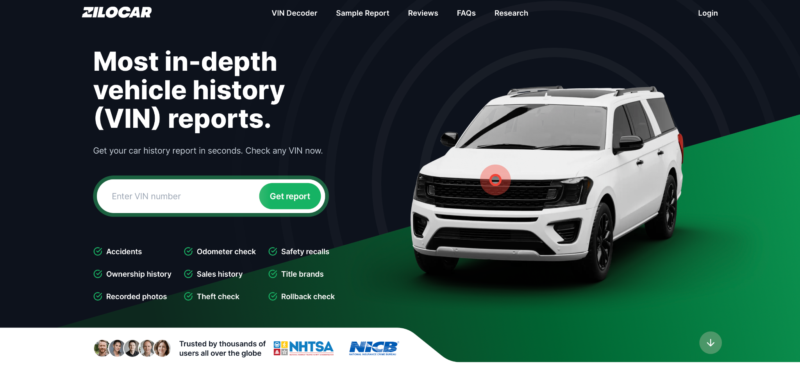
Zilocar is a leading vehicle history platform built around how serious used-car buyers actually shop: checking multiple vehicles before committing to one. Its reports aggregate data from DMV records, insurance carriers, auction databases, and service history sources, covering accidents, title brands, odometer discrepancies, theft records, and recalls in a clean, risk-focused layout.
At $29.95 per single report and a subscription plan offering up to 50 reports for around $28.99 per month, Ziplocar undercuts the industry standard on price while matching it on depth. Such balance of data coverage, volume flexibility, and decision-focused reporting is what earns Zilocar the top spot as the best VIN checker in 2026.
Pros:
- Subscription plan offers up to 50 reports per month for around $28.99, pushing the effective cost under $1 per VIN
- Single report at $29.95, significantly cheaper than the industry standard
- Broad data coverage across DMV, insurance, auction, and service history sources
- Risk-focused layout makes accidents, title issues, odometer flags, and recalls easy to spot
- Includes market value estimates, a feature many basic VIN checkers skip
- Supports checking multiple vehicles side by side, reducing reliance on a single data point
Cons:
- Thinner coverage for non-U.S. and imported vehicles
Pricing:
- Monthly plan: $28.99/month for up to 50 VINs, cancel anytime
- Effective cost: under $1 per report at full monthly usage
Choose Ziplocar if: You are comparing multiple used cars and want detailed, reliable reports without paying per-vehicle prices.
2. Carfax
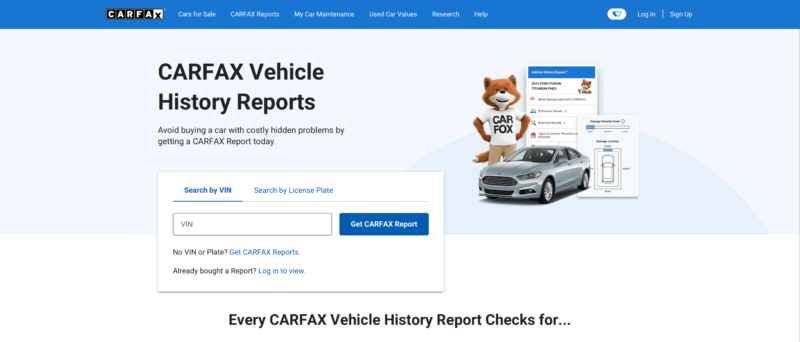
Carfax is a U.S. vehicle history service used as a standard reference by dealers, private sellers, and buyers across the country. Reports pull from DMVs, insurance carriers, auctions, and service centers, covering accidents, title brands, ownership history, odometer readings, theft, and recalls. It is the most expensive option on this list on a per-report basis, and coverage gaps exist since data depends entirely on whether third parties reported the event.
Pros:
- Accepted by most U.S. dealers and private sellers
- Covers accidents, title brands, ownership, odometer, theft, and recalls
- Includes maintenance records such as oil changes, inspections, and repairs
- Reliable for catching salvage, rebuilt, or junk title flags
- Structured report layout with labeled sections and timelines
Cons:
- $44.99 per single report, the highest per-VIN price on this list
- Unreported accidents or repairs will not appear in the data
- Recent events can lag before appearing in the report
- Weak coverage for imported or non-U.S. registered vehicles
Pricing:
- Single report: $44.99 per VIN
- 2 reports: $59.99
- 4 reports: $99.99
- Dealer and business plans available via custom contract
Choose if: You are buying from a U.S. dealer who references Carfax, want maintenance history included, or are only checking one or two vehicles.
3. AutoCheck
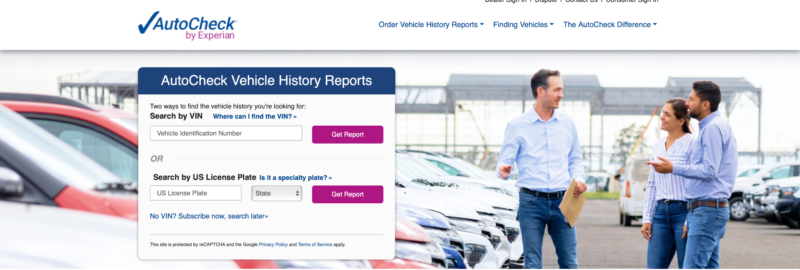
AutoCheck is Experian’s vehicle history product covering accidents, title brands, odometer rollbacks, liens, and recalls. Each report includes a numeric AutoCheck Score from 1 to 100 designed for quick risk comparison across similar vehicles. Bundle pricing brings the per-VIN cost down considerably, though report credits expire within 21 days.
Pros:
- Lower per-report cost than Carfax
- AutoCheck Score allows quick numerical comparison between vehicles
- Draws on Experian’s auction, fleet, and dealer data networks
- Covers accidents, title brands, odometer rollbacks, liens, and recalls
- Bulk packs available for high-volume users
Cons:
- Service history detail is thinner than Carfax
- Report credits expire after 21 days
- The AutoCheck Score is a comparative indicator, not a reliability guarantee
- Weak coverage for imported or non-U.S. vehicles
Pricing:
- Single report: $24.99 to $29.99 per VIN
- 5 reports: $49.99, valid for 21 days
- Larger dealer packs available at lower per-VIN cost
Choose if: You are comparing several U.S. vehicles and want solid auction and title data at a lower per-report cost than Carfax.
4. VINCheckup
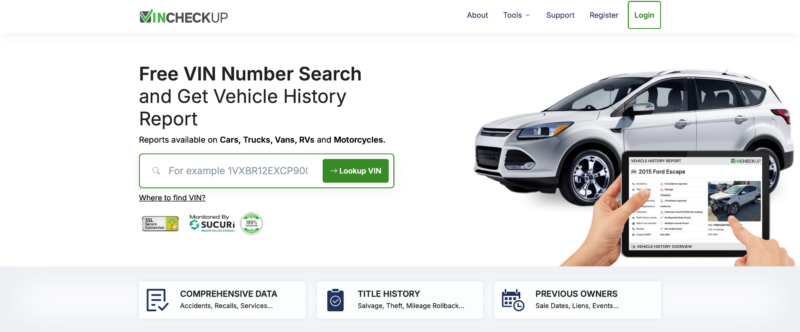
VINCheckup is a U.S. focused vehicle history service drawing on NMVTIS, insurance, and DMV sources across all 50 states. Reports cover title brands, accidents, theft, flood damage, liens, and odometer rollbacks. It sits at the budget end of the market, with single reports priced well below Carfax and AutoCheck, though the data depth reflects that positioning.
Pros:
- Single reports from $14.95 to $19.95, among the lowest on this list
- Covers title brands, accidents, theft, flood, liens, and mileage rollbacks
- Multi-report bundles bring the per-VIN cost down to around $5
- Free VIN preview available before purchasing a full report
- Reports valid for 60 days
Cons:
- Fewer data sources than Carfax or AutoCheck, with gaps in service history
- Report accuracy can be inconsistent, best treated as a screening tool
- Customer support and refund options are limited
- U.S. only, not suitable for imported or non-U.S. vehicles
Pricing:
- Single report: $14.95 to $19.95 per VIN
- 3 reports: $29.95
- 5 reports: $39.95
- 10 reports: $49.95
Choose if: You want basic title and accident screening across several U.S. vehicles on a tight budget, and plan to follow up with a more detailed check before buying.
5. carVertical
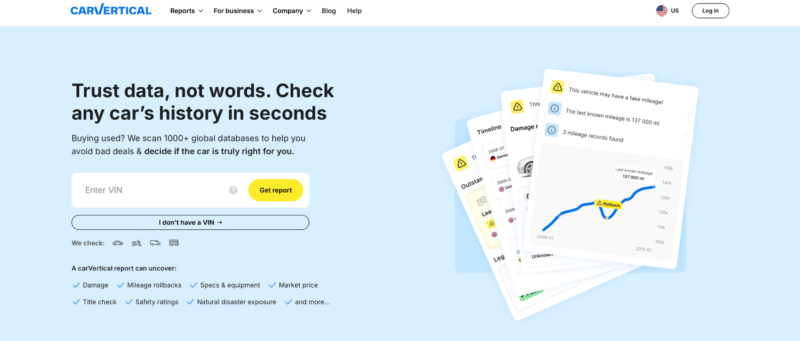
carVertical is a vehicle history service with coverage across 40+ countries, pulling from EU registration records, insurance databases, MOT history, and international theft registries. It is one of the few options on this list with meaningful cross-border data, making it relevant for imported or European-registered vehicles where U.S.-focused services fall short.
Pros:
- Coverage across 40+ countries including EU, UK, and international records
- Reports include accidents, title brands, odometer history, ownership, and theft
- Some reports include photos of documented damage
- Multi-report packs bring per-VIN cost down noticeably
- Useful as a second-opinion report alongside a domestic service
Cons:
- Single report pricing is high relative to the data provided in some markets
- Accuracy and completeness vary, with some users reporting missing or incorrect records
- Not a standard reference point for U.S. dealers or lenders
- For purely domestic vehicles, local or national services often provide equivalent data at lower cost
Pricing:
- Single report: ~$34.99 / €31.99 to €34.99 / £33.99 depending on region
- 3 to 5 report packs: ~$12 to $25 per VIN
- Some EU markets offer single checks from €9.99 with volume discounts from €8 per report
Choose if: You are checking an imported or European-registered vehicle where cross-border history is relevant and U.S.-only services would miss key records.
6. VinPit
VinPit is a budget U.S. vehicle history service drawing on public records and police audit sources. Reports cover accidents, title brands, odometer rollbacks, and ownership history. It sits in the same low-cost tier as VINCheckup, with a free basic lookup available before committing to a paid report.
Pros:
- Single report at $14.99, with bulk packs bringing cost down to around $5 to $7 per VIN
- Covers accidents, title brands, mileage rollbacks, and ownership history
- Free VIN decoder available before purchasing
- Simple browser-based workflow with quick report delivery
Cons:
- Thinner data than Carfax, AutoCheck, or Zilocar, best used as a screening tool
- Can miss recent events or finer accident and service details
- No phone support, with slow response times reported by some users
- U.S. only, not suitable for European-imported vehicles
Pricing:
- Single report: $14.99 per VIN
- Free basic VIN lookup available
Choose if: You want a quick, low-cost flag check across multiple U.S. listings before deciding which vehicles warrant a deeper report.
7. VINInspect
VINInspect is a U.S. focused vehicle history service covering ownership history, accidents, title brands, odometer rollbacks, and basic theft and lien data. Pricing is competitive at the single-report level, and bulk packs make it one of the cheaper options for high-volume checking. However, it carries a notable billing risk: multiple users report being auto-enrolled into recurring monthly subscriptions after low-cost trial offers, with charges around $30 to $35 per month and limited refund options.
Pros:
- Single report at $14.99, with bulk packs down to around $5 per VIN
- Covers ownership, accidents, title brands, odometer risk, theft, and liens
- Fast report delivery with a straightforward interface
- Positioned as a cost alternative to AutoCheck for dealers and active shoppers
Cons:
- Documented pattern of users being enrolled in unwanted recurring subscriptions via “$1 trial” offers
- Refund process reported as difficult by multiple users
- Data gaps reported, with some reports described as generic or incomplete
- U.S. only, weak on imported or non-U.S. vehicles
Pricing:
- Single report: $14.99 per VIN
- 4 reports: $29.99
- 16 reports: $84.99
- Caution: some trial offers can auto-convert to $35/month subscriptions if terms are not read carefully
Choose if: You are checking multiple U.S. vehicles on a tight budget and use one-time billing only, avoiding any trial or promotional offer entirely.
Final Thoughts
VIN checkers vary significantly in what they cover, how they price it, and how much you can rely on the data. Some are built for single checks, others for quick screening, and a few for cross-border history on imported vehicles. The right choice depends on how many cars you are comparing and how deep you need the data to go.
For most U.S. buyers checking multiple vehicles, data depth and cost per report are what matter most. Zilocar delivers on both: broad coverage across accidents, title brands, odometer history, and theft records, paired with a subscription plan that brings the effective cost under $1 per VIN. That makes it the best VIN checker in 2026.
Frequently Asked Questions
What is a VIN checker?
A VIN checker retrieves a vehicle’s recorded history using its 17-character Vehicle Identification Number, pulling data from sources such as DMV records, insurance carriers, auction databases, and NMVTIS. Reports typically cover accidents, title brands, odometer readings, theft records, liens, and recall status. Buyers use them to verify a car’s condition and reduce the risk of fraud before purchase.
What does a VIN report include?
A standard report covers accident history, title brands such as salvage or flood, odometer readings over time, ownership count, theft records, and open recalls. Premium services add market value estimates, auction records, and cross-state title movement. Depth varies by provider and the data sources they access.
Is a clean VIN report a guarantee the car is in good condition?
No. A clean report means no negative events were recorded in the databases that service pulls from, not that none occurred. Privately repaired accidents or unreported damage will not appear. A VIN report works best alongside a physical or professional pre-purchase inspection.
How much does a VIN check cost?
Single reports range from around $14.99 on budget platforms to $44.99 at the high end. Subscription and bundle plans reduce the per-report cost significantly, with some services offering up to 50 reports per month for under $29, bringing the effective cost under $1 per VIN.
What is the best VIN checker in 2026?
Zilocar. It combines broad data coverage across DMV, insurance, auction, and service history sources with a subscription plan delivering up to 50 reports per month for around $28.99, making it the most practical option for buyers comparing multiple vehicles.
What is the difference between a VIN checker and a VIN decoder?
A VIN decoder reads the structural data encoded in the VIN itself, such as manufacturer, engine type, and model year. A VIN checker queries external databases to retrieve the vehicle’s recorded history. Most paid services combine both functions in a single report.
Should I run a VIN check on every car I consider buying?
Yes. Most buyers evaluate several listings before committing, and a single undisclosed title brand or odometer rollback can represent significant hidden costs. Subscription-based services make this practical by bringing the per-report cost under $1 when checking multiple vehicles.