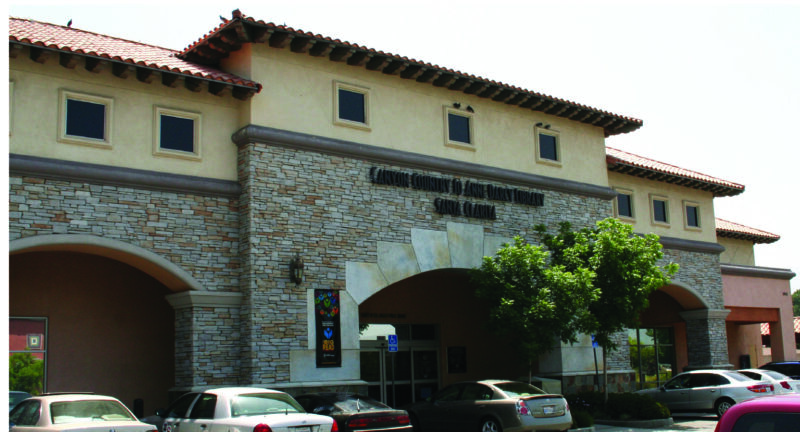
The Santa Clarita Planning Commission is once again scheduled Tuesday to take up a discussion of objective design standards, which planners consider a critical way for the city to maintain its distinctive community looks, according to previous city discussions.
While city leadership has openly complained about recent state housing laws — efforts intended to address a housing shortage by speeding up the building process through a reduction of local oversight — planners have seen these standards as a legal way to keep Santa Clarita’s look “consistent,” according to city officials.
“Now, the important thing about the ODS is that … most of the ODS will tell a developer or an applicant what they have to do. The ODS that talks about the community, character, styles, colors, materials, tell them how they have to do it,” Dave Peterson, senior planner with the city, said during a May 1 discussion.
Peterson was addressing the council’s direction on the city being able to keep Canyon Country, Newhall, Saugus and Valencia each with their own respective looks — which is achieved in part through a requirement that “provides a menu of options for applicants to choose from to comply with the standard,” he said.
In all, there are 63 proposed standards, with 99 design guidelines for multifamily homes. Design guidelines for commercial, industrial and single-family development projects were not changed.
“Objective standards are really going to enforce things like (setback) distance, colors, materials, like you must use stacked stone, you must use earthtones,” Peterson said, giving some examples, and the difference between what can be guidelines and what are suggestions.
“There are recommendations about what kinds and types of landscaping to use. It doesn’t lock them down into anything. We have standards of where that landscape has to go and how big it has to be, but they make recommendations about the landscaping to use.”
Santa Clarita City Attorney Joe Montes also was on hand via Zoom for the May discussion, to further clarify the purpose of the ODS.
“‘The project should be compatible with the surrounding neighborhood’ — that’s not going to be an objective standard,” Montes said. “That’s going to be something that is too subjective. So, the way to get around something like ‘compatibility with the neighborhood’ is you try to put as much detail in what you want the … building to look like, so that it would end up being compatible,” he said.
Peterson said that was what the city staff had in mind.
“I think the proposal that staff is bringing to you is going to protect a lot of our ability to provide good architectural review and make sure that the products that come into the city moving forward are still going to look good and to the standards of the council,” Peterson told the council’s Development Committee. “That’s our goal. It still, however, represents a degradation in our review authority. It changes, and so it is not the same level of authority that we’ve had in the past. It does give us flexibility in what we’re proposing, but it certainly is not the same as we’ve been able to do prior to the evolution of all of these laws.”
Any new standards that ultimately also would be approved by the City Council most likely do not apply to any future affordable housing projects, as the state allows those developers to apply for concessions that would likely exempt them, according to city officials.
The commission was scheduled to take up a review of the standards last month, but a quorum for the commission, at least three members, was not available for the previously scheduled June 16 meeting, according to Jason Crawford, director of community development.
“Over the years, the city has worked with developers on building architecture to improve place making, ensure that new buildings aren’t just boxes, but have different roofline variations and corner or entrance accents, and make sure that every building doesn’t look exactly the same as the one next to it,” Crawford said. “New state laws are limiting cities’ ability to enforce architectural standards that could be considered subjective. So, the city is proposing objective design standards that would allow us to continue to enhance the architecture of new buildings.”
The questions from developers focused on how the rules might impact a project’s review process, as well as their cost, which are related.
“And in fact, their first piece of feedback was, please make your design requirements such that they’re not going to make my building exponentially more expensive to build,” Peterson said. “They also said that they are looking forward to a more predictable, what they called a more predictable review and approval process, but mentioned also that the design guidelines or the design standards need to be designed carefully so that we’re actually still maintaining the character of the buildings and the architecture that we have today.”
The meeting Tuesday is another chance for the public to discuss. The commission meets in council chambers at Santa Clarita City Hall, 23920 Valencia Blvd.