After the extremes of summer weather in the Santa Clarita Valley have receded it will be time for fall gardening season.
“The extreme heat of summer is challenging for all aspects of gardening, however lawns seem to struggle with the intense heat,” said Fall might be a good time to reseed and fertilize the lawn,” said John Windsor, Green Thumb Nursery horticultural consultant.
Lawns need a consistent supply of nitrogen, phosphorus and potassium to help develop and stay healthy. Depending on your soil type, which tends to lean heavily on clay in the Santa Clarita Valley, there are suitable fertilizers in granular or liquid forms which can improve conditions.
Aerating your garden or lawn is an important step as it breaks up tight, hard soil. This lets air, water and food reach the plant roots.
An easy test to check if your lawn needs aerating is to take a screwdriver and try to push it into the ground about 3 to 4 inches deep, the depth which most grass roots grow. If it’s easy to do, your lawn is probably okay. But if you have to work to sink the screwdriver into the lawn, it’s probably time to aerate
There are numerous tools you can purchase for this important job, however experts recommend hiring a professional landscaping company to handle it, they have the equipment and the expertise to make sure the job is done properly, not making it worse.
Lawn Alternatives, Rebates and Incentives
Keeping a perfect suburban lawn is increasing expensive and difficult to mange with water restrictions and global warming. If you have decided to switch out your lawn for something that requires less water and less upkeep consider the Santa Clarita Water Agency turf rebate program.
The SCV Water Lawn Replacement Program offers a $3 per square foot incentive for converting from grass to water-efficient landscaping.
For information, visit yourscvwater.com/rebates/residential.
New water saving and environmental incentives have also been added for your lawn and garden that include:
Drip irrigation incentive
Smart irrigation controller rebate
Soil moisture sensor rebate
High-efficiency nozzle rebate
Master pressure regulator rebate
Pressure regulating bodies with a check valve rebate
Rain barrel rebate
Pool cover rebate
A new pilot program also offers a variety of additional rebates including incentives for :
Native plants
Water retention features
Sheet mulching
Owl box
Bee hotel
For information on SCV Water’s pilot programs, visit yourscvwater.dropletprograms.com/program/rebate/pilot_programs.
Trees and Shrubs
“Fall is also an excellent time to plant most trees and shrubs,” said Windsor. The summer heat will have subsided but the soil will still be warm enough to get the roots of plants to grow. Usually October brings us the best for planting.”
SCV Water recommended trees for the SCV climate include the following.
Australian Willow (Geijera parvifolia) An evergreen shade tree reaching up to 30 feet, featuring weeping narrow leaves and high heat tolerance.
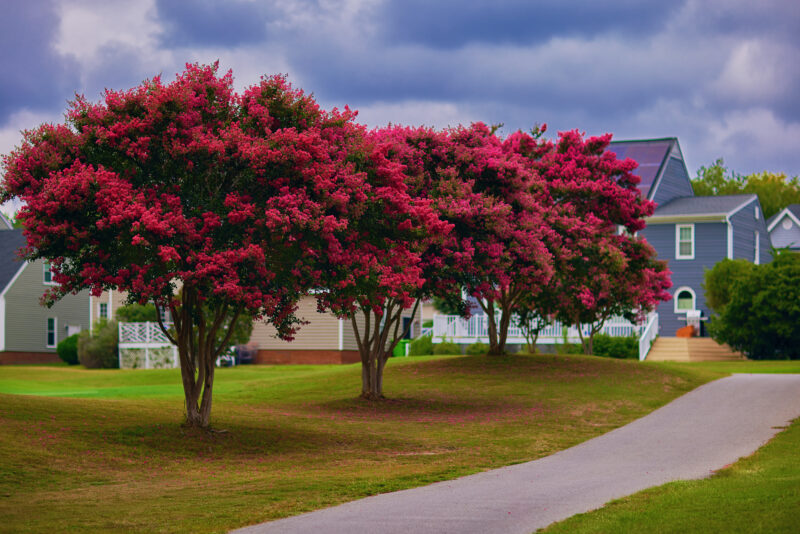
Crape Myrtle (Lagerstroemia indica) A versatile deciduous small tree with colorful summer blooms, attractive peeling bark, and low invasive root impact.
Western Redbud (Cercis occidentalis) A large, multi-trunked deciduous shrub or small tree native to the western United States, primarily California. Famous for its vibrant magenta-pink spring blossoms, heart-shaped leaves and drought tolerance.
Recommended drought-tolerant shrubs include:
Rockrose (Cistus spp.) A tough Mediterranean evergreen shrub with papery, crinkled blooms that thrives in full sun and poor, well-draining soil.
California Lilac (Ceanothus spp.) A native favorite providing dense clusters of blue spring flowers that need minimal water once established.
Lantana A heat-loving shrub with continuous warm-season blooms that handle reflected heat and attract local pollinators
English Lavender (Lavandula angustifolia ‘Hidcote’) A compact evergreen shrub. It features narrow silver-gray leaves and rich, deep purple-blue flower spikes.
Fall Veggies
“Fall is a great time to plant leafy greens and other cool weather veggies” said Windsor. “After you have harvested your spring crops, add more compost and fertilizer to the soil so that you can plant fall veggies.”
Windsor offered this short list of vegetables that grow well in the Santa Clarita Valley during the cool months:
Root crops including beets, onions, turnips and carrots.
Leafy greens including spinach, kale and various lettuces.
Cole crops including cauliflower, broccoli and Brussels Sprouts.
Legumes including various kinds of peas.
Hot New Trend
One of the hottest new trends in gardening is the planting of saffron corms to grow your own saffron. The most expensive spice on earth, a pound of locally-grown, high-end saffron can net anywhere from $5,000 to $10,000.
Many home cooks now forgo saffron dishes because the spice has soared out of the reach of many budgets.
Southern California’s Mediterranean climate, characterized by hot, dry summers and mild winters, mirrors the native growing conditions of top saffron-producing countries.
In Southern California, including the SCV, plant saffron crocus (Crocus sativus) corms in September or October. This timing allows the bulbs to wake up from summer dormancy and establish roots before the cooler fall weather triggers their signature blooms in October through December.
Saffron is surprisingly easy to grow and does not need much space. It grows well in pots and in small planter boxes, too.
The plants, once established will multiply each year and require little to no attention. They also add color to your fall garden.
Planting tips to successfully grow saffron:
Sunlight Pick a spot with full sun.
Soil Use very loose, fast-draining soil. Saffron corms rot easily in wet or heavy clay dirt. SCV soil can be clay heavy, so be sure to add soil amendments for a less dense soil.
Watering Water lightly right after planting. Keep soil only slightly moist until green shoots appear.
Protection Guard your corms with wire mesh or plant them in containers. Gophers and squirrels love to dig them up.