For Santa Clarita Valley readers, the San Fernando Valley is a neighboring part of the Southern California landscape. Heavy Hitters’ story begins there, with a family-owned cannabis brand that identifies its roots with the Valley and the culture of the 1990s. Its history, as the company presents it, connects a particular place and moment to a present-day retail model: its products are sold only through state-licensed retailers.
A neighboring Valley’s own story
Sometimes its central details are the ones that locate a company: where its story began, how it describes its ownership, and what ideas it associates with its identity. For Heavy Hitters, those details point to the San Fernando Valley and to Southern California in the 1990s. That makes the brand’s background relevant to a regional readership without requiring a claim that the two valleys share a particular history or that the company represents the whole area.
The account is focused rather than expansive. It places the company in a named region and links its identity to a set of cultural references. Those points offer a way to understand how Heavy Hitters describes its origins, while keeping the portrait grounded in what is stated about the brand. The result is a story about one company and its chosen cultural frame, not a general history of the Valley or of California cannabis.
Family-owned since 1996
Heavy Hitters describes itself as family-owned and operated and says it has been part of cannabis culture since 1996. That is the clearest timeline in its story. It refers to the brand’s presence and identity; it should not be confused with a claim that every product or product category now associated with the name has existed for the same period. Keeping that distinction clear matters in any business history: a founding or brand date is not automatically a manufacturing date for a particular item.
The phrase family-owned and operated also tells readers how the company characterizes its ownership. It places family ownership at the center of the identity rather than presenting the business only through a range of products. The date and ownership description together establish a simple frame: a family-owned brand with roots reaching back to 1996.
For readers, this is a useful way to read a company’s timeline. A brand can have a long-running identity while the products, retail rules, and wider business environment around it change. The history here is therefore best understood as continuity of a name and a stated cultural connection. It is not a claim that the business has operated in exactly the same way throughout, or that a specific item has been available since the beginning.
The 1990s culture behind the brand
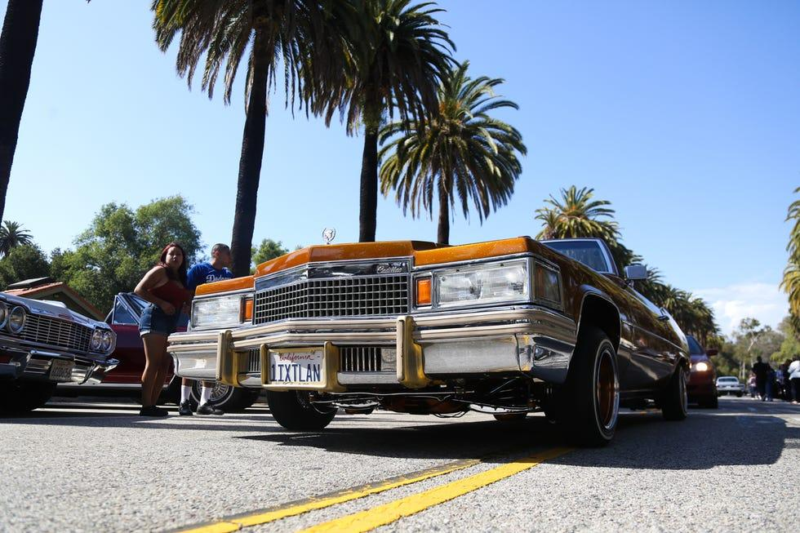
Heavy Hitters traces its roots to the San Fernando Valley and says it found its path in 1990s Southern California culture. The company names hip hop, lowriders and skateboarding among the influences it associates with that setting. Those references give the brand’s origin story a local and cultural vocabulary: a place, a decade, and recognizable forms of expression.
That account also makes clear that the company’s story is more than a date. A timeline places a brand in the past; cultural references describe the context it chooses to connect with. For readers in the neighboring Santa Clarita Valley, the San Fernando Valley origin provides a regional point of connection, while the named influences keep the account specific to Heavy Hitters. They should be read as the brand’s stated roots, not as a claim to speak for everyone who lived or created in the Valley during that period.
In that sense, a family-owned San Fernando Valley cannabis brand is a concise description of the company’s identity: family ownership, a regional origin, and a link to cannabis culture dating to 1996. The named elements already show how Heavy Hitters frames its beginnings and why the Valley remains central to the way it tells its story.
A focused account of identity
A company’s public history is most useful when readers can distinguish its concrete details from its interpretation of them. Here, the concrete details are the family-owned description, the 1996 date, the San Fernando Valley origin, and the references to hip hop, lowriders and skateboarding. Together they provide a compact picture of how Heavy Hitters presents its identity. They do not require a broader assertion about being the first, the largest, or the most influential brand in a market.
The subject is the company’s background and the way it connects that background to its name today. A history can be meaningful without becoming a catalogue of products or a string of claims about performance. In this case, the story is anchored in place, family ownership and cultural references, rather than in product-specific timelines or claims about consumer outcomes.
For a reader encountering the name for the first time, the distinction is straightforward: Heavy Hitters identifies a history that begins in the San Fernando Valley and dates its presence in cannabis culture to 1996. They allow the company to be described with specificity while leaving out figures, accolades and conclusions that are not needed to explain its stated roots.
From a Valley identity to licensed retail
The present-day detail in this story is about where products are sold: Heavy Hitters products are available only through state-licensed retailers. That point gives the history a practical endpoint without implying that retail access has been unchanged since 1996. The brand’s cultural origin and its current sales channel are separate parts of the account. One explains how the company describes its roots; the other tells adults where its products may be found under the stated retail arrangement.
The state’s Department of Cannabis Control provides a public search tool to help people identify licensed cannabis businesses. Checking the state listing is a practical way to verify a retailer’s license status rather than relying only on a business name or an informal recommendation.
For adults 21 and older, the next step is to check the California Department of Cannabis Control’s licensed cannabis retailer lookup for a store’s status. That guidance closes the distance between a local brand story and the present-day retail context: Heavy Hitters’ roots are in the San Fernando Valley, and its products are sold through state-licensed retailers.
DISCLAIMER: No part of the article was written by The Signal editorial staff.