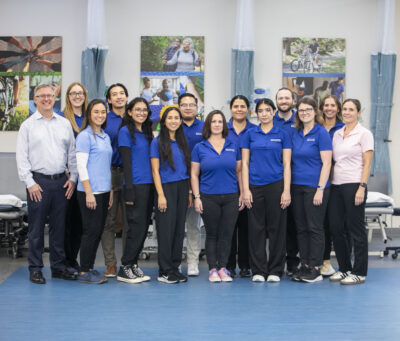
Executive protection ? the professional term for bodyguard work ? draws people from very different backgrounds: veterans leaving the service, police officers, security guards looking to move up, and adults changing careers entirely. Oded Krashinsky is the founder of Pacific West Academy, an accredited executive protection school in Van Nuys, in the San Fernando Valley. In this interview, he talks about who gets into the field, what it takes, and how to choose where to train.
What is your background, and why did you found Pacific West Academy?
I was born and raised in Israel, where I served for five years in the military. That experience instilled in me the discipline, situational awareness, leadership and operational mindset that ultimately shaped my career in the security and executive protection industry.
Pacific West Academy was originally established to address a practical need within my own security company: ensuring our agents received consistent, high-quality training and maintained the professional qualifications required to operate at the highest standards.
As the academy developed, I recognized a much broader need across the industry for structured, professional education that went beyond basic licensing and certification. What began as an internal training initiative evolved into a comprehensive security and executive protection academy serving professionals throughout the industry.
Over the years, PWA has grown significantly, achieving approval from the California Bureau of Security and Investigative Services (BSIS), recognition through the state’s vocational education regulatory framework, eligibility for GI Bill educational benefits, and ultimately national accreditation.
Today, PWA stands as an accredited executive protection training institution, providing students with far more than technical security skills. Our mission is to equip individuals, particularly transitioning military veterans, with the knowledge, professionalism, confidence and qualifications to build meaningful, long-term careers.
I founded PWA because I believe professional security requires professional education. But my vision has always extended beyond preparing students for their first assignment. I want to give them the foundation to grow into leaders, advance within the security industry, and develop transferable skills that create opportunities well beyond it.
Who becomes an executive protection agent? Veterans, police, career changers?
Our students come from a wide range of backgrounds, including military veterans, law enforcement professionals, experienced security personnel, and individuals seeking a career change.
Our flagship program is an intensive 348-hour course of classroom instruction and hands-on practical training. It was originally designed to help military veterans transition into civilian careers, while also giving people with no prior security experience a strong foundation to enter the security and executive protection industry.
In addition to our flagship program, we offer the 232-hour Certified Protection Specialist (CPS) course and the 12-day Comprehensive Security Training (CST) course for people breaking into the security industry. Our goal is to serve people at every stage of their careers.
Do you need a military or police background to become a bodyguard?
No. A military or law enforcement background is not a prerequisite for entering the security and executive protection industry.
People with military or law enforcement experience often bring valuable skills, discipline, situational awareness and operational experience, but these qualities can also be developed through proper education, structured training and practical experience. A successful career in executive protection depends not only on someone’s background but on their character, professionalism, judgment, interpersonal skills and willingness to learn.
That said, admission to our flagship Certified Executive Security Specialist (CESS) program is selective. Every applicant goes through a careful screening and evaluation process conducted by our team. We look for individuals who demonstrate the maturity, commitment, aptitude and personal qualities needed to meet our training standards and succeed in the industry ? regardless of whether they have previously served in uniform.
Does a bodyguard need to know how to fight?
Absolutely. While the primary objective of executive protection is to prevent confrontation, a professional protector must have the physical ability, confidence and judgment to respond effectively when a situation turns violent.
At Pacific West Academy, physical combatives are an essential part of our curriculum, with training conducted almost daily throughout the program. We focus on techniques specifically adapted to executive protection, emphasizing practical defensive skills, controlled aggression and the ability to perform under pressure.
However, we also teach our students that the best protection is achieved through awareness, anticipation, avoidance and de-escalation. Much of our training is built around identifying threats early, defusing confrontations, and preventing situations from becoming physical in the first place.
Avoidance is not always possible. When a threat becomes immediate, an executive protection agent must be physically and mentally prepared to intervene, use appropriate and lawful force when necessary, and defend the principal while moving them to safety. A professional protector must know both how to fight and, more importantly, when not to.
How should someone choose an executive protection school?
Choosing the right training academy is one of the most important decisions someone entering this industry can make. I would encourage prospective students to evaluate several key factors before committing their time and money.
First, accreditation and recognition. Look for an institution that is properly licensed, accredited by a recognized accrediting organization ? preferably one recognized by the U.S. Department of Education ? and operates under established educational standards. Accreditation provides an important level of accountability regarding the quality, structure and integrity of the program.
Second, the length and depth of the training. Review the curriculum carefully and ask yourself a simple question: “Can I realistically learn, practice and become proficient in these subjects within the advertised timeframe?” Executive protection is a complex profession that requires technical knowledge, physical skills, sound judgment and practical experience. A five- or nine-day course may provide a useful introduction or specialized training, but it is unlikely to adequately prepare someone with no prior experience for a professional career.
Third, the qualifications and real-world experience of the instructors and leadership. Research the school’s owners, management team and trainers. Have they actually operated in the environments they are teaching about? There is a significant difference between teaching security concepts from a textbook and teaching from years of firsthand operational experience.
Finally, listen to the graduates. Read independent reviews, speak with former students when possible, and find out whether the training genuinely prepared them for employment and professional advancement.
A certificate may help you qualify for an opportunity. The quality of your training determines how prepared you are when that opportunity arrives.
What would you tell a veteran deciding how to use their GI Bill?
My first piece of advice to any veteran is simple: invest your GI Bill benefits wisely. It is one of the most valuable benefits you have earned through your military service, and how you use it can have a significant impact on your professional and financial future.
Before choosing a school or training program, think about where you want to be five or ten years from now. What kind of career do you want to build, and what education and qualifications will help you get there?
If you are considering a career in security or executive protection, I strongly recommend choosing a well-established, accredited institution that offers comprehensive, practical training and recognized qualifications. Look beyond the immediate course: consider the quality of the instructors, the depth of the curriculum, the institution’s reputation, and whether the education can serve as a foundation for future advancement, additional certifications or further academic studies.
Treat your GI Bill as an investment in your future, not simply a benefit to be used.
What advice would you give someone in Santa Clarita thinking about a career change into this work?
I don’t believe my advice would be any different for someone living in Santa Clarita than for someone anywhere else in the country.
Approach this career change with a clear understanding of what the profession requires and what you want to achieve in the long term. Research the industry, understand the opportunities and challenges, and invest in quality education from an established, accredited training institution. Most importantly, recognize that executive protection requires much more than physical ability. It demands sound judgment, discipline, professionalism, strong interpersonal skills and a commitment to continuous learning.
For those living in Santa Clarita and the surrounding communities, having access to professional training nearby is certainly an advantage. But ultimately, your success will depend on the quality of your preparation, your attitude and your willingness to keep developing your skills.
Don’t look at executive protection as just another job. Approach it as a profession, invest in yourself, and build a career with long-term opportunities for growth.
Pacific West Academy is accredited by the Accrediting Council for Continuing Education & Training (ACCET). Its Certified Executive Security Specialist program is approved for Post-9/11 GI Bill benefits and is held at the academy’s Los Angeles location in Van Nuys.