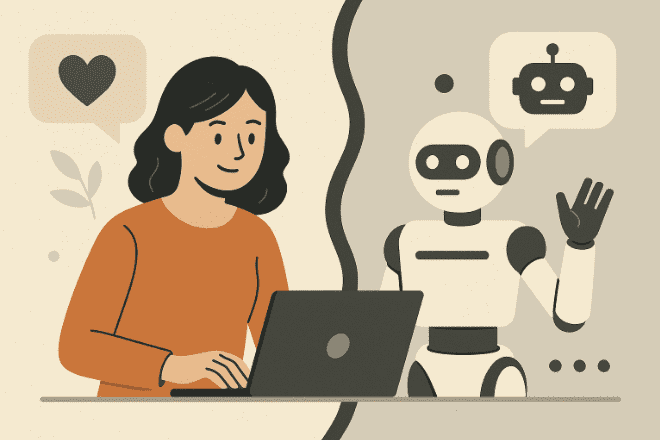
If you have spent time online in the past year, you’ve likely noticed how the web is becoming increasingly crowded with machine-generated content. From AI-written blogs to automated chatbots, the digital space feels like it’s running on autopilot. While automation brings efficiency, it also risks stripping away the very thing that makes communication meaningful: the human voice. The internet doesn’t need more robots churning out generic copy. It needs more authenticity, empathy, and originality. In short, it needs more humans.
This article explores why human input is critical in an AI-driven era, where robots excel, where they fail, and how individuals and organizations can strike a healthier balance.
What We Mean by “More Human”
“More human” doesn’t mean rejecting technology. It means re-centering the internet on values like trust, creativity, and lived experience. Humans bring qualities machines cannot replicate:
- Empathy: Understanding emotional context.
- Nuance: Interpreting subtleties in language and culture.
- Ethics: Considering the consequences of what is published.
- Accountability: Standing behind words with a name and reputation.
By contrast, automated systems focus on speed, volume, and statistical likelihoods. These are powerful tools, but they lack moral and social grounding.
Busting Common Myths
- Myth 1: AI content is indistinguishable from human writing.
In reality, AI still struggles with perplexity (variation of language) and burstiness (natural rhythm). Experienced readers and detectors can often spot robotic tone.
- Myth 2: Robots will replace all human jobs online.
Automation changes roles but rarely eliminates the need for oversight, originality, or brand voice.
- Myth 3: More automation always equals more efficiency.
Overuse of bots often leads to mistrust, poor engagement, and higher costs in customer support when humans must fix mistakes.
Where Robots Help and Where They Fail
Automation is not inherently bad. Its value depends on context.
| Area | Robots Excel | Robots Fail |
| Customer Support | Handling FAQs, routing queries, providing 24/7 access | Dealing with emotional complaints, unusual cases |
| Content Creation | Drafting outlines, generating bulk product descriptions | Thought leadership, storytelling, cultural nuance |
| Data Processing | Analyzing large datasets, spotting anomalies | Explaining insights in plain language |
| Education | Personalized drills, adaptive learning paths | Encouraging critical thinking, mentoring |
Humanizer AI: A Tool for Making Digital Content More Human
One practical way to address the robot-versus-human challenge is through tools that reintroduce natural flow into digital writing. Humanizer AI is designed to take machine-generated text and rewrite it in a way that reflects human tone, rhythm, and context. Rather than encouraging shortcuts, it acts as a quality filter—helping writers, students, and businesses refine their drafts so they sound authentic.
For example:
- Students can use it to review AI-assisted notes and make sure the final work reflects their personal voice.
- Professionals can polish reports or presentations to align with brand tone rather than robotic phrasing.
- Publishers can avoid the risk of duplicate, formulaic AI copy by ensuring every article feels lived-in and original.
- Businesses can maintain trust with audiences by presenting customer-facing content that reads naturally, even if it began with AI assistance.
Strategies for Keeping the Internet Human
1. Hybrid Models
Use AI for first drafts or data processing, but always apply human editing for nuance, ethics, and voice.
2. Transparency
Disclose when content is AI-assisted. Readers reward honesty, and regulators are increasingly demanding disclosure.
3. Invest in Human Capital
Train employees not just to use AI, but to differentiate themselves from it—through storytelling, strategy, and creativity.
4. Prioritize Quality Over Quantity
Publishing ten authentic articles is more valuable than posting a hundred shallow AI drafts that damage authority.
The Future Outlook (Next 1–3 Years)
- Search Engine Policies: Google and Bing will tighten their focus on human-authored expertise, rewarding transparent, experience-based content.
- Regulation: Expect clearer guidelines on AI disclosure in advertising, education, and journalism.
- Detection Tools: AI detectors will grow more sophisticated, combining metadata analysis, burstiness scores, and stylistic fingerprints.
- Consumer Behavior: Audiences will gravitate toward platforms that emphasize authenticity and personal connection.
Key Takeaways
- Robots are powerful tools, but they lack empathy, nuance, and accountability.
- Blind reliance on automation undermines trust, credibility, and user experience.
- The most sustainable approach is human-first, robot-assisted.
- Over the next three years, regulations and search algorithms will further reward authenticity and transparency.
Frequently Asked Questions (FAQs)
Q1. Is AI content bad for SEO?
Not inherently. Google ranks content based on usefulness and authority, not the tool used. However, AI-generated text without human editing risks duplication, shallow insights, and poor rankings.
Q2. How can businesses balance robots and humans in customer service?
Use bots for repetitive queries but ensure human escalation for sensitive or complex issues. Hybrid models consistently outperform fully automated systems in customer satisfaction.
Q3. Will AI eventually replace human writers completely?
Unlikely. AI can assist, but it cannot replicate lived experience, accountability, or ethical judgment—all of which are critical in publishing and communication.
Q4. What should students know about using AI in assignments?
AI tools can help with brainstorming or summaries, but direct use without attribution risks plagiarism. Many universities now use AI detectors to spot unoriginal work.
Q5. How do I make my brand more “human” online?
Show behind-the-scenes content, highlight staff expertise, engage directly with customers, and be transparent about when you use automation.
Q6. Are AI detectors reliable?
They are improving but not perfect. Combining multiple detectors and manual review provides more accurate results. Transparency with your audience remains the safer path.
Final Thought:
The internet doesn’t need another wave of soulless automation. It needs voices willing to take ownership, share real experiences, and build trust. Robots can assist, but only humans can make the web truly worth reading.