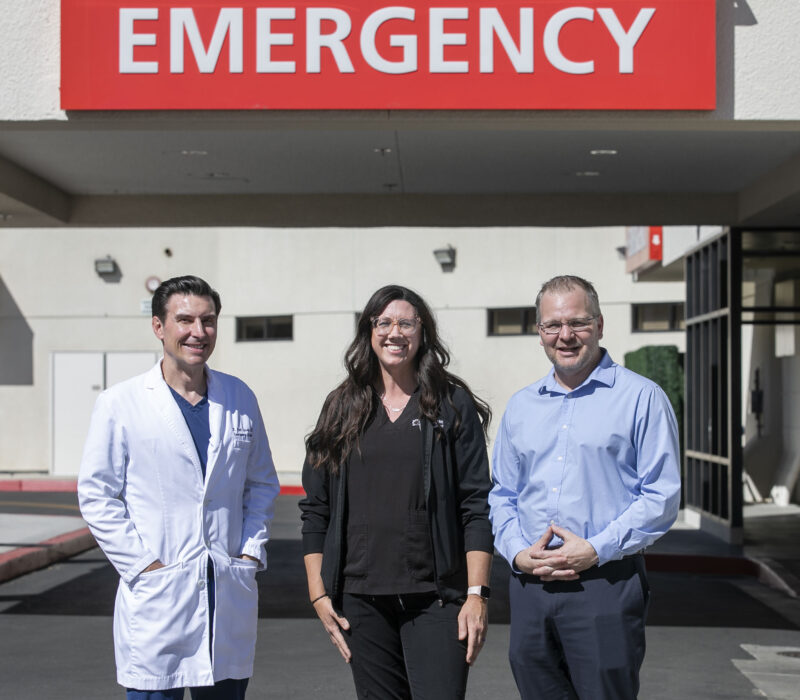
The emergency room at Henry Mayo Newhall Hospital in Valencia cares for all patients at any time of day, any day of the year, regardless of what conditions bring them there and regardless of their ability to pay.
It’s what Jack Casey, medical director of emergency medicine at Henry Mayo, said he loves about the Emergency Department.
“We’re the front door of the hospital,” he said during a recent telephone interview. “We’re here to serve our community.”
Henry Mayo’s Emergency Department is open 24/7 and, according to the hospital’s website, it’s equipped with state-of-the-art medical technology. As a designated Level II Trauma Center, it includes a trauma room and cardiac-monitored beds.
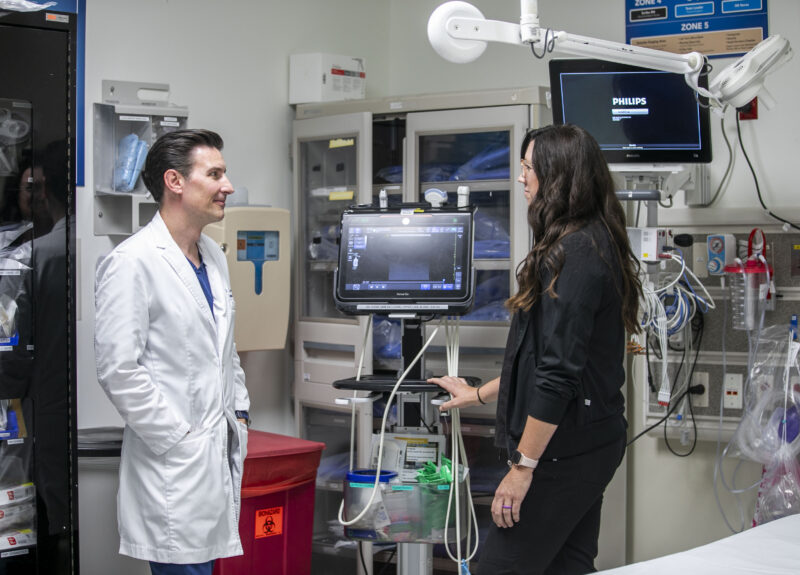
Additionally, the department follows emergency cardiac care standards established by the American Heart Association, is certified as an Emergency Department Approved for Pediatrics and serves as a paramedic base station for Los Angeles County.
Casey and others spoke about the Henry Mayo ER, its importance in the community, how far it’s come over the years, and where it’s going in the future. Casey, who came to the hospital in 2009, discussed his role there and the department’s operations, and he emphasized his passion for patient care.
“That’s what I love most about my job,” he said. “The second component to my work at Henry Mayo is serving as a leader, and in that regard, helping to optimize the care we provide to patients in our department, and helping to build a strong team of physicians and advanced providers.”
Casey said that in medical school, he had several specialties to choose from to practice professionally, but he said emergency services was most attractive to him, in part because it combined so many of the elements of the various specialties that he loves.
According to Casey, the ER sees a high volume of patients, like larger academic centers, but is unique in its community context. He noted improvements in patient evaluation and treatment times.
“The last few years, we’ve implemented a comprehensive, rapid medical evaluation process, which we continue to work on refining, to ensure that all patients are evaluated promptly, and treatment and testing is initiated quickly,” he said. “I would say that over the past year, we’ve made very significant improvements in reducing the amount of time patients spend in the ER before going home or getting admitted to the hospital.”
Upon arrival, each patient is assessed by a trained triage nurse who reviews vital signs, allergies, current medications and medical history to determine the appropriate level of care.
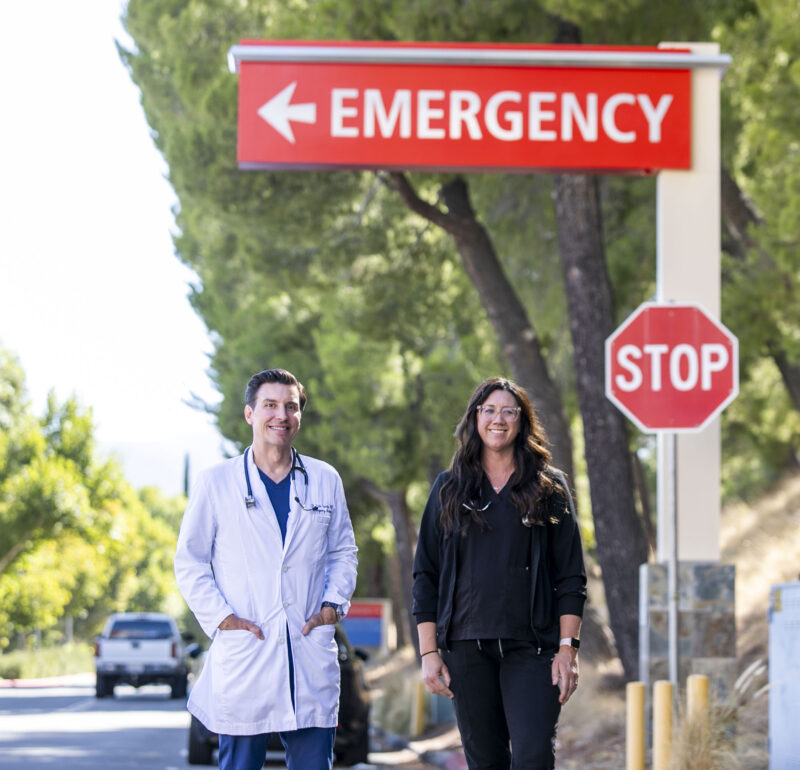
Emma Jerrain, senior clinical registered nurse in Henry Mayo’s Emergency Department, takes on additional responsibilities beyond regular patient care, including serving as relief charge nurse, mentoring new nurses, and participating in department improvement projects. She spoke in more detail about how the rapid medical evaluation process works and how it makes wait times more productive.
For example, she said that when patients go through triage, they see a provider immediately rather than waiting for a bed. The provider can then order necessary tests and draw blood right away. While waiting for results or procedures like CT scans, patients can wait in the waiting room instead of occupying an ER bed.
This process, she added, helps the department handle patients more efficiently by getting diagnostic work started immediately, even when all the monitored beds are full. The process is also particularly useful for patients who don’t need immediate bed placement but still require medical evaluation and testing.
Jerrain mentioned that this was one of the creative solutions emergency services implemented to handle the growing number of patients they’d been seeing over the years. She’s certainly seen that number grow since she began working at the hospital in the early 2000s.
“When I started as a new grad nurse, we maybe saw like 60 patients a day,” Jerrain said during a recent telephone interview. “It might have even been less than that because I remember being on night shift back then, and there were some nights that we didn’t have patients. We had to entertain ourselves.”
Now, however, she said the ER sees around 200 to 250 patients a day. Creative efforts have helped keep their wait times down, which, she added, are “pretty good compared to other facilities.”
Casey said that such improvements have been the results of a team effort at the hospital, giving credit to nurses, techs, advanced providers, doctors and other staff.
“It’s everyone’s collective effort that allows us to succeed in the mission of providing outstanding patient care,” he said.
According to Patrick Moody, Henry Mayo’s director of marketing and public relations, the Emergency Services Department at Henry Mayo opened when the hospital opened on Aug. 3, 1975. Moody noted that ER patient volume has generally increased over the years. There’s been a definite increase over the past 10 years.
In 2015, the ER treated 64,244 patients. By 2024, that number rose to 70,515 — an overall increase of more than 6,000 patients.
The highest pre-pandemic volume occurred in 2017, with 71,034 patients. However, the COVID-19 pandemic seemed to cause a noticeable decline in visits, with volumes dropping to 59,126 in 2020 and reaching a low of 57,527 in 2021 — 6,717 fewer patients than in 2015.
“This was the ‘COVID dip,’” Moody wrote in an email, “when a lot of people delayed care, including, unfortunately, necessary visits to hospital emergency departments. This wasn’t unique to Henry Mayo. It happened all across the country. “
Since then, the hospital’s ER patient volumes have rebounded significantly, with nearly 70,000 patients seen in 2023 and more than 70,500 in 2024.
According to Jerrain, part of what has helped the ER keep up with those numbers was the hospital expansion. The ER itself expanded in 2010, but then the patient tower opened in 2019, adding over 100 more beds to the hospital, and that directly helped the Emergency Department by reducing patient backlog.
Jerrain said that when there are no available beds in the hospital, admitted patients get stuck holding in the Emergency Department, preventing new patients from being seen. With the additional patient beds from the tower, patients can be moved out of the Emergency Department more quickly after being admitted, freeing up ER space to continue treating new patients who come through the doors.
Another improvement that was made during her time at the hospital was going from paper charting to electronic medical records, which she believed was a huge step in efficiency.
“It also came with a lot of safety features, like scanning medications and all these things to just provide quality nursing care safely,” she said. “It cut down on medication errors.”
When Jerrain started as a nurse, Henry Mayo wasn’t a STEMI receiving center or stroke center, which meant they couldn’t perform life-saving procedures for heart attacks or administer clot-busting medication for strokes. At the time, the Emergency Services Department was forced to stabilize critical patients and then transfer them to another hospital, usually Holy Cross Medical Center in Mission Hills, with nurses sometimes having to ride in ambulances to keep patients alive during transport. That process, Jerrain said, could cost valuable time when “time is muscle” for heart attacks and “time is brain” for strokes.
Now that Henry Mayo has these capabilities, including its own cardiac cath lab, emergency services can immediately treat heart-attack patients with stent procedures and stroke patients with clot-busting medication, providing faster, more effective care that often can lead to better patient outcomes and heart function compared to the delays of the transfer process.
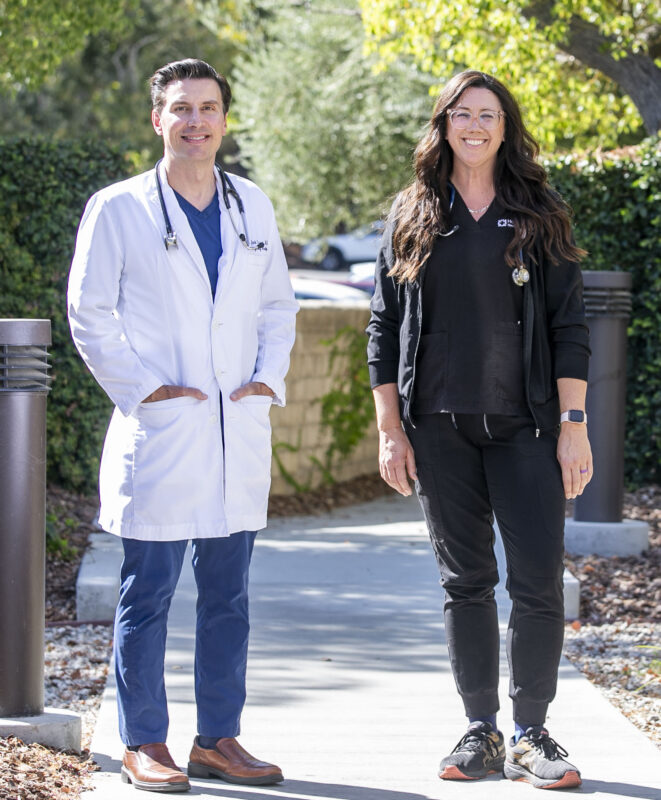
“It was really exciting,” Jerrain said, “because it was a service we could now provide to our community that we didn’t have before, and it literally is lifesaving.”
The Henry Mayo Emergency Services Department continues to grow and improve. According to Moody, the planned EmPATH unit at the hospital, which is expected to open in the summer of 2026, is going to have quite an impact on the ER.
The EmPATH unit (Emergency Psychiatric Assessment, Treatment and Healing unit), according to hospital officials in a previous news story, will transform how mental health crises are handled, shifting from traditional ER care to a more therapeutic, noninstitutional environment.
Supported by a $3 million grant, the unit aims to quickly stabilize patients in crisis and connect them to ongoing care.
Vicki White, chief nursing officer for Henry Mayo, spoke about the EmPATH unit during a previous interview.
“This represents an opportunity for us to really receive patients when they’re in crisis, get them better, sooner, or more stable, and then get them out to wraparound services in the community,” White said, “so that they’re not constantly in crisis or so that they don’t have to be in a long-term behavioral health hospitalization or get involved with law enforcement or suffer what they often suffer because of the debilitating effects of mental health on their lives.”
For Jerrain, being part of this ongoing transformation in emergency services is both professionally meaningful, deeply personal and a chance to directly contribute to the kinds of life-changing care now available at Henry Mayo.
“I want to serve my community, and I want to make a difference in my community,” she said. “As these big changes have come in — these services that have come to our facility — it’s really been great to be and still be a part of those changes and improvements in order to provide the best care to our community.”
Her sense of pride and purpose is echoed by others on the team, including Casey, who shares a similar commitment to the hospital’s mission.
“That’s what we’re there for,” he said. “It’s to take care of patients, and we enjoy it and are happy to be able to serve the community in that way.”