We like to believe we’re good judges of people. In a world that rewards quick decisions and snap judgments, it feels efficient — almost necessary — to size someone up in an instant. But the truth is, we often get those first impressions wrong. What we think we see on the surface rarely tells the whole story underneath. I was reminded of this recently at my gym.
There was a guy I’d see there almost every time I’d go. At first, I didn’t like him. I couldn’t even explain why. Maybe it was his intensity, or the way he carried himself, or perhaps just the way my mind filled in gaps with assumptions. I’d nod politely, keep my distance, and move on. But over time, through small interactions — a quick comment about the workout, a shared laugh about the music playlist, a spot on a tough set — I started to see who he actually was. Not who I assumed he was.
As I got to know him, he turned out to be genuine, humble and surprisingly thoughtful. Someone I now look forward to seeing and talking with. The shift made me pause and think about how easily we confuse personality — the surface-level expression — with character, the substance underneath.
Personality is what we notice right away. It’s the handshake, the facial expression, the tone, the style, the way someone enters a room. It’s the outer shell — often shaped by mood, environment, or habit. Character, on the other hand, reveals itself through consistency, integrity and behavior over time. Personality is what catches the eye. Character is what earns trust.
This distinction matters even more in professional settings, where early impressions can influence collaboration, trust and opportunity. We meet a new colleague, vendor, or customer and instantly, sometimes unconsciously, draw conclusions: “They seem difficult.” “They’re a bit quiet.” “They’re too confident.” “They’re not confident enough.” But people are rarely that simple.
It can take weeks or even months to truly understand how someone works, what motivates them, what stresses them, and what strengths they bring to the table. The coworker who seemed aloof turns out to be thoughtful and thorough. The vendor who appeared overly assertive becomes your most reliable partner. The customer who seemed impatient in the first meeting reveals themselves to be deeply loyal once trust is built. Surface impressions start the story, but they don’t finish it.
My father once told me something when I was younger that I didn’t fully understand at the time, but I appreciate more every year. He said, “Business is no more complicated than people working with other people called colleagues and other people called vendors to serve other people called customers, and money is just the fruit that falls from the tree when you do it well.”
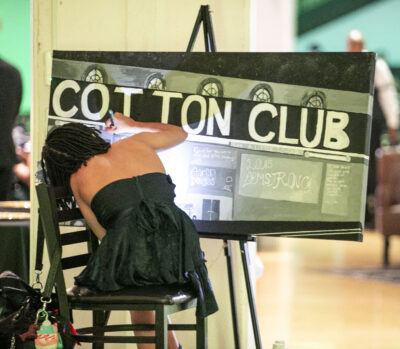
At the heart of that message is the idea that business is fundamentally human. And humans are complex. If we’re too quick to categorize or judge people based on the first brushstroke, we risk missing their full portrait.
The lesson from the guy at my gym — and from many similar moments in life — is that slowing down our judgments creates space for more accurate and meaningful connections. People are rarely who we assume they are at first glance. Most of the time, they’re better. More layered, more interesting, more generous, more capable.
But discovering that requires patience. It requires curiosity. And it requires remembering that first impressions may be part of the story, but they are never the whole story.
If we allow ourselves to look beyond the surface — to move past personality and pay attention to character — we give others the chance to show who they truly are. And just as importantly, we give ourselves the chance to build deeper, richer relationships, whether at the gym, at work, or anywhere else life brings people together.
Paul Butler is a Santa Clarita resident and a client partner with Newleaf Training and Development of Valencia (newleaftd.com). For questions or comments, email Butler at [email protected].