There was good news flowing downstream from the latest Northern California snowpack measurement, local water officials said Monday.
Kevin Strauss, spokesman for the Santa Clarita Valley Water Agency, said in a phone interview Monday that the latest measurements likely mean the area is on pace to meet or exceed last year’s allocation.
The state’s Department of Water Resources announced an initial State Water Project allocation of 10% of requested supplies for the new water year, which started Oct. 1. The figure represents the first water-supply forecast of the season for roughly 27 million Californians and 750,000 acres of farmland served by the State Water Project.
“The initial allocation of 10% is an increase from the allocation that was initially in December of last year. So, it’s a positive sign for the weather to come for the projections of what the snowpack will be in the available water supplies from the State Water Project,” Strauss said.
He added that the forecasts are expected to trend toward a wetter winter, but there’s no certainty.
“We started at a 5% allocation (last year), and we ended up by 50%, so starting at 10(%) doesn’t necessarily foreshadow where we will end, but as the weather and the winter progresses, especially up north, more rainfall, more snowfall can have a positive impact on what our final allocation will be as we get into the spring,” he said.
SCV Water imports about half of its water from the State Water Project, Strauss added, so the wet weather is a benefit.
“So as we prepare for future drier years, we’re not drawing down as many reserves, or we’re not taxing our local system,” he said, adding that means the agency can bank the water it is contractually obligated to purchase for future years.
Speaking of the State Water Project, Strauss also sent out a previous notice about a request in two weeks for local ratepayers to pause their outdoor usage for one week, Dec. 14-22.
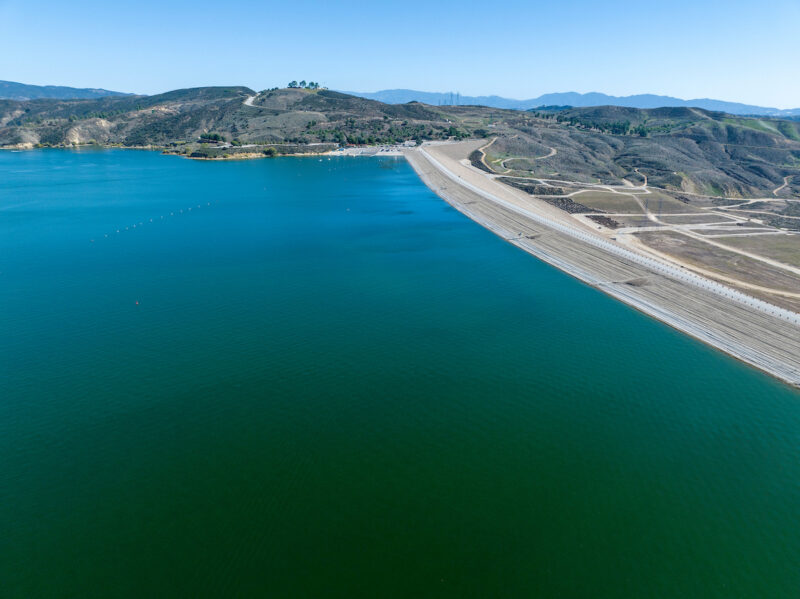
The state is performing maintenance at the Castaic Lake reservoir. The maintenance was previously scheduled to happen in January, but was postponed due to the wildfires.
Strauss said in a December 2024 interview, when the work was originally being noticed, that the pause was due to the agency being cautious about the available supply during that week of work by the state.
The Department of Water Resources will be repairing a pipeline at Castaic Lake, which requires closing SCV Water’s connection.
“We won’t be able to fall back on the imported supply that we typically have just reserved up there if needed,” Strauss said at the time, adding that the bulk of local residential usage is on outside watering.
Both Strauss and Mike Alvord, SCV Water’s director of operations and maintenance, mentioned there was no long-term concern about the supply associated with the conservation request.
“It’s merely a response to the temporary disruption of water delivery while key infrastructure is taken out of service for needed repairs and maintenance,” Alvord said in a news release.
SCV Water is asking its ratepayers to take the following steps to prepare for the brief conservation effort.
“During that time, outdoor water use should be completely turned off so available supplies can be reserved for indoor needs, health and safety and emergencies. The shutoff request extends to all outdoor water uses including but not limited to: irrigating personal landscapes or common areas in business parks or HOAs; washing vehicles by hand; filling or refilling pools; using water for grading in new developments; and any other major uses of water that can be postponed until the following week.”
Strauss added that the time of year picked was chosen as a way to minimize the impact.
“So, using outdoor water takes the biggest strain on our system,” Strauss said, adding that this time of year there’s a little more moisture in the air, and most plants, including lawns, should be able to last the week.
“And that will help us keep that supply stored in our bank, because we’re relying on our local storage in the water tanks, our local groundwater, to make sure we have the production capability, we have the storage necessary for indoor uses, for the health care industry, at the hospital, for emergency services, If there were to be a fire or other disaster,” he added, “we want to make sure we have that supply for all those critical uses.”