By David Hegg
As the New Year has arrived, I’ve been pondering the idea of “stepping out of my comfort zone.” Like me, you’ve heard this many times. “Step out of your comfort zone and try it!” For some reason, other people like to make us do just that, to go outside the supposed boundaries of our comfort.
Those who call us to do so make it sound like comfort is a bad thing, a self-centered thing, a barrier to better living. All this time I’ve believed comfort was a good thing! And so I’ve been thinking about this and have come to a conclusion: Calling someone to “step out of their comfort zone” is foolish and actually quite counterproductive. If the thing you want them to do is “outside” their comfort zone, eventually they’ll retreat into the zone when you’re not looking. This is especially true if you keep telling them that the “thing” is actually uncomfortable! So, I have a better idea.
Here it is. Instead of saying “step out of your comfort zone” to get me to do something uncomfortable, say “enlarge your comfort zone to encompass a new opportunity.” Ah! Enlarging my comfort zone calls on me to do three things. First, I must believe there are more “comfortable” things than those I already know in my safe little zone. Second, I must agree, at least to some extent, that what is outside my comfort zone may be helpful, meaningful, even fun. Lastly, I must be open to the possibility that expanding my zone to encompass something new has a better-than-even chance of raising my quality of life. Isn’t that what we all want anyway? Don’t we want some more “comfortable” things that add to the pleasant variety of life?
The real problem is change. But if we’re playing with open eyes, we have to agree that change is inevitable. If the business books are correct, the pace of change is not going to slow down anytime soon. Given this, it is counterproductive to resist change. And I’ll go even further and say people don’t really hate change. Here’s why:
When people say, “I hate change,” what they’re really saying is, “I hate the thought that change might make me uncomfortable.” They begin with the premise that change will be bad, even though there is a case to be made that change is often good. God must have thought change was a good idea when He decided to make the sun rise and set every day. The Earth is constantly rotating, bringing the change of light and darkness, while it is steadily revolving around the sun, bringing the change of seasons. Trees change colors, grass grows, and we grow older every day. Nothing remains static: not our eyesight, our nails, our hair, or our weight, sadly! As human beings, we are “change machines.” Every day we are different, and were it not so, we would be bored. Remember? “Variety is the spice of life.” We need change, and we actually love it … so long as we can still be comfortable!
We also love change that is outside of ourselves. Who doesn’t enjoy a new purchase, a new car, a new couch? Who doesn’t enjoy a new restaurant find, a new book, a new blouse, or a suit coat? And what about the growth and maturity of a child? Don’t we work hard to bring about change in our kids, as they progress from self-centered brats into helpful, loving adults? Don’t we pray for change when they’re in junior high? And wasn’t the most significant change in all of life something we actually made happen when we decided to have kids in the first place? Talk about change!
So why do we always hear that “people hate change?” The truth is that people hate being uncomfortable, and this preoccupation with self prevents most of us from even considering that change can be good.
The real problem with change is that we’ve become so comfortable with ourselves. When Jesus came into this world, what He brought was God’s mirror. He forced us to look at ourselves as God sees us, with all of our brokenness in plain sight. But then, through the power of His redemptive love, He also called us to trust that he can change us through faith. Ultimately, change is our only hope.
So, as you settle on your list of New Year’s resolutions, try this: Think of something you’re uncomfortable doing, but would really improve your life. Then check off all the myths you currently believe that keep you from being comfortable doing what you know is best. Then do it! And when you find the reward change can bring you, you won’t be tempted to retreat to a zone of comfort. Instead, you’ll find your zone has grown to encompass something that genuinely improves your place in this world. So, don’t settle for “stepping out of your comfort zone.” Instead, be bold and grow your zone!
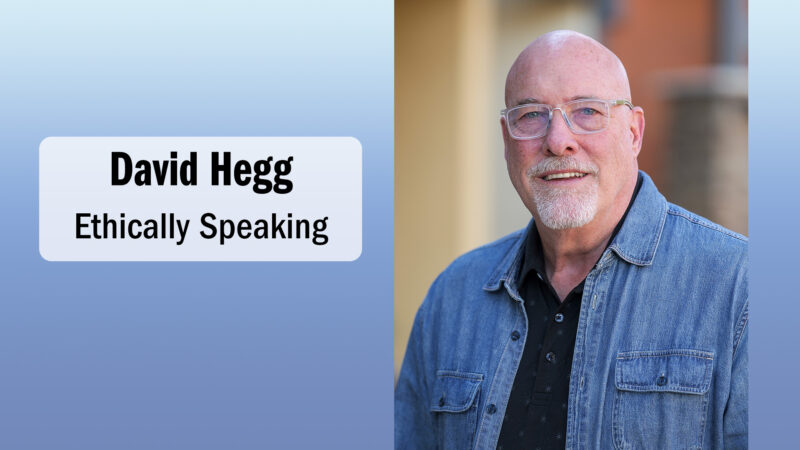
Local resident David Hegg is senior pastor of Grace Baptist Church. “Ethically Speaking” appears Sundays.