Whether you’re an employee, an entrepreneur, or retired from either path, please join me in raising a glass to our shared hopes — and perhaps even prayers — for the American workplace of 2026. What follows is my list of hopes for the year ahead across our nation’s workplaces.
- Let’s Mind Our Language
Are you noticing how much more coarse language has crept into the workplace? I certainly am. I’m often shocked to hear seemingly “professional” people using words that still cause offense to colleagues, customers and vendors of reasonable mind and moral fortitude.
I suspect that streaming television and what I refer to as “antisocial” media have played a role in normalizing this crudeness. Someone recently said to me, “Oh Paul, what you call bad language is the new good language.” On what workplace planet does “bad” now mean “good”?
My hope is that leaders and human resources professionals will go retro — seeing themselves once again as the adults in the room — and reduce this vitriol through both example and appropriate corrective processes. There is no shortage of words available to express disappointment, frustration, or delight at work in this Land of the Free (Choice of Words).
2. Let’s Be Kinder
I’ve come to believe that at the heart of most workplace conflict — whether with a customer, colleague, or vendor — lies a lack of kindness on one or both sides.
When we show kindness, it’s like pouring water on a kindling fire. When we do the opposite — by lording authority over others, making unreasonable demands, or cutting customers off mid-sentence because they aren’t listening to “our policy”—it’s the equivalent of throwing gasoline on the flames.
Speaking louder and longer than the other person is a reliable way to lose a client, disengage a direct report, or turn a vendor into a mere transaction rather than a trusted partner. We have two ears and one mouth — may we all use them in that proportion over the next 365 days.
3. Real (Human) Intelligence
We hear the phrase “artificial intelligence” constantly. My hope for 2026 is that we recommit to bringing real (human) intelligence to the work we do. I often say that all organizations are, in effect, volunteer organizations: People choose how much of their intelligence to give based on how much they trust their leadership. While that reality can be discouraging, it remains economically true. My hope is that proactive people will continue to bring their very best ideas to work every day.
Real (human) intelligence means seeking opportunities to learn more, do more and be more at work. It is human beings who generate new ideas. It is human beings who choose to go the extra mile to deliver excellent customer service. And it is human beings who become the coworkers and vendors we respect, enjoy and love to work with.
4. Think Like an Owner
Imagine a workplace where everyone thought and acted like an owner. Consider what that mindset would do for income, expenses, assets, liabilities and overall business equity — what we call “net worth” in personal finance.
Every organization, regardless of entity-type, must bring in more than it spends and must own more than it owes. Financial intelligence is both a mindset and a skill set — one that few employees possess, yet every organization desperately needs.
There is no greater job security than building a personal reputation as someone who understands how the organization makes money, speaks the language of business, and can clearly connect their work to the financial drivers of the enterprise.
Peter Drucker (1909–2005), often called the father of modern management, famously argued that the purpose of management is to make people’s strengths productive and to call forth the “better angels” of their nature. By committing to mind our language, act with kindness, apply our human intelligence, and think like owners, may we each gainfully employ our better angels at our workplaces in 2026.
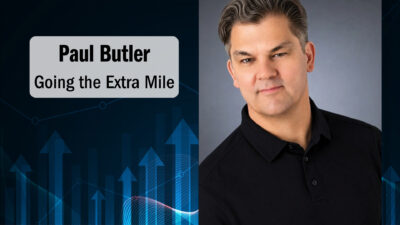
Paul Butler is a Santa Clarita resident and a client partner with Newleaf Training and Development of Valencia (newleaftd.com). For questions or comments, email Butler at [email protected].