The city of Santa Clarita’s Transit Division is slowly making the change from compressed natural gases, or CNG, to hydrogen fuel cell buses, hoping the entire fleet will have zero emissions by the year 2040.
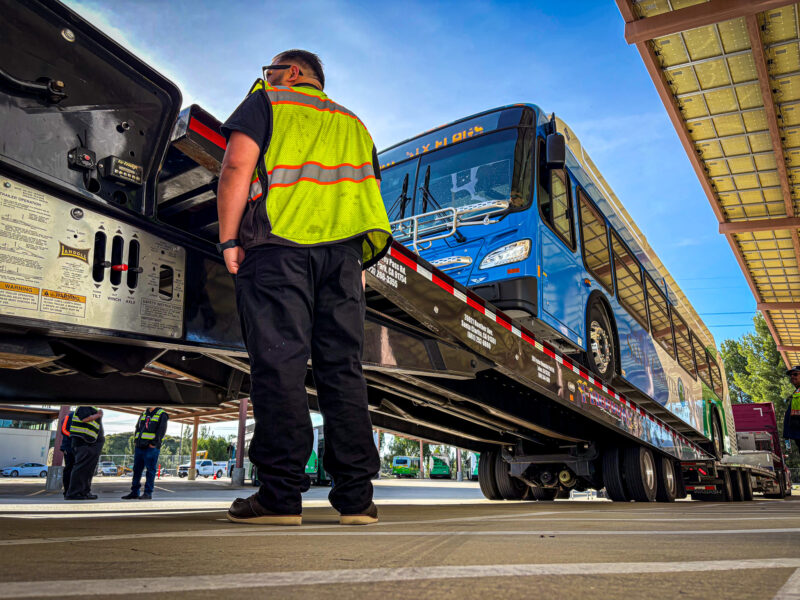
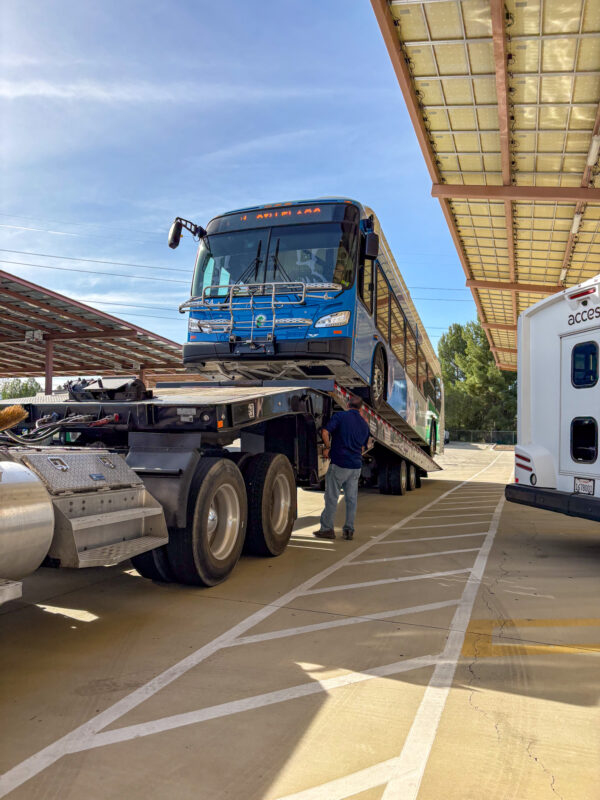
The Transit Division received seven buses earlier this month to kick off the new initiative to lessen the carbon footprint of the city’s public transportation.
Adrian Aguilar, a transit manager for the city, told The Signal on Tuesday morning that the new buses were 40 feet long and also use batteries to charge and run.
“But rather than having to plug them in and charge for an extended period of time, they are equipped with a hydrogen fuel cell. So basically, what it does is it uses hydrogen, and then the fuel cell takes that hydrogen and generates electricity,” Aguilar said. “So that electricity that’s generated on board the vehicle is what charges the batteries and then also powers the electric motor on the bus itself.”
Aguilar said that the process of picking the hydrogen fuel cell buses involved looking at the transit network as a whole.
“We looked at how far a bus typically travels in a day, we looked at the length of our routes and how, how many miles our buses operate … when I say how long they operate, I mean, both in terms of miles and in terms of hours … so we looked at that data, and those, and we use that data as our baseline,” Aguilar said.
Aguilar said the new buses take only 10-15 minutes to refuel and be ready to go back into service while the older buses take a few hours before they are ready to go back out. He said the lengthy process would set back the operations and would require the number of working buses to be scaled back or have to bring in additional service buses to compensate.
“The city has a replacement schedule where, where we are, we’re replacing buses (because) the useful life of a bus is 12 years. So, we’re replacing 1/12th of our fleet every year,” Aguilar said. “So, as we, as a bus reaches its retirement age, we are in the process of replacing them with a newer, zero-emission vehicle like the hydrogen fuel cell … We’re not taking any vehicles out of service early.”
There are currently 56 transit buses in the city’s fleet and seven hydrogen fuel cell buses.
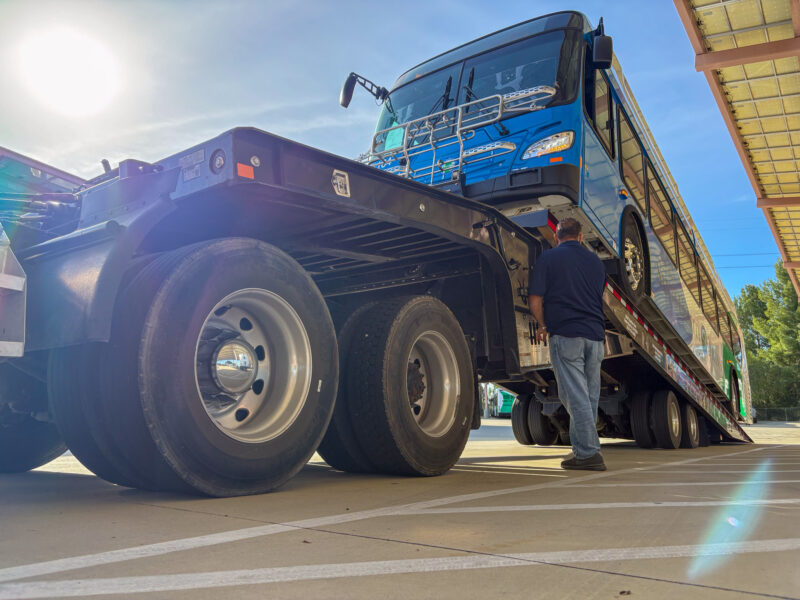
The new buses were ordered in 2024 and took about 18-24 months to be built. Each bus is built by hand in Alabama, Aguilar said.
“These are the first vehicles that have arrived and that they’re being, that will be introduced into our fleet. So, this will give us an opportunity to learn the technology, see how they operate, kind of make tweaks as we need, as we need to and then we’re continuing to place orders for buses,” Aguilar said.
He said the Santa Clarita City Council approved three more buses recently, and they are expected to arrive in the next 18 months.
“So, every year we place an order for new buses and with the idea is that it will take about a year and a half to two years for them to arrive, go into service, so we schedule or we plan that replacement accordingly,” Aguilar said.