The Environmental Protection Agency ordered Chiquita Canyon Landfill to address “an imminent threat to surrounding communities” in a recent order, based on problems at the landfill seen during a recent tour of the facility.
The issues were observed by EPA officials during a March 5 visit of Waste Connections’ Castaic property, which has been subject to oversight from the federal agency, among others, for more than three years.
Regulators have said the problems there — a 60-acres-and-growing underground fire, and a sickening stench caused by more than a million gallons of stinky leachate it produces each week — could last for the next 10 to 20 years.
But the March 17 EPA orders might be indicators of the most significant threat yet to the community’s health: that the slope keeping the landfill’s leachate away from the region’s water table is failing.
EPA regulators observed the “potential slope failure at the southmost end of the western toe of the landfill,” during a March 5 inspection, according to the order.
“CCL observed that the leachate buildup had been exacerbated by the suspension of operation of leachate extraction pumps since Feb. 15,” which was due to space constraints, according to the EPA letter. CCL also stated that approximately 1 in 6 gallons of the leachate produced by the landfill over the last year was generated in the sump near the west slope.
The landfill also said the “welding between the landfill bottom liner and the top geomembrane cover completed during the West Slope Toe Drain Installation Project has been breached in certain areas, leading to the observable leachate seepage beneath the cover,” according to the EPA’s correspondence.
In addition to causing increased leachate seeps between the landfill’s geomembrane cover of the landfill fire and the liner, the buildup of leachate could cause a failure of the west slope “such that saturated material could collapse towards the stormwater channel,” per the EPA.
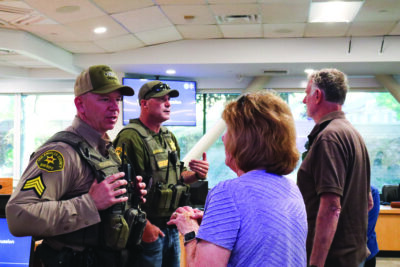
In response to the concerns raised by the federal agency last month, L.A. County 5th District Supervisor Kathryn Barger shared a letter with her Santa Clarita Valley constituents Tuesday, during a Chiquita Canyon Landfill Community Advisory Committee meeting at the Castaic Library.
The letter dated Tuesday, co-signed by Barbara Ferrer, the county’s director of Public Health, calls for urgency from John Perkey, Waste Connections vice president and legal counsel, and Kevin Green, the landfill’s general manager.
“The EPA’s directive makes clear that these conditions may constitute an imminent and substantial endangerment to public health and welfare. In response, CCL has been ordered to revise its West Slope Contingency Plans to include enhanced monitoring and concrete emergency response actions, including daily slope assessments and mitigation measures for landfill gas emissions and odors in the event of failure,” Barger and Ferrer wrote.
Then Barger called on the landfill’s parent company, Waste Connections, to do more, including take care of impacted residents.
“While the EPA’s directives are a necessary step, more must be done to ensure the safety of nearby residents in the event of a slope failure or other emergency,” she added. “At a minimum, such contingency measures must include temporary relocation and housing accommodations for residents.”
The landfill issued a statement about its work on the EPA’s concerns Wednesday morning through spokesman John Musella. The statement indicated the landfill “has been working closely with local, state, and federal regulators to address the Elevated Temperature Landfill (ETLF) event (or reaction) taking place deep within a lined, but older and inactive portion of the Chiquita Canyon Landfill and any related impacts.”
Musella said the landfill “sought direct engagement with the U.S. (EPA) to help cut through the bureaucratic complexity in California and align everyone around a single, science-based action plan,” according to this statement.
Musella also indicated the landfill “submitted the plans under the EPA orders, and we are waiting for comments,” in a text message Wednesday. The response did not address Barger’s call for assistance.
While Barger shared her demands with residents at the advisory committee — where residents have been hearing for years how Chiquita Canyon Landfill has been “working hand in glove” with its regulators — there’s no guarantee that Chiquita Canyon Landfill will comply.
The county’s strategy of holding the landfill responsible — and making sure the landfill takes care of its responsibilities to residents — was cited early on as a reason behind not declaring a state of emergency.
That worked — for a while.
The landfill created a relocation fund for impacted SCV residents in March 2024.
However, in February 2025, the landfill announced its relief fund was wrapping up that month, amid claims from the facility that the problem was getting better. Environmental regulators would later describe the data the landfill used to justify its claims as biased in community meetings and a hearing in front of the California Air Resources Board.
L.A. County saw challenges in that strategy by December 2024, when it began suing the landfill’s operators. That effort is still working its way through the federal courts, where thousands of lawsuits from residents have been consolidated into a case expected to take years to litigate.
Part of the county’s suit is seeking an injunction to order the reinstatement of the relief fund.
CARB strengthened its air regulations last year due in part to residents’ testimony about the growing problems at Chiquita.
But despite the growing calls for more regulations, residents’ frustrations remain.
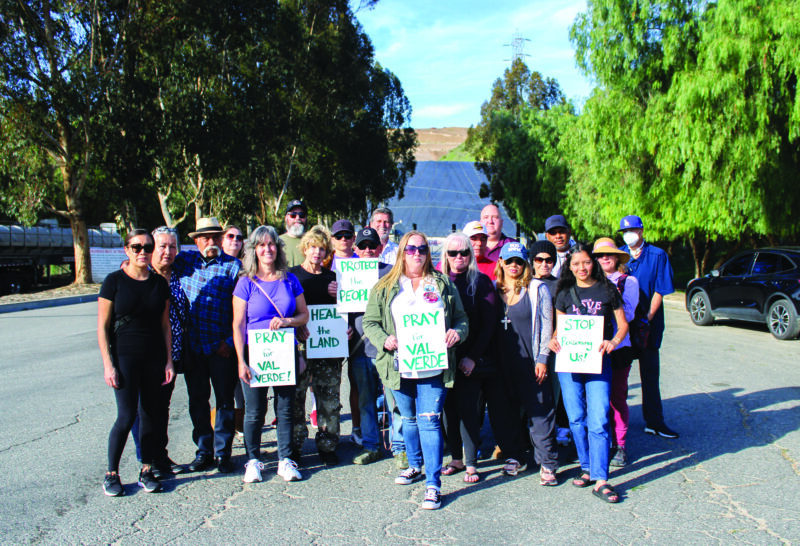
“My very basic questions are: How is it that we are in this situation? I mean, how are you all getting paychecks? It’s literally your job to keep these things from happening,” said Nora Lynne Clemmons, one of the panelists who said she moved to the area in 2019, questioning CARB during a July 23 panel the agency held at College of the Canyons prior to its hearings. “And I want to sound, you know, hopeful. And I want to say, you know, ‘Thanks — thanks for having these conversations.’ But it really is too late. It’s just it’s late, it’s … we’re in it, and we cannot escape.”
This is not the first time the landfill had concerns about health concerns about its leachate response.
In December, landfill regulators sent a letter to the landfill over its plans to let a 7,000-gallon leak “evaporate” from where it had leaked, into a stormwater channel, because the leak was too hard to access.
The Santa Clarita Valley Water Agency has already expressed written concerns about potential impacts to the region’s water table from the contamination in a 2024 letter to the landfill’s regulators.