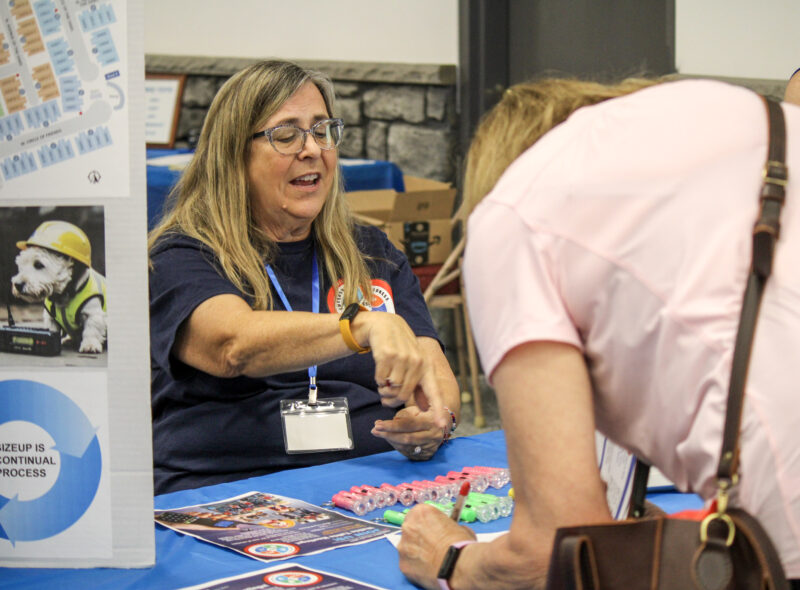
In the event of a major disaster near Friendly Valley, members would likely have to shelter in place — and organize quickly.
That’s why having a plan is especially important for the members of the 11 homeowners associations that make up the Santa Clarita retirement community, said Brenda Trunzo, a Friendly Valley resident.
“A lot of people don’t drive, and they’re sort of dependent on other people to help them, so we’re trying to educate our community,” Trunzo said. “From what I understand with the city of Santa Clarita, we’re probably, so far, the only community here in Santa Clarita that’s gotten as far as we have in this emergency preparedness for our community.”
That’s where the Friendly Valley Emergency Preparedness Community comes in.
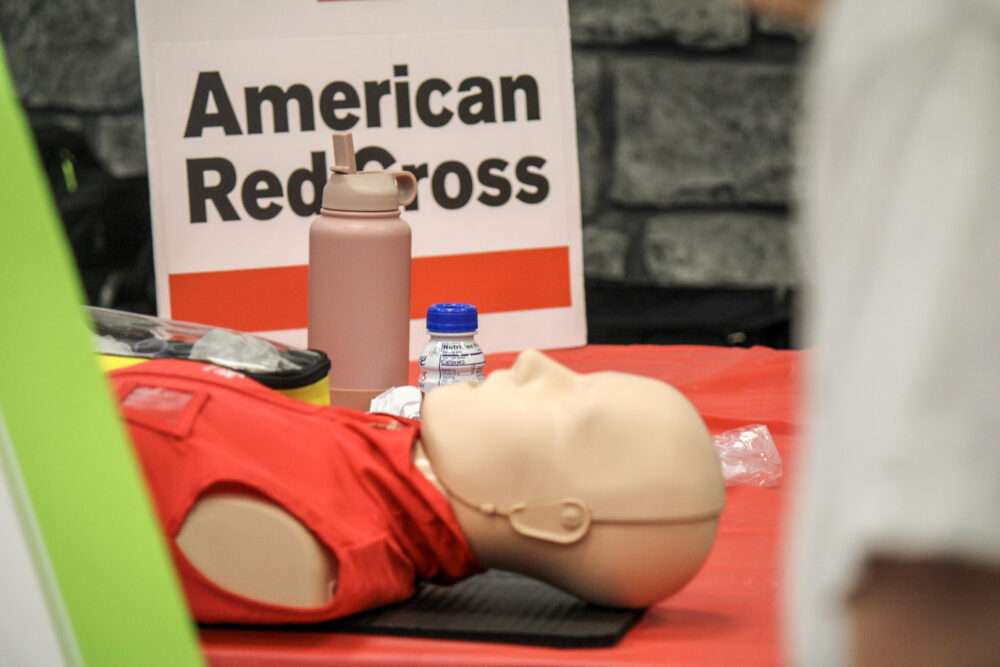
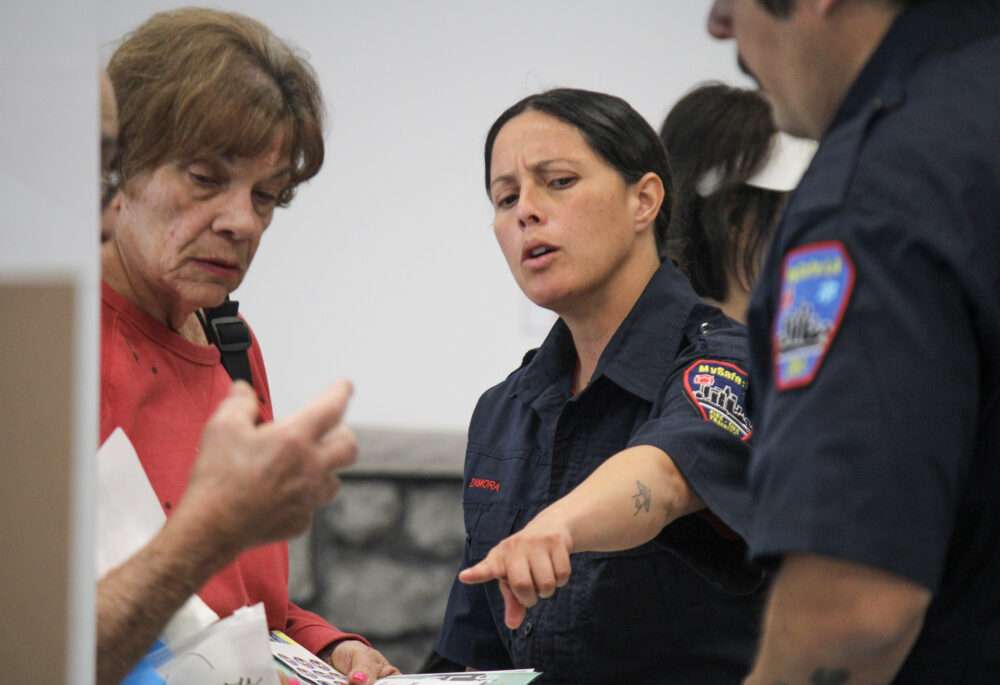
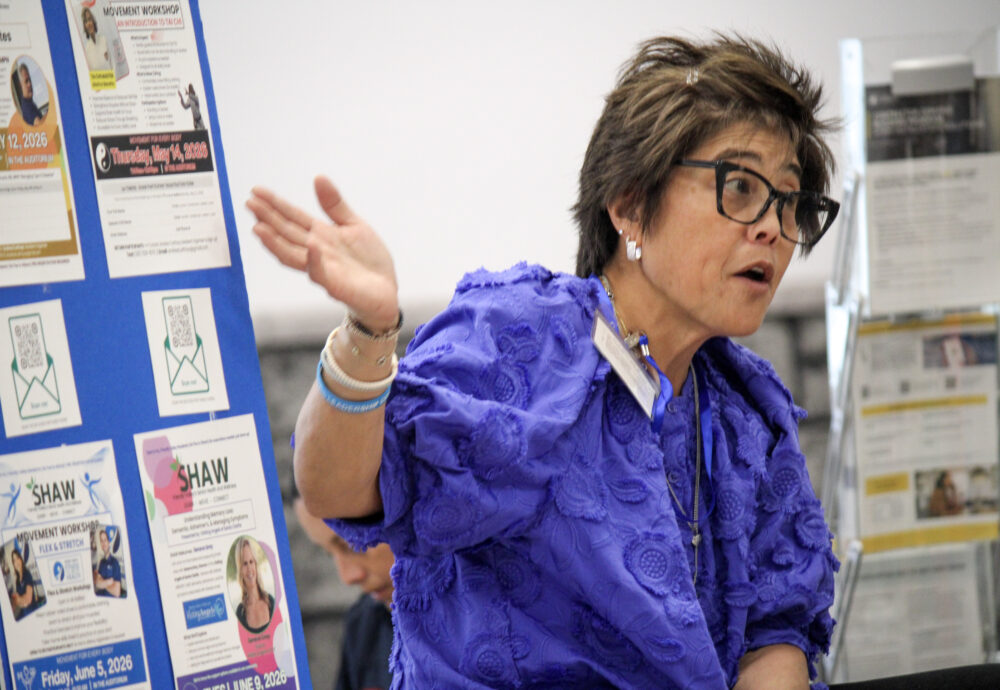
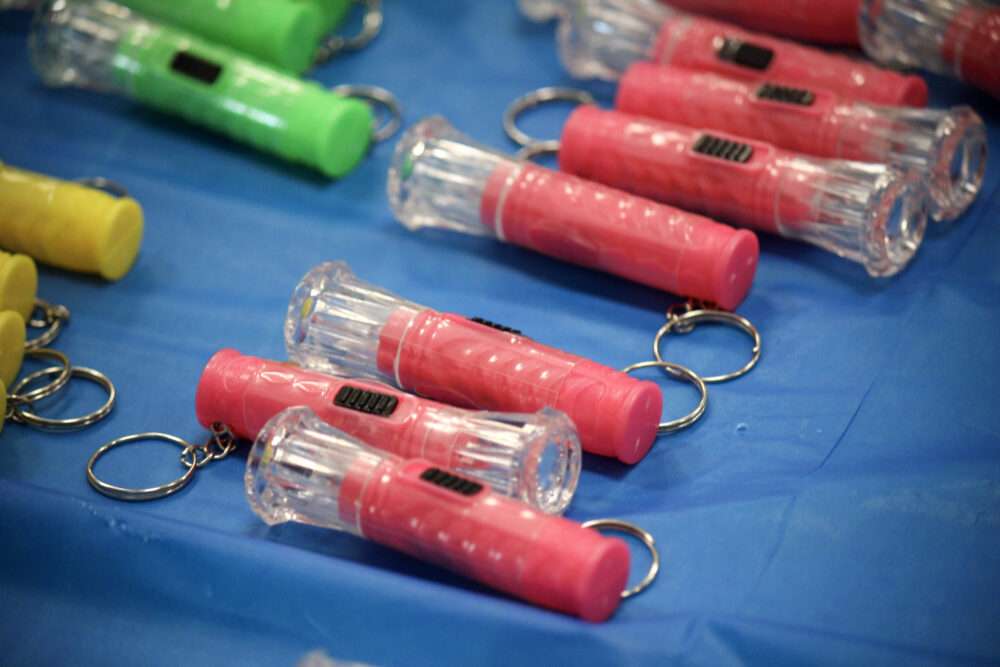
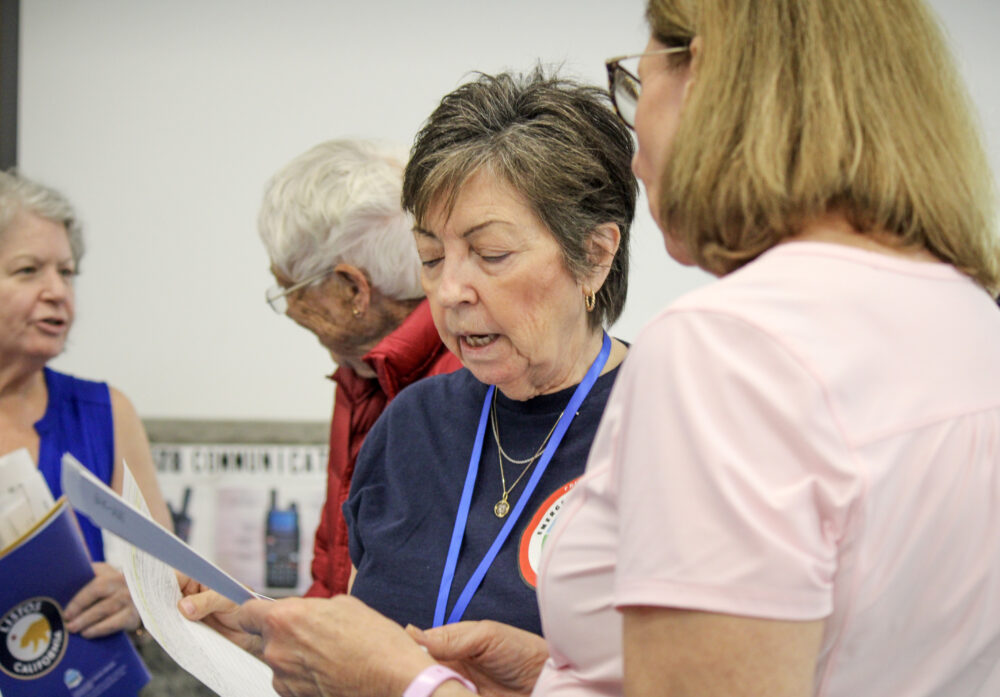
The Friendly Valley EPC’s Disaster Expo brought representatives from the L.A. County Fire Department, California’s Disability Disaster Access and Resources program, the Red Cross, Assemblywoman Pilar Schiavo’s office and others to the Friendly Valley country club auditorium Tuesday, where disaster resources and information on what to do, who to contact and how to do it were circulated to residents.
Friendly Valley has come a long way in the past couple of years, as far as being disaster-ready, said Allison Rhoden, the EPC chairperson.
Officially established in June 2024, the group has a five-member core team, with subcommittees operating under their umbrella, such as the walkie talkie committee. Rhoden said that, when she joined the group about 10 years ago, the loose-knit disaster planning group was called the Emergency Preparedness Committee.
Several years went by without an official disaster plan, Rhoden said.
“I said, ‘Well, we should have some programs. We should be engaging the community.’ So somehow I ended up being the chairperson, because I opened my mouth,” Rhoden said. “This whole expo fair … I’ve done things smaller than this, but I’ve seen them put on before, and I wanted to bring it to the community.”
Nowadays, the EPC organizes drills, schedules informational sessions — next month, L.A. County firefighters will be teaching residents about chemical spills, Rhoden said — and now, expos.
Mike Wolfe, who, along with Trunzo, is a member of the EPC’s core team, said he’d had similar feelings about the community’s lack of a solid plan in the event of a major disaster when he moved to Friendly Valley a year and a half ago.
“I came here a year and a half ago and they said, ‘Well, we’ve got 11 associations, and they all have their own plan or don’t.’ So this is not planned for disaster,” Wolfe said. “So I said, ‘We need to have one organization overall.’”
Wolfe was a volunteer with the Red Cross for 25 years. He became a disaster volunteer at his wife’s recommendation after the Whittier Narrows earthquake in 1987 — a wake-up call for many Californians, he said — and was the duty officer the morning of the 1994 Northridge earthquake that shook the San Fernando Valley.
“‘Okay, here’s your Valley. It’s all yours. What do you want to do?’” was the sentiment, Wolfe said. “My goodness, wow. Two kids, the dog and the wife in the car.”
Wolfe promptly set up an emergency shelter, a skill that he’s brought to Friendly Valley. In the event of a catastrophe, Wolfe said residents would use their walkie talkies — there are more than 60 throughout the community, and five more residents just received their amateur ham radio licenses, he said — to communicate.
Communications will pass to a centralized location, likely the country club auditorium, or a pop-up in the parking lot.
“We’ll set up an operation center so we can coordinate the information, and then we can use our radios to call the Sheriff’s, Fire Department and City Hall and hospital, because they’re all going to be on walkie talkies. They’re not going to be on phones, right?” Wolfe said.
Members of EPC are keenly aware of why it’s so important for Friendly Valley residents to have such a detailed plan in place in the event of a disaster. But with decades of worldly knowledge under their belts, they may be the most suited to do it.
“This age group is very vulnerable, and a lot of them don’t drive anymore. They have all kinds of disabilities,” Rhoden said. “So I decided, well, I’m retired. I might as well use my information for something.”