Liberty Harbor | Jersey City Real Estate | Summer 2026
Most people don’t think to ask about a building’s power infrastructure until after they’ve signed the lease, especially in dense waterfront neighborhoods like downtown Jersey City.
It matters. How a building handles power outages, communicates with residents and supports them during repairs says a lot about its management.
Here’s what to ask, what to watch for and how Liberty Harbor stacks up as an example.
Urban Apartment Infrastructure: What Prospective Residents Often Overlook
Most people evaluating an apartment focus on the unit itself, such as layout, finishes, light and views. The building’s infrastructure is in the background. That makes sense until the background becomes the foreground.
The questions worth asking about any building before you sign:
- What backup power systems does the building have, and what do they cover?
- When was the building’s electrical infrastructure last significantly upgraded?
- Does the building have an on-site management team, or is it remotely managed?
- How does the building communicate with residents during utility disruptions?
- What is the building’s protocol for supporting residents during extended outages?
These aren’t trick questions. A well-run building answers them straight. If you get vague or evasive responses, pay attention. That’s your answer.
How Waterfront Buildings Like Liberty Harbor Are Designed for Power Resilience
Urban waterfronts come with their own set of challenges. Taller buildings mean more electric pumps and elevators. These areas take the brunt of storms and grid strain during heat waves. Residents move here for the energy, transit, restaurants, and everything close by, so they expect more from where they live.
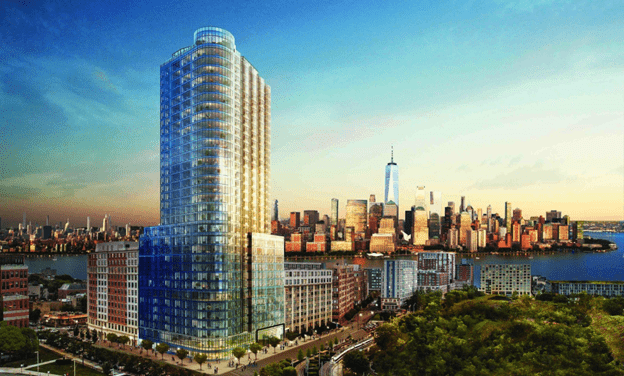
Liberty Harbor was built with the whole neighborhood in mind, not just one building at a time. Electrical, backup power and mechanical systems were designed for people planning to stay, not for the bare minimum.
The result: backup systems cover what matters, an on-site team keeps things running, and residents stay in the loop.
What Generator Systems Mean for Residents — and When They Matter
Residential generators have one job: keep essential services running when the main power goes out. Knowing what that actually covers helps everyone stay realistic.
During a grid outage, the standby generator kicks in to power the basics: emergency lights, fire safety, one elevator and sometimes water pressure. What gets covered depends on the generator’s size and setup.
If there’s an internal electrical issue, the generator does the same thing: keeps essentials running while contractors fix the problem.
For residents, three things shape the generator experience: how close it is to your unit, how long it runs and how well management communicates. The first two are set. The third is where management can actually make a difference.
How Liberty Harbor Approaches Resident Communication Around Power Events
When infrastructure issues hit, Liberty Harbor’s on-site team leads with clear, direct communication. Here’s how it works:
- Residents get notified right away when something goes down—what’s affected, what’s backed up, no guesswork.
- If it drags on, we keep residents in the loop with regular updates. No one’s left wondering what’s happening.
- We reach out directly to anyone hit hardest.
- We spell out what support’s available, rent adjustments or alternative accommodations if needed.
- Confirmation of full restoration when normal service resumes
This isn’t a theory. The team’s on-site, in the building, handling communication face-to-face, not phoning it in from a call center.
Why Infrastructure Transparency Is a Marker of a Well-Managed Community
Living in a residential building isn’t a quick transaction. You’re building your daily life here, not just signing a lease. The infrastructure behind that experience matters.
Residents trust communities that are upfront about their infrastructure. When management is clear about what works, what doesn’t and why, and keeps people in the loop, trust builds over time.
You see that trust in higher retention, stronger resident communities and smoother crisis management. Direct, consistent communication isn’t just a nice-to-have; it’s what sets the best buildings apart.
A building’s infrastructure is a test that only comes up occasionally. But when it does, the result reveals a lot about how the building actually treats its residents.
Liberty Harbor’s approach to power and communication puts residents first. Transparent, present, and accountable, that’s the standard any waterfront community should meet.