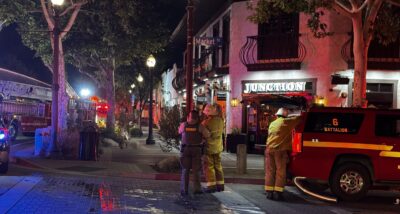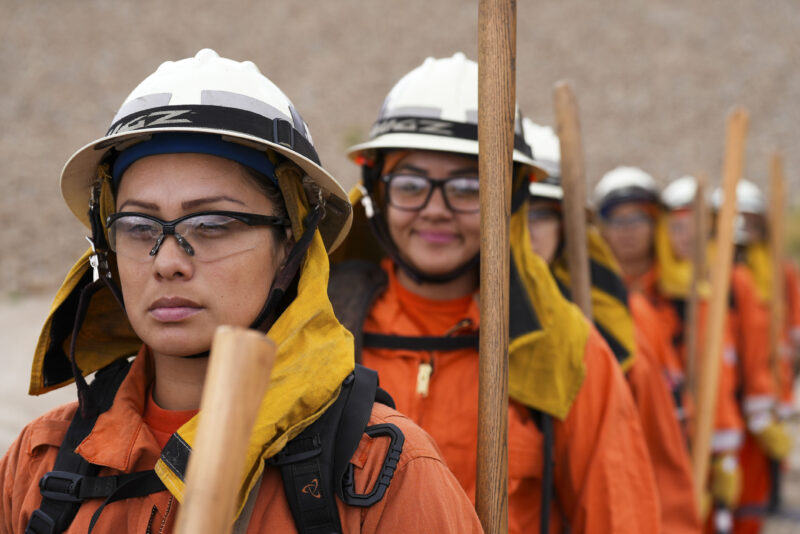
Fire season has started, and to better combat the wildfires that take place in the coming months, the California Department of Corrections and Rehabilitation, in addition to the Los Angeles County Fire Department, has been continuing training drills at locations such as Castaic Lake.
As of April, “there are 920 incarcerated people working at fire camps. Approximately 1,210 are fire line-qualified crew members. In addition to hand crews, approximately 700 camp participants work as support and maintenance staff such as cooks, laundry workers, landscapers, and water treatment plant operators,” according to a fact sheet provided by the CDCR.
Lt. Manny Nuñez, camp commander of the Francisquito Conservation Camp No. 4, was among those participating in drills last week at the lake.
“The CDCR has been partnering with the Los Angeles County Fire Department since the 1980s, and this program has been around for a very long time. These drills have been going on for many years, and often occur in the spring, just before fire season is predicted to begin,” Nuñez said. “That’s when they get the training and the crews scheduled to get acclimated to working in unison, working on the tactics that are required for wildland firefighting missions, and we get everybody trained and prepared, so that … they’re familiar with working in unison,” Nuñez said.
According to Nuñez, the training takes between three to four weeks to ensure that the crews are well-equipped and ready.
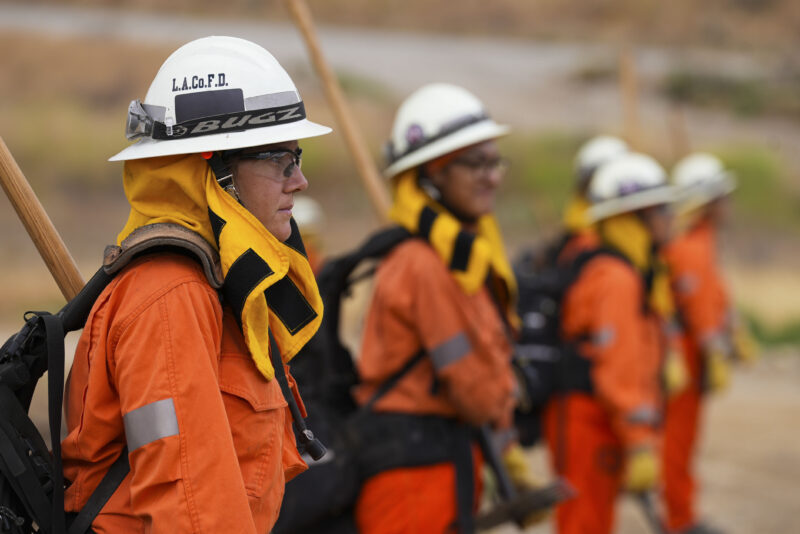
“The grass drill that they’re currently doing they schedule typically for about two weeks, and then they have another set of drills coming up where they incorporate other firefighting elements, such as fire engines and water tankers and other apparatus that are usually used out on the fire line,” Nuñez said. “It’s all weather-permitting — some years they get a little more training than others. When it’s really hot, they’re not going to train as much because there’s a greater risk of fire spreading.”
While some crew members have been associated with this training for a couple of years, some are learning how to prepare for their first fire season.
“The [crew members] are training daily, even outside of these annually scheduled spring and grass drills. They’re doing daily hikes and physical fitness preparedness exercises, and part of their work day is practicing these fire line techniques and working in unison with one another. That’s part of their daily job duties,” Nuñez said. “We call them grade assignments, and they can be anything from trail maintenance up in the hills behind the camp or U.S. forestry campground maintenance, or any public works type of assistance. Even if this is their first fire season, their daily training comes to fruition during these annual scheduled training.”
During the drills, sections of grass are set on fire; the crew members focus on not only putting out the fire, but also finding ways to actively prevent the spread — all while learning to communicate quickly and efficiently.
“The way the training is held, you’re not going to have every single hand crew present on every day of training. You might have four crews one day and then a whole other set of four the next day,” Nuñez said. “Their primary focus is on communication — communication with their crew and crew leader. The next important thing is constructing a handline, and a handline is where they take their given tool, and they create a bare mineral soil gap in the area that they’re working that acts as a fire break.”
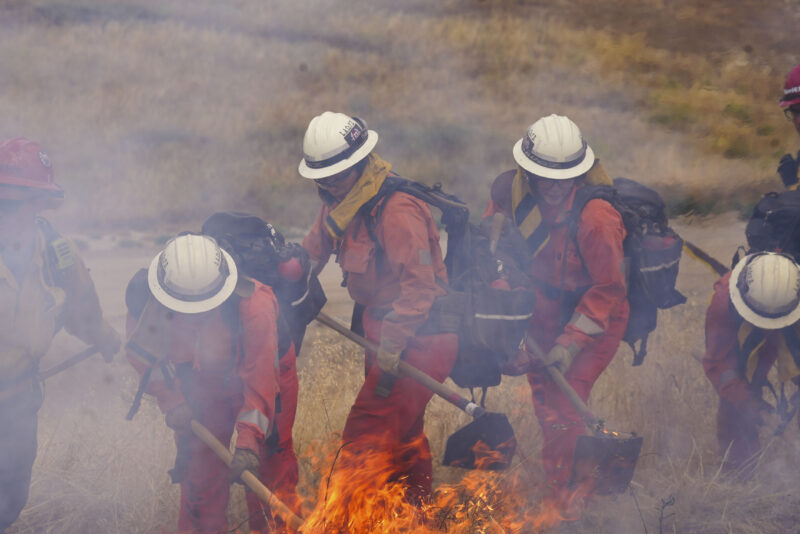
The crew is tasked with removing any brush, foliage, weed or grass, and scraping the growth away from the root, according to Nuñez.
“They scrape the growth away all the way down to the bare mineral soil, so that as the fire burns up to that fire break that they constructed, it theoretically slows down or dies,” Nuñez said. “Our crews are 14 to 16 men on the line, and they’re working with fire engines, water tenders. The drills vary in size but these trainings simulate real-life events, but are mindful of public safety to keep the training manageable and so that it doesn’t present a threat to the surrounding area.”
As the weather gets warmer and the threat of fire becomes imminent throughout the summer, Nuñez encourages residents to always follow and adhere to the rules of public safety officials.
“Anytime these trainings occur, always follow the advice of the public safety officials that are in charge of the incident. The information that they’re giving you is real time, and it’s coming from the ground where the incident’s occurring,” Nuñez said. “When they make recommendations to evacuate, people in those areas should take those recommendations seriously. They should stay prepared ahead of time, and keep a ‘go bag’ with supplies like medication and anything that’s valuable.”