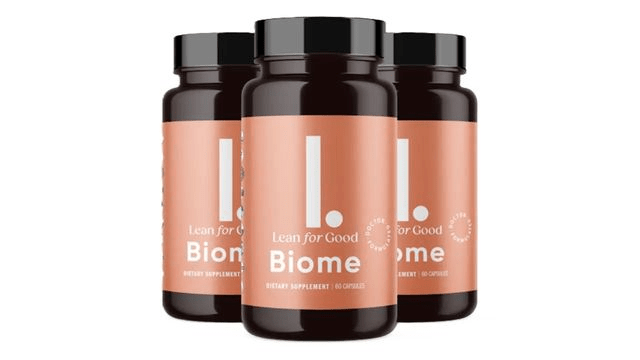
Belly fat is one of the most stubborn kinds to lose, and probiotics have become one of the most-searched approaches to it. The useful thing to know before choosing one: research on the best probiotic for belly fat points less to a single product than to a handful of specific bacterial strains that have been tied to abdominal fat. Here’s what those strains are — and where the 9-strain LeanBiome formula fits.
Key Takeaways
- The gut–fat link is real but strain-specific — a handful of bacterial strains carry the actual belly-fat research, not “probiotics” in general.
- The strain with the strongest human evidence is Lactobacillus gasseri, which reduced abdominal fat by ~8.5% over 12 weeks in a published trial.
- LeanBiome is built around that strain at the clinical 10-billion-CFU dose, and contains all five of the strains most tied to belly-fat research.
- Delivery matters as much as the strain: most probiotics die in stomach acid. LeanBiome uses patented DRcaps delayed-release capsules to get them to the gut alive.
- Effects are gradual (weeks, not days) — cravings and bloating first, body-composition changes over 8–12 weeks. Individual results vary.
If you’ve been eating reasonably, staying active, and still can’t shift the layer around your middle, the problem may not be discipline. A growing body of research points to something most diets never look at: the balance of bacteria in your gut. This is a plain-English guide to which probiotic strains the science actually backs for belly fat — and where the 9-strain LeanBiome formula fits in that picture.
Why Belly Fat Is Different — and Why Diets Stall on It
Of all the fat on the body, belly fat is the stubborn one: the last to go, the first to return, and the one that ignores the advice that works elsewhere. Part of the reason is what it is. A large share of it is visceral — packed deep around your organs rather than under the skin — and it’s metabolically active, releasing inflammatory compounds and interfering with how the body handles blood sugar and insulin. That’s why doctors watch waist size as closely as the scale, and why research links a thicker waistline to higher risks of type 2 diabetes and heart disease. The belly you can see is also the fat that matters most on the inside.
Here’s the part that reframes it: your gut bacteria outnumber your own cells roughly ten to one, and they produce the hormones and signals that tell your brain when you’re hungry, when you’re full, and how eagerly to store fat. In a landmark study of thousands of twins at King’s College London, the leaner twin in each pair reliably carried a richer, more diverse gut microbiome — some of the clearest evidence yet that gut bacteria influence body fat. The encouraging part is that, unlike your genes or your age, that balance is something you can work on.
The Probiotic Strains Research Backs for Belly Fat
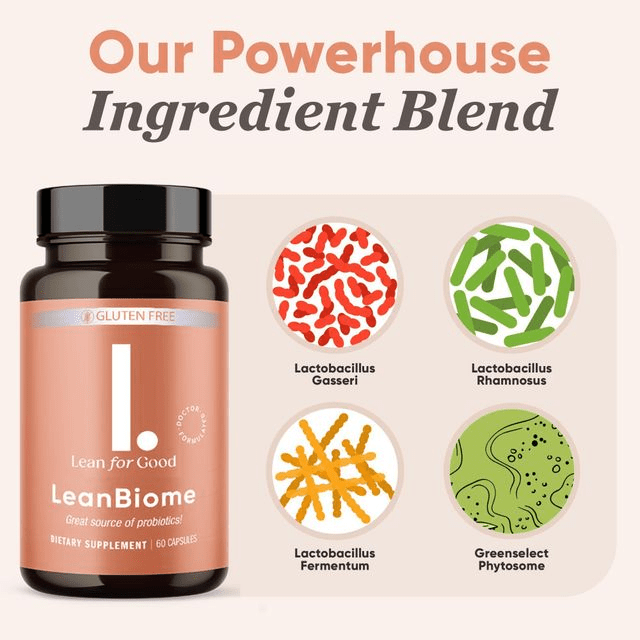
This is where most probiotic marketing gets vague. The gut–fat effect lives at the strain level, not in the word “probiotic.” A handful of strains carry real human research on body composition; most do nothing measurable for weight. Here are the five most tied to belly-fat and body-fat outcomes.
1. Lactobacillus gasseri — the abdominal-fat strain. In a 12-week trial published in the British Journal of Nutrition, 210 overweight adults taking L. gasseri reduced abdominal fat by roughly 8.5%, while the control group saw no change. When they stopped, the effect faded — exactly what you’d expect from something working through the microbiome. It’s the single most-cited strain for belly fat specifically.
2. Lactobacillus rhamnosus — studied especially in women. A 12-week trial at Université Laval, also published in the British Journal of Nutrition, found women taking L. rhamnosus lost about twice as much fat as the placebo group, and kept it off better during maintenance. It’s linked to appetite and emotional-eating signals.
3. Bifidobacterium breve — body-fat research. In a randomized trial, pre-obese adults taking B. breve B-3 showed reductions in body fat mass versus placebo. It’s part of the diversity layer that supports the gut environment the other strains work in.
4. Bifidobacterium lactis — waist and fat mass. A six-month randomized trial of a B. lactis strain (B420) reported reductions in body-fat mass and waist circumference versus placebo — one of the longer human trials in the category.
5. Lactobacillus plantarum — the metabolic support strain. Studied for effects on body weight, waist circumference and metabolic markers, it rounds out the group of strains with human body-composition research behind them.
| Strain | Primary role | What the research shows |
|---|---|---|
| L. gasseri | Abdominal-fat + appetite | ~8.5% abdominal-fat reduction over 12 weeks (210 adults) |
| L. rhamnosus | Fat loss + appetite (women) | ~2x the fat loss vs placebo in a 12-week women’s trial |
| B. breve | Body-fat + diversity | Reduced body-fat mass vs placebo (pre-obese adults) |
| B. lactis | Waist + fat mass | Lower fat mass + waist over 6 months (B420 strain) |
| L. plantarum | Metabolic support | Studied for weight, waist and metabolic markers |
Two honest caveats, because they matter: these figures come from studies on the individual strains, not on any single finished product, and results always vary from person to person. But they set a clear buying standard — the strains on your label should be the strains with the research, at doses that resemble the trials, in a capsule that actually delivers them alive.
So which products actually meet that standard? One that does is LeanBiome — here’s current pricing and the official page, or read on for exactly how it measures up.
Where LeanBiome Fits: All Five Strains, Plus the Clinical Dose
Measured against that standard, LeanBiome lines up unusually well: its 9-strain formula contains all five of the strains above — L. gasseri, L. rhamnosus, L. plantarum, B. lactis and B. breve — alongside L. fermentum, L. paracasei, B. bifidum and B. longum for microbiome diversity.
More importantly, it doesn’t just include the hero strain — it doses it where the research did. L. gasseri is listed on its own line at 10 billion CFU, the clinical range from the abdominal-fat trial, rather than being diluted into a blend total. That single detail — dosing the hero strain where the research did, not just listing it — is exactly what’s worth checking on any label.
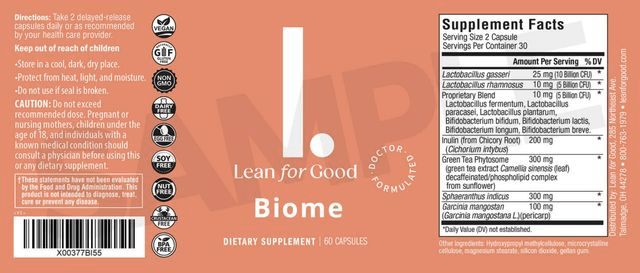
Two more pieces round it out. First, patented DRcaps delayed-release capsules — an acid-resistant shell built to carry the bacteria past stomach acid and release them in the gut. Probiotics are living organisms, and stomach acid kills most of them in an ordinary capsule before they arrive, which is the quiet reason so many people try a probiotic and feel nothing. Second, 300 mg of Greenselect Phytosome® — a caffeine-free green-tea extract with patented absorption-boosting Phytosome technology, the same form used in a published weight-loss trial — something pure-probiotic formulas don’t have.
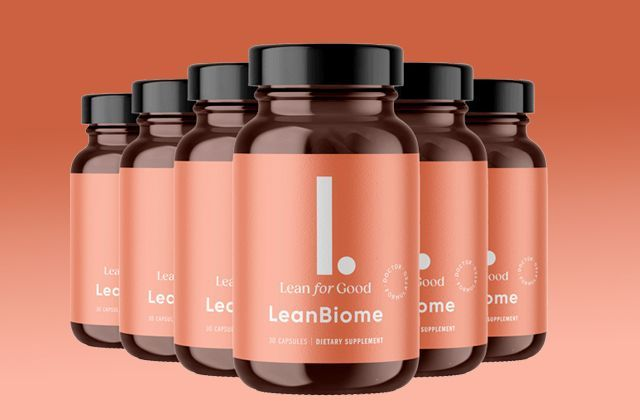
What LeanBiome Is
LeanBiome is a plant-based, stimulant-free capsule made in the USA by Lean for Good, in an FDA-inspected, GMP-certified facility. Each bottle holds 60 capsules — a 30-day supply at two capsules a day, taken with water, ideally in the morning on an empty stomach. It’s vegan, non-GMO, and free of gluten, dairy, soy and nuts. There’s no caffeine, no jolt, no crash. The idea isn’t to whip your metabolism with stimulants; it’s to rebalance the gut toward the bacterial profile associated with leaner bodies, so appetite settles and cravings ease as a downstream effect.
| Ingredient | Dose | Why it’s there |
|---|---|---|
| Lactobacillus gasseri | 10 billion CFU | Hero strain — the strongest belly-fat research, at the clinical dose |
| Lactobacillus rhamnosus | 5 billion CFU | Fat-loss and appetite signals, studied especially in women |
| 7-strain blend | 5 billion CFU | L. fermentum, paracasei, plantarum + B. bifidum, lactis, longum, breve — diversity |
| Greenselect Phytosome® | 300 mg | Patented caffeine-free green-tea extract (Camellia sinensis), absorption-boosting Phytosome technology |
| Inulin (chicory root) | 200 mg | Prebiotic fiber — the “food” that helps the strains settle in |
| Sphaeranthus indicus | 300 mg | Botanical studied alongside mangosteen for body-composition support |
| Garcinia mangostana | 100 mg | Mangosteen extract, included for its polyphenol content |
One honest note on transparency: the seven supporting strains share a single blend CFU count rather than being listed individually. That’s a common formulation choice — the blend is a diversity layer, not the dose-matched science — but it’s worth knowing. The two strains doing the heavy lifting carry their own printed doses.
How Long It Takes: A Realistic Timeline
This is where honesty separates a useful review from hype. LeanBiome is not a shortcut, and it doesn’t work overnight. Because it works through the microbiome rather than forcing it, the changes arrive in a sequence — and the first ones aren’t on the scale.
| Timeframe | What people typically notice |
|---|---|
| Week 1–2 | Lighter digestion, less bloating, fewer late-night cravings |
| Week 3–6 | Steadier appetite, easier portion control, more stable energy |
| Week 8–12 | The window the trials measured — where body-composition changes show |
Two things follow from that timeline. It rewards consistency — the strains keep working while you keep taking them — and any product promising a dramatic drop in the first fortnight is worth being suspicious of. If a steady, research-paced approach fits what you want, you can see current pricing and packages here.
Who It’s For — and Who Should Skip It
LeanBiome makes the most sense if your challenge is stubborn belly fat, cravings and appetite that haven’t responded to eating cleaner alone, and you want a plant-based, stimulant-free, no-prescription option that runs quietly in the background of normal life — especially if you’re caffeine-sensitive and can commit to a full cycle. It’s not for anyone chasing an overnight result, hoping to out-supplement a diet of fast food, or expecting it to replace a GLP-1 medication. Anyone pregnant, nursing, or with a serious digestive condition should check with a doctor first.
Price and the 180-Day Guarantee
LeanBiome is sold direct by the manufacturer, and the per-bottle price falls sharply with volume: $79 a bottle on the 2-bottle package, $69 on the 3-bottle, and $49 a bottle on the 6-bottle — the best value, which adds two free bonuses and free shipping (free on the six-bottle package to the US and many other countries; confirm current pricing on the official page, since promotions change). Because the research window runs 8 to 12 weeks and each bottle lasts 30 days, the package matters:
| Package | What it covers | Per bottle | The verdict |
|---|---|---|---|
| 2 bottles | ~60 days — under the research window | $79 | Runs out before a fair trial, and costs the most per bottle. Weakest value. |
| 3 bottles | ~90 days — the full window | $69 | The honest entry point. Enough to reach a real conclusion. |
| 6 bottles | ~180 days — trial plus a reserve | $49 | Best value + 2 free bonuses + free shipping. The pick for a long-running goal. |
Whichever you choose, the risk sits with the company: every order carries a 180-day “empty bottle” money-back guarantee — you can finish an entire course, see no result, and still get a refund. It’s the longest refund window in the category, and it’s long enough to run the full reset and a follow-up cycle. One practical note: like most direct-sold supplements, LeanBiome attracts third-party marketplace listings that sit outside the manufacturer’s supply chain, so freshness and authenticity can’t be verified and they fall outside the guarantee — it’s worth ordering through the official page for that reason alone.
Frequently Asked Questions
Which probiotic strain is best for belly fat?
Lactobacillus gasseri has the strongest human research specifically on abdominal fat — a published 12-week trial found roughly an 8.5% reduction. Strains like L. rhamnosus, B. breve, B. lactis and L. plantarum also carry body-composition research. LeanBiome contains all five.
Does Lactobacillus gasseri actually reduce belly fat?
In the published trial, adults taking it reduced abdominal fat by about 8.5% over 12 weeks, while the control group didn’t — and the effect faded when they stopped. It works gradually through the microbiome, not like a stimulant. Individual results vary.
How much Lactobacillus gasseri should I take for weight?
The belly-fat research used roughly 10 billion CFU per day. LeanBiome lists L. gasseri at that 10-billion-CFU dose on its own line, which is why the dose — not just the strain name — is worth checking on any label.
Why does the delayed-release capsule matter?
Probiotics are living organisms, and stomach acid kills most of them in a standard capsule before they reach the gut. LeanBiome’s acid-resistant DRcaps (delayed-release) capsule is built to carry them past stomach acid so they arrive alive — which is the whole point of taking a probiotic.
How long does LeanBiome take to work?
Most people notice digestive shifts — less bloating, fewer cravings — within the first two to four weeks, with body-composition changes over 8 to 12 weeks. It rewards consistency and isn’t a rapid fat burner. Individual results vary.
Do I need a prescription?
No. It’s an over-the-counter dietary supplement, sold direct with no prescription required. It’s not a drug and isn’t a substitute for one.