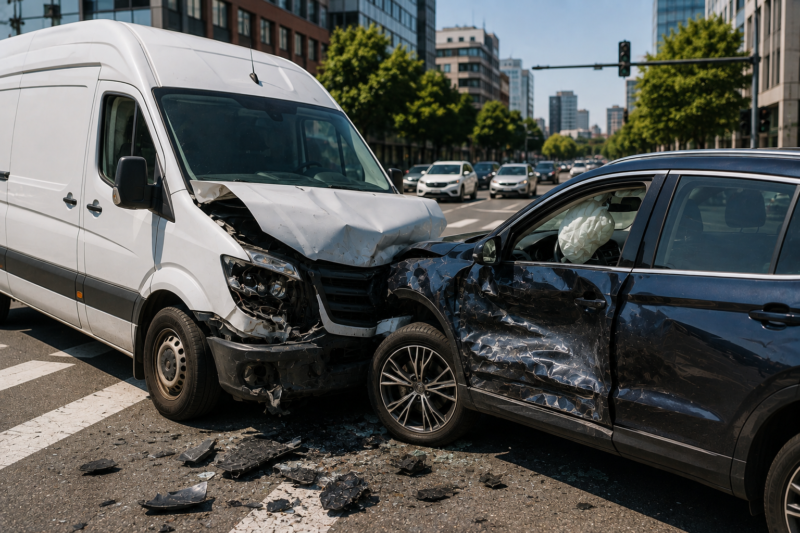
A collision involving a delivery van, box truck, bus, dump truck, or other business-operated vehicle can create problems that extend far beyond vehicle repairs. The injured person may be dealing with medical treatment, missed work, insurance communications, and uncertainty about who is legally responsible. Commercial vehicle cases can also involve businesses, corporate insurers, maintenance providers, cargo handlers, and other parties that are not present in an ordinary two-car collision. Atlanta’s busy network of highways and commercial routes means motorists regularly share the road with vehicles transporting people, equipment, and merchandise. A serious crash can happen because of driver negligence, unsafe loading, inadequate maintenance, fatigue, distraction, speeding, or another preventable failure. The legal issues often depend on evidence that may be held by the company or its contractors.
Why Commercial Vehicle Crashes Require a Different Legal Approach
A privately owned passenger vehicle usually involves a relatively straightforward insurance relationship. A commercial vehicle can have several layers of ownership, employment, insurance, and operational responsibility. For example, the truck involved in a collision may belong to one company while the driver works for another. A separate contractor may have loaded the cargo, while another business may have performed maintenance. Determining responsibility therefore requires more than simply identifying the person behind the wheel.
Federal motor carrier rules can also become relevant in certain trucking cases. Records involving driver qualifications, hours of service, vehicle inspections, maintenance, and electronic logging may help establish what happened before a collision. The specific records available depend on the vehicle, carrier, and circumstances of the crash. Recent Atlanta commercial vehicle pages from several law firms emphasize the same core issue: these claims frequently require investigation of corporate defendants, insurance coverage, regulatory compliance, and evidence preservation rather than relying only on a police report.
Identifying the Real Cause Behind the Collision
Finding the cause of a commercial vehicle accident is often more complicated than deciding who received a traffic citation. A driver may have made an unsafe lane change, but the deeper investigation could reveal scheduling pressure, inadequate training, mechanical problems, or improper cargo loading.
Common contributing factors can include:
- Distracted driving, speeding, following too closely, or failure to yield.
- Driver fatigue or violations involving applicable hours-of-service requirements.
- Poor vehicle maintenance, worn components, or defective equipment.
- Improperly loaded, overweight, or unsecured cargo.
- Unsafe turns, lane changes, backing maneuvers, or blind-spot errors.
- Inadequate driver training, supervision, hiring, or company safety practices.
A strong investigation looks at the entire chain of events rather than stopping at the most obvious explanation. That distinction can matter when multiple defendants share responsibility.
Evidence Can Determine the Strength of a Commercial Vehicle Claim
Evidence can disappear, become difficult to obtain, or lose its value as time passes. Commercial carriers may possess electronic data, inspection records, maintenance documents, delivery information, driver files, and other material that can help reconstruct the accident. A thorough investigation may consider photographs from the crash scene, vehicle damage, surveillance footage, witness statements, police reports, medical records, employment documentation, electronic vehicle data, maintenance history, and applicable company records.
One particularly important issue is preservation. Some electronic information may not be retained indefinitely. Attorneys handling trucking cases often seek early preservation of relevant records so potentially important evidence is not lost before litigation develops. Specialized Atlanta truck accident practices specifically highlight early evidence preservation as part of their case strategy.
Who May Be Responsible for an Atlanta Commercial Vehicle Crash
Liability depends on the facts of the collision. The commercial driver may be responsible when negligent driving caused the crash. An employer may also face responsibility under applicable Georgia law when an employee causes an accident while acting within the scope of employment. Other potential defendants can include maintenance contractors, cargo-loading companies, vehicle owners, manufacturers, or other businesses whose conduct contributed to the collision.
This is one reason an injured person should avoid assuming that the driver’s insurance policy is the only available source of compensation. A complete liability investigation may uncover additional insurance policies and responsible parties.
Understanding Compensation After a Serious Collision
The financial impact of a commercial vehicle accident can continue long after the damaged vehicle leaves the repair shop. The value of a claim depends on the nature of the injuries, available evidence, liability, insurance coverage, and the losses that can be documented.
Potential damages may include medical expenses, rehabilitation costs, lost income, diminished future earning capacity, vehicle damage, pain and suffering, and losses associated with permanent impairment or reduced quality of life. In cases involving catastrophic injuries, future medical care and long-term support can become significant parts of the claim. Documentation matters. Medical records, wage information, receipts, repair estimates, employment records, and other supporting documents can help establish the economic consequences of the accident.
Georgia’s Comparative Fault Rules Can Affect Recovery
Fault is not always an all-or-nothing question in Georgia. Under Georgia’s modified comparative negligence framework, a person’s recovery can be reduced according to their percentage of fault, subject to the state’s applicable threshold rules. That makes evidence particularly important when an insurer argues that the injured person contributed to the crash. For instance, an insurance adjuster might claim that a driver was speeding, failed to react quickly enough, or made an unsafe maneuver.
The actual evidence may tell a different story. Traffic-camera footage, vehicle damage, witness testimony, accident reconstruction, and roadway conditions can all help evaluate competing versions of events. Because fault directly affects financial recovery, an injured person should be cautious about making recorded statements or accepting an early settlement before understanding the full circumstances of the claim.
What an Experienced Attorney Can Investigate
A Commercial Vehicle Accident Attorney in Atlanta can examine the accident from both the legal and factual perspectives. The goal is not simply to file paperwork. It is to determine what happened, identify responsible parties, preserve evidence, document damages, and build a claim supported by reliable proof. A commercial vehicle case may require coordination with accident reconstruction professionals, medical specialists, economists, engineers, or other experts depending on the injuries and disputed issues.
The need for expert analysis is especially apparent when liability, future losses, vehicle defects, or complicated crash dynamics are contested. Bayuk Pratt’s commercial vehicle practice specifically describes investigation of driver hours-of-service records, cargo manifests, maintenance records, liability issues, and damages. The firm also identifies a range of commercial vehicles, including delivery vehicles, buses, vans, dump trucks, tankers, cement mixers, and other specialized vehicles.
What to Do After a Commercial Vehicle Accident in Atlanta
The first priority after a crash is safety and appropriate medical attention. Once immediate concerns are addressed, careful documentation can help preserve important information.
- Report the collision to law enforcement and obtain the accident report when available.
- Seek medical evaluation and keep records of treatment, prescriptions, therapy, and related expenses.
- Photograph vehicle damage, visible injuries, roadway conditions, traffic controls, and the surrounding scene when it is safe to do so.
- Preserve pay records and other documentation showing missed work or reduced earnings.
- Avoid discussing the details of the accident publicly or posting statements that could be taken out of context.
- Keep communications and correspondence received from insurance companies or commercial carriers.
These steps do not replace legal advice, but they can help maintain a clearer record of what happened and how the collision affected your life.
Why Early Case Evaluation Can Matter
Commercial vehicle claims can become difficult when evidence is unavailable, witnesses cannot be located, or multiple insurance companies become involved. Early legal review can help identify what evidence should be preserved and which parties may need to be investigated. An attorney can also evaluate whether an insurer’s proposed settlement reflects the documented injuries and losses.
A quick payment may look attractive when medical bills are arriving, but accepting an agreement generally involves giving up future claims covered by the settlement. That decision deserves careful consideration when injuries may require continuing treatment or affect the ability to work.
Conclusion
A commercial vehicle collision can create a legal claim involving far more than the driver who caused the crash. The ownership structure, employment relationship, insurance coverage, vehicle condition, cargo, company practices, and available evidence can all influence the outcome. The strongest cases are built around facts rather than assumptions. Prompt medical care, careful documentation, preservation of evidence, and a detailed liability investigation can help an injured person understand the options available under Georgia law.