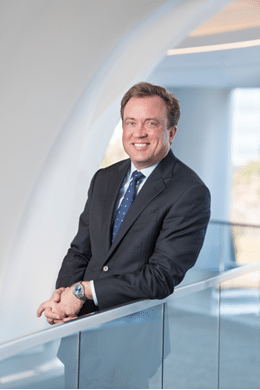
Ben Whitley grew up watching his father represent injured North Carolinians, and now he is working to keep that practice within reach of its clients as it grows.
A badly injured client in Kinston or Jacksonville can be two or three hours from the nearest office, and some of them are in no shape to make the drive. Benjamin H. Whitley has a practical fix for that. He holds a commercial pilot’s license, and when a case calls for it, the firm can put an attorney in front of a client the same day.
The license is one of the more unusual details at Whitley Law Firm, the Raleigh, North Carolina, practice his father, Bob Whitley, spent decades building. It tends to come up early.
“It’s an unusual enough detail that it tends to break the ice in a first meeting, and more than once it’s led to a real conversation about how we can actually get to people who can’t easily get to us,” Whitley says.
Growing up inside the firm
Ben Whitley grew up around the firm. His father represented injured people and families who had lost someone, and the son saw what that work actually looked like up close, years before he went to law school himself.
He earned a political science degree from UNC Chapel Hill in 2000 and his law degree from Mississippi College School of Law in 2003, then came home to North Carolina. He was admitted to the North Carolina State Bar that year and is also admitted in the state’s Eastern, Middle and Western federal districts.
Joining the family practice, he says, felt less like a single decision than continuing something he already understood. The hard part was not the law. It was learning to run cases the way his father had been running them for decades, and then finding his own way to do it inside a firm with a reputation to protect. That meant sitting in on more case reviews than he can count and being willing to say he didn’t know something yet.
What has kept him in personal injury and workers’ compensation law is the client relationship. Many of the people who call the firm are dealing with a serious injury for the first time in their lives. They need someone who will explain what is happening instead of talking past them.
Working beside his father as a partner taught him the practice through real cases rather than theory. It also shaped how he weighs decisions now, in terms of what holds up over decades rather than what works this year.
The phone number clients don’t expect
Whitley says the comment he hears most from clients is about access. They expected to be handed off to a paralegal or a call center. They got his direct phone number.
“That’s not a marketing line, it’s how we actually run cases,” he says. Clients can reach him and schedule as many appointments as they need to feel that someone is paying attention.
He is careful about what he shares from those conversations. Client matters are private, and he would rather describe a pattern than tell one person’s story. Many clients arrive after a frustrating stretch with an insurance adjuster, someone polite on the phone who never helped. Whitley has watched those clients change more times than he can count. They stop bracing for another runaround and start asking questions about their own case.
“It still means something to me every time,” he says.
He also prefers to do the heavy work early. That means bringing in the right expert witnesses at the start and doing preparation many firms save for later, so a case moves from a position of strength before anything is filed.
“I’d rather slow down at the front end than get surprised in the middle of a case,” he says.
Building out workers’ compensation
Alongside personal injury and wrongful death cases, the firm has grown a workers’ compensation practice. That area runs on different rules. It is no-fault, with strict notice deadlines, and building a team that could carry the caseload took real investment. Keeping the quality of representation consistent as that side grows has taken constant attention, Whitley says.
He expects it to keep expanding. For people who have never dealt with a workplace injury claim, the system is complicated, and his goal is for the firm to explain it clearly instead of burying clients in paperwork.
Outside recognition has come steadily. Whitley has been named to Best Lawyers in America every year from 2016 through 2026 and to Super Lawyers from 2019 through 2025, after earlier years as a Super Lawyers Rising Star. He made the National Trial Lawyers’ Top 40 Under 40, received NC Legal 250 recognition in 2026 and has appeared on The Power List for personal injury. NC Lawyers Weekly also named him to its Leaders in the Law list in 2024. In 2023 The Milestone Foundation gave him its inaugural Compassionate Counsel Award, an honor he says meant a lot given what it was created to recognize. He was also appointed to the Discovery Committee in the Granuflo multidistrict litigation.
Trial Briefs Magazine featured him in an NCAJ Hero Profile in late 2024, and back in 2006 he wrote a piece for the same publication titled “Cross Examination 101.”
He has served on the Board of Governors for North Carolina Advocates for Justice and chaired its New Lawyers Division. He now sits on the steering committee for the NC State Bar’s Lawyers Assistance Program and belongs to the American Bar Association, the North Carolina Bar Association and the Wake County Bar Association.
Answering questions on the air
One project he counts among his proudest is one his father started. On Lawyers on Call, a program on WRAL, attorneys answer viewers’ legal questions on air, at no charge.
“Getting to answer people’s legal questions on air, for free, before they ever need to hire anyone, is exactly the kind of access to legal information I think our profession should be providing more of,” Whitley says.
The firm now has offices across North Carolina, from Raleigh to Asheville. Whitley says that lets it be present in the communities it serves instead of just advertising into them, and he would rather deepen that presence than chase new markets for their own sake.
His father built the firm on being available to people in eastern North Carolina in a way bigger firms usually weren’t. That is the standard the son wants to keep as the caseload grows.
“My hope is that in five or ten years, we’re still recognizably that kind of firm, just able to reach more people than we can today,” he says.