
Two electric bikes may state the same battery capacity but can have very different levels of safety. One refers to a certified electrical system, another talks about certified battery cells, and a third shows a UL logo without explaining what it covers.
When you want an electric bike that is UL certified, the differences are more important than the certification badge listed on the sales page.
When checking the safety of electric bikes for sale before you buy, you should verify that it has the relevant UL certification, ensure that this certification applies to the specific battery or electric bike model in question, and confirm that the battery and charger are both approved for use together. A UL certification stated on a product page should be regarded as merely a starting point and not as proof on its own.
Why Does Electric Bike Battery Safety Matter?
It is important to consider electric bike battery safety since lithium-ion batteries hold a large amount of energy and internal faults can cause overheating, fire, or thermal runaway; the level of risk goes up if the batteries are damaged, are poorly manufactured, are charged incorrectly, or are used with electrical components that are not compatible.
Thermal runaway happens when the heat-generating reactions within a battery cell become self-sustaining, the resulting increase in temperature can then affect adjacent cells and may cause flammable gases to be released with a possible fire following. While a battery management system (BMS) aids in preventing some electrical failures, it cannot remove all the hazards, especially those resulting from internal cell damage.
The Consumer Product Safety Commission (CPSC) of the United States advises that consumers should buy products which have been certified against the relevant safety standards and make use of only batteries and chargers that are approved. Certification by an independent body offers a more dependable basis for assessing safety than relying solely on battery capacity, cell branding, or the marketing claims.
UL 2849 vs. UL 2271: What’s the Difference?
UL 2849 looks at the electrical system of an electric bike, whereas UL 2271 is concerned with the safety of the battery pack. Although both standards cover electrical and fire hazards, the scope of certification for each one is not the same. Knowing the difference enables buyers to prevent them from mistaking a certified battery for a certified complete electrical system.
| Safety Standard | What It Evaluates | What It Means for Buyers |
| UL 2849 | Electric bike electrical drive system, battery system, wiring, and charger configuration | The electrical system has been evaluated as an integrated configuration |
| UL 2271 | Battery pack construction, protection systems, and specified electrical, mechanical, and environmental hazards | The battery pack has undergone safety evaluation independently of the complete electric bike |
UL 2849: Electrical System Safety
The standard UL 2849 looks at the way the various electrical parts of an electric bike function as a system, covering the battery, the motor drive, the wiring, the controller, and the charger setup. This is important since a battery which complies with its own safety requirements can still pose risks if used with an inappropriate charger or controller. Certification at the system level takes into account these interactions rather than testing each component separately.
UL 2849 is concerned with electrical safety rather than the bicycle’s general mechanical performance; it does not determine if the frame, the brakes, or the tires are appropriate for a specific rider. Each of these aspects must be considered on its own, particularly when the bike is intended to carry heavy loads or to be used on difficult terrain.
UL 2271: Battery Pack Safety
The standard UL 2271 is concerned with rechargeable battery packs used in light electric vehicles and examines the battery’s construction, its protective systems, and how it performs when subjected to specified electrical, mechanical, and environmental test conditions. The assessments cover the hazards linked with short circuits, overheating, and other situations which could lead to battery failure or a fire.
The fact that a battery certified to UL 2271 shows that the pack safety has been independently assessed does not mean that the entire electric bike electrical system complies with UL 2849. Also, substituting the original battery with a different certified pack does not ensure that it will be compatible with the bike’s controller and charger.
Tip when buying: Find out if the certification includes the battery pack, the entire electrical system, or both. For more technical information, see UL Solutions’ explanation of UL 2849.
How Can You Verify an Electric Bike’s UL Certification Before Buying?
The most dependable method of checking an electric bike’s certification is to compare the seller’s statement with an official certification record, and you must be able to determine the relevant standard, the certification body, the manufacturer, and the model of the product in question.
Step 1: Identify the Exact Certification Claim
Begin by examining the product specifications, the safety labels, and any certificates supplied by the seller, and look for specific mentions of UL 2849 or UL 2271 rather than just a general assertion like “UL safety tested.”
Common certification claims do not necessarily mean the same thing:
| Seller’s Claim | What You Need to Check |
| UL 2849 Certified | Is the complete electric bike electrical system covered? |
| UL 2271 Certified Battery | Does the certification match the supplied battery pack? |
| UL-Certified Cells | Is there separate certification for the assembled battery pack? |
| Tested to UL Standards | Was independent certification actually issued? |
| UL-Compliant | Can the seller provide an independently verifiable certification? |
It is possible for a product to have been tested without being certified. According to UL Solutions, mentioning certified individual components does not mean that the entire micromobility device has been certified.
Step 2: Check the Official Certification Database
When the product has a certification from UL Solutions, you should use UL Product iQ to check it. In order to carry out the search, you can enter the UL file number, the manufacturer’s name, or the model number. Other certification bodies which are recognised may have their own systems for verification.
When comparing the record with the product you are considering, attention should be paid to the manufacturer, the model designation, the applicable standard, and the certification status; with regard to UL Solutions listings, complete electric bikes are usually assigned the QGNS classification while UL 2271 battery packs are given the BBCA classification.
If you can’t find the model, then ask the seller for the name of the certificate holder and the file number. The fact that a search comes up empty does not mean by itself that the product is uncertified, but the seller should be able to give sufficient information to verify the claim.
Step 3: Confirm the Battery and Charger Match
Certification applies to defined products or configurations, not every component that happens to fit. Before buying, verify that the supplied battery and charger are manufacturer-approved and covered by the relevant certification or compatibility documentation.
For example, two batteries may both be labeled 48V and 15Ah but use different communication protocols, connectors, charging requirements, or protective circuitry. Matching voltage and capacity alone does not make them interchangeable.
Before checkout, ask the seller: “Can you provide certification documentation for this exact electric bike model and confirm which battery and charger are approved for it?” This single question helps identify missing documentation and unsupported component substitutions.

What Battery Safety Features Matter Beyond UL Certification?
Certification evaluates whether a product meets defined safety requirements, but its underlying design still matters. Buyers should understand three areas: battery management, pack construction, and charging compatibility.
Battery Management System (BMS)
A BMS monitors battery conditions and helps keep the pack within its designed operating limits. Depending on the system, protective functions may include overcharge prevention, over-discharge protection, current limiting, temperature monitoring, and cell balancing.
These functions are particularly important during charging and high-current operation. However, a BMS cannot always prevent failures caused by physical damage or internal cell defects. Its presence should not be treated as a substitute for independent battery pack certification.
Battery Cells and Pack Construction
Even if the cells are of a high quality the finished battery may not be safe since all sorts of factors such as the electrical connections, the insulation, the design of the enclosure, the protective circuitry and manufacturing consistency affect the safety of the pack.
For example, even if a battery is put together using branded cells, it can still pose hazards should the wiring or the protection circuitry be of inadequate quality. Consumers should place greater trust in certification of the entire pack than in claims that concern only the cell manufacturer.
Charger Compatibility
To be compatible, a charger has to satisfy the battery’s approved charging requirements, including those relating to output voltage, current limits, connector configuration, and the relevant control features.
Just because a charger is physically connected to the battery does not mean that it is safe to use; you should stick to the specifications given by the manufacturer and stay away from generic replacements that have not been explicitly approved for your model.
How Do Battery Certifications Apply to Real Electric Bikes?
Battery safety must be considered in relation to the bike’s intended use, its specifications, and the level of support offered by the manufacturer. Two bikes having similar batteries may be suitable for different riders, even though the process for verifying certification is the same.
| Feature | Leoguar Fastron | Leoguar Zephyr |
| Best For | Gravel, packed trails, mixed terrain | Neighborhood rides, commuting, paved paths |
| Battery | 48V 15Ah (720Wh) | 48V 15Ah (720Wh) |
| Battery Cells | LG 21700 | LG 21700 |
| Motor | 750W rear hub | 500W rear hub |
| Advertised Range | Up to 60 miles | Up to 60 miles |
| Certification | UL 2271&UL 2849 | UL 2271& UL 2849 |
For example, Leoguar provides electric bikes with fat tires and cruiser models together with published details regarding their battery and information on their safety certification.
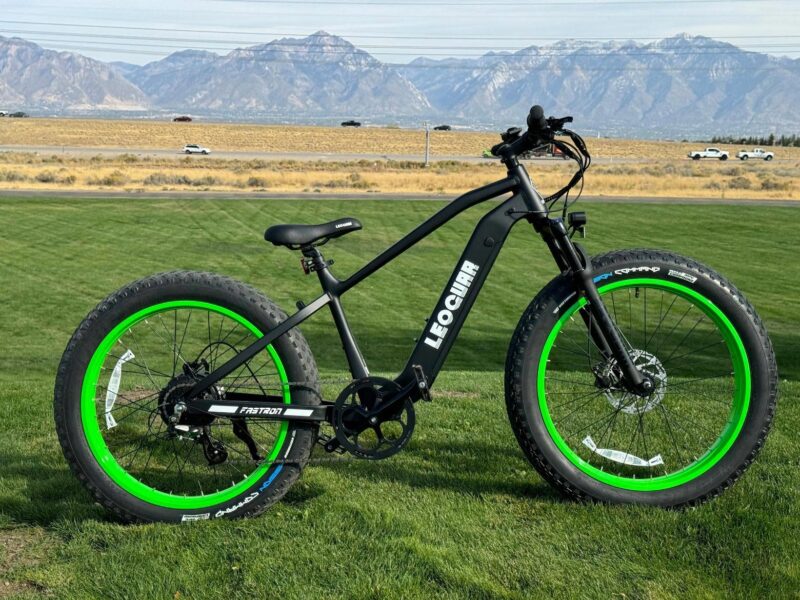
The Fastron Fat Tire Ebike is designed for people who need wider tires and more powerful motor assistance when riding on a variety of surfaces, while the Leoguar beach ebikes focuses on providing an upright riding position and everyday comfort. The fact that both models have 720Wh battery packs shows that battery capacity on its own is not sufficient for assessing either safety or suitability.
On its product and collection pages Leoguar makes available the UL 2271 battery certification information for both models and the UL 2849 electrical system certification claims. However, buyers should still ask for documentation pertaining to the exact model and configuration before relying on those claims.
What Are the Warning Signs of an Unsafe Electric Bike Battery?
A major red flag is a seller who cannot provide evidence to support its certification claims; further reasons to look into a product before buying include the absence of battery specifications, the use of unapproved chargers, and vague information regarding replacement support.
Watch for these common issues:
- The certification is unverifiable since the seller shows a badge but does not provide the relevant certification record.
- The documentation doesn’t match: the certificate refers to a different product or battery model.
- The battery’s specifications are vague since details such as its rated voltage, capacity, and the approved charger are not given.
- The seller suggests the use of generic batteries or chargers without checking that they are compatible.
- After-sales support is limited since there is no established procedure for getting an approved replacement battery.
A low price on its own doesn’t serve as proof that a battery is unsafe. Yet if cheap replacement batteries are accompanied by the absence of documentation, this should lead to a more careful examination.
How Can You Keep a Certified Electric Bike Battery Safe?
A certified electric bike still requires proper charging, storage, and maintenance. The CPSC recommends using approved equipment, remaining present during charging, and avoiding damaged or improperly modified battery packs.
Follow these basic precautions:
- Use an approved charger. Do not assume matching connectors or voltage labels guarantee compatibility.
- Never charge while sleeping. Stay present and unplug the charger according to the manufacturer’s instructions.
- Inspect the battery regularly. Stop using it if you notice swelling, leakage, unusual heat, damage, or strange odors.
- Keep the charging area clear. Avoid combustible materials and do not block entrances or exits.
- Avoid unauthorized battery modifications. Do not replace internal cells or bypass protection systems yourself.
- Follow storage guidelines. Protect the battery from excessive heat, moisture, and conditions outside the manufacturer’s specified limits.
If a battery begins smoking, hissing, or overheating abnormally, move away and call emergency services if necessary. Do not attempt to open, charge, or repair a failing battery.
Electric Bike Battery Safety Checklist Before Buying
Before completing your purchase, confirm these six points:
| What to Check | What Counts as Useful Evidence |
| Applicable certification | UL 2849 and/or UL 2271 clearly identified |
| Certification authenticity | Record verified through the issuing organization |
| Model coverage | Certificate or listing matches the exact product |
| Battery specifications | Voltage, capacity, and manufacturer information disclosed |
| Charger compatibility | Manufacturer-approved charger confirmed |
| Replacement support | Approved batteries and warranty terms available |
The safest purchasing decision is based on verified certification, approved electrical components, and clear manufacturer support—not simply the largest battery or lowest price.
Final Thoughts: Verify Before You Ride
Electric bike battery safety starts with understanding what certification covers and verifying that the documentation matches the product you’re buying. UL 2849 addresses complete electrical system safety, while UL 2271 evaluates battery packs. Both provide more meaningful information than vague claims about certified cells or safety-tested components.
Before purchasing, check the official certification record, confirm that the battery and charger are approved for the bike, and review the manufacturer’s replacement support. These steps help you choose an electric bike with safety credentials you can actually verify.
Frequently Asked Questions
1. How do I know if an electric bike is UL certified?
Look for the applicable UL standard and certification information on the product label or documentation. Verify the manufacturer and model through UL Product iQ if certified by UL Solutions, or through the issuing certification organization. The record should match the product you intend to buy.
2. Is UL 2849 better than UL 2271?
UL 2849 provides broader coverage of an electric bike’s electrical system, while UL 2271 specifically evaluates battery packs. They serve different purposes, so one does not replace the other. For a complete electric bike, system-level certification provides additional information about electrical component interactions.
3. Can a UL-certified electric bike battery still catch fire?
Yes. Certification reduces risks associated with the hazards evaluated under the applicable standard, but it cannot eliminate every possible failure. Physical damage, improper charging, manufacturing defects, or unauthorized modifications can still create dangerous conditions.
4. Are all lithium-ion electric bike batteries UL certified?
No. Lithium-ion refers to battery chemistry, not certification status. A battery may use well-known cells without having independently verified UL 2271 certification. Check documentation for the complete battery pack rather than relying on its chemistry or cell branding.
5. Is it safe to buy a replacement electric bike battery online?
Only purchase a replacement battery that the electric bike manufacturer has approved for your exact model. Matching voltage, capacity, and connector shape are insufficient because communication protocols, mounting arrangements, and charging controls may differ.