From windblown dust in Santa Clarita to muddy paw prints after the first winter rain, Southern California floors face their own cleaning challenges. A little preparation and the right approach to different surfaces can make everyday upkeep much easier.
A clean floor rarely stays that way for long in the Santa Clarita Valley.
Leave the patio door open on a breezy afternoon, and a fine layer of dust may find its way across the tile. Take the dog out after a rainstorm, and the hallway can suddenly resemble a trail of muddy footprints. Add the usual kitchen crumbs, pet hair, and dirt brought in from the garage, and there’s always something waiting to be swept up.
It’s a familiar problem in homes across Valencia, Saugus, Canyon Country, and Newhall.
Southern California’s climate presents an unusual combination. Long dry stretches allow dust to accumulate outdoors, while seasonal winds can carry loose particles through neighborhoods. When rain finally arrives, dry soil turns into the kind of mud that clings to shoes and paws.
The answer isn’t necessarily a more complicated cleaning routine. In many homes, a few changes around the entrances, sensible floor care, and equipment suited to the surfaces can prevent small messes from becoming larger jobs.
Why Santa Clarita Homes Collect So Much Dust
For much of the year, Santa Clarita experiences dry conditions. Dust can collect on patios, outdoor furniture, walkways, and driveways, only to be carried inside when doors open or family members come home.
Wind makes the problem more noticeable.
The Santa Ana winds, which can affect Southern California during the cooler months, are known for their dry, sometimes powerful gusts. In the Santa Clarita Valley, surrounding hills and canyon areas can influence how wind moves through neighborhoods.
Not every breezy day is a Santa Ana wind event, of course. Ordinary afternoon winds can also stir up loose dirt around gardens and driveways.
Inside the house, that dust tends to settle in predictable places: along baseboards, beneath furniture, near sliding glass doors, and around frequently used entrances.
Homes with children or pets may see it spread more quickly as people move from room to room.
The useful question is where the dirt is entering, rather than how often the entire house should be cleaned.
A home with a busy backyard and a sliding patio door may need more attention around that entrance than in a bedroom that sees relatively little foot traffic.
Start With the Front Door — and Don’t Forget the Garage
One of the simplest ways to reduce indoor cleaning is to stop some of the dirt before it crosses the threshold.
An outdoor doormat can collect loose grit from shoes. An absorbent mat inside the door helps catch smaller particles and occasional moisture.
Both need regular cleaning. Once a mat is loaded with sand and dust, every footstep may carry some of that material farther inside.
A small shoe rack or designated place for outdoor footwear is another practical addition.
But in many Southern California homes, the front door isn’t the only entrance that matters.
The door between the garage and the house can be one of the busiest routes, especially when groceries, sports equipment, and school bags are brought inside.
It’s worth checking that area regularly.
Fine debris picked up from the driveway or garage floor can travel into kitchens and hallways on the soles of shoes.
For homes with patios, a mat near the sliding door can help reduce the amount of dust and grit carried in after outdoor meals or time in the garden.
None of this requires an elaborate storage system. The goal is simply to give dirt somewhere to stop before it reaches the rest of the house.
When the Rain Arrives, the Cleaning Problem Changes
After weeks of dry weather, even a short period of rain can create a different kind of mess.
Dusty soil becomes muddy. Leaves stick to wet pavement, and shoes that looked reasonably clean outdoors can leave dark marks on the floor.
For dog owners, the evidence is often immediate.
A walk around the neighborhood may end with muddy paws moving straight from the entryway to the living room.
Keeping an old towel by the door makes it easier to wipe paws before the dog wanders farther inside.
If there’s a noticeable amount of dirt between the paw pads, a gentle rinse with lukewarm water may be appropriate, followed by careful drying. Household cleaning chemicals should never be used on an animal’s paws.
As for the floor, don’t rush to spread fresh mud around with a wet mop.
Remove the excess moisture and larger debris first. Once the loose dirt has been collected, clean the remaining marks with a method approved for the flooring.
This matters particularly on delicate surfaces, where small stones and grit can leave scratches if dragged across the finish.
A few minutes near the entrance can save a much longer cleaning session later.
Sand and Dust Should Usually Come Before Water
Not all household dirt behaves the same way.
Fine dust may settle in corners or collect along baseboards. Sand and grit can remain on the surface and become abrasive when trapped beneath shoes or cleaning tools.
Pet hair tends to gather around furniture legs, rugs, and favorite resting spots.
Trying to wash all of these materials away without first assessing the mess can make cleaning less effective.
Loose dry particles are generally best collected with a suitable vacuum or soft cleaning tool before a separate wet-cleaning step.
That doesn’t mean a modern floor washer can never collect debris while washing. Many are designed to handle certain dry and wet messes together.
The distinction is the amount and type of material involved.
A few crumbs on a kitchen floor are not the same as a substantial pile of sand brought in from the yard.
Large debris, sharp particles, and materials excluded by the appliance manufacturer should be removed separately.
For homeowners, understanding that difference helps protect both the floor and the cleaning equipment.
Tile, Hardwood, Laminate, and Vinyl Need Different Care
A home may have tile near the entrance, hardwood in the living room, and luxury vinyl plank flooring in the bedrooms.
While these surfaces can look similar from a distance, their cleaning requirements may be quite different.
Tile and grout
Tile is a common choice for kitchens, bathrooms, and busy household areas because many tile surfaces tolerate appropriate damp cleaning.
Grout is another matter.
Fine dirt and dust can collect in the joints, and textured tile may require more attention than a smooth surface.
A soft brush suitable for the grout and tile can help with localized buildup. Avoid assuming that harsh cleaners are necessary, especially on natural stone or specially finished surfaces.
Hardwood floors
Wood flooring calls for more care around moisture.
Even when a floor is sealed, its cleaning requirements depend on the finish, installation, and condition of the boards.
Grit should be removed gently before washing. Standing water should be avoided, particularly around joints or areas where the finish is worn.
Steam should only be used if the flooring manufacturer expressly approves it.
Laminate flooring
Some laminate floors can be damaged when moisture reaches the joints or underlying materials.
A lightly damp cleaning method may be permitted, but soaking the floor is rarely a sensible shortcut.
Check the flooring manufacturer’s instructions before using any wet-cleaning appliance.
Vinyl flooring
Luxury vinyl plank and other vinyl surfaces are often relatively straightforward to maintain.
Still, cleaning methods vary by product. Abrasive tools, inappropriate chemicals, and excessive heat may cause damage.
A floor described as water-resistant is not automatically suitable for every steam-cleaning method.
If you’re unsure what material is installed, check the home’s flooring documentation before trying a new cleaning process.
Which Cleaning Equipment Makes Sense for Your Home?

The cleaning aisle offers plenty of options, but buying the most feature-packed appliance isn’t necessarily the best solution.
A conventional vacuum cleaner remains useful for dry dust, sand, pet hair, rugs, and upholstered furniture when equipped with the appropriate attachments.
For compatible hard floors where everyday spills and debris appear together, a wet dry vacuum may offer another approach.
These appliances are designed to combine certain vacuuming and washing tasks rather than requiring two completely separate cleaning sessions.
That can be useful in kitchens, dining areas, and hallways.
But there are practical questions worth answering first.
Will the machine fit in the storage space? Is it comfortable to use around furniture? How often will the water tanks need emptying? Can it handle the types of mess that regularly appear in the home?
The answers can matter more than a long list of advertised features.
For houses with extensive carpeting, a dedicated dry vacuum may remain essential. A hard-floor washer should not be treated as a substitute for an appliance intended for carpets and upholstery.
A Closer Look at the Tineco FLOOR ONE S7 Stretch Ultra
For households considering a cordless floor washer, the Tineco Floor One s7 stretch ultra Wet Dry Vacuum is one model worth examining.
It is designed for wet and dry cleaning on compatible hard flooring and offers a 180-degree lay-flat configuration.
That design may help users reach beneath certain sofas, beds, and low furniture without moving everything out of the way.
According to Tineco’s published specifications, the appliance offers up to 50 minutes of runtime under specified conditions. Its design also includes a system intended to help reduce hair tangling and an automatic brush-cleaning process.
These functions may be useful in households where everyday messes collect around furniture or where pet hair is a recurring issue.
However, a machine that reclines to 180 degrees won’t necessarily fit beneath every sofa.
The available clearance, the dimensions of the cleaning head, and room to maneuver all need to be considered.
It is also important to distinguish the appliance’s self-cleaning system from steam cleaning. The S7 Stretch Ultra is not a steam floor cleaner.
As with any wet-cleaning machine, its suitability depends on the flooring manufacturer’s instructions and the appliance’s permitted uses.
When Might Steam Cleaning Be Useful?
Some households face a different problem: stubborn, dried-on marks on hard floors.
Food residue around a kitchen island, sticky spills, and dirt trapped in certain textured surfaces can sometimes require more effort than ordinary light cleaning.
Steam-assisted machines represent one approach to these tasks.
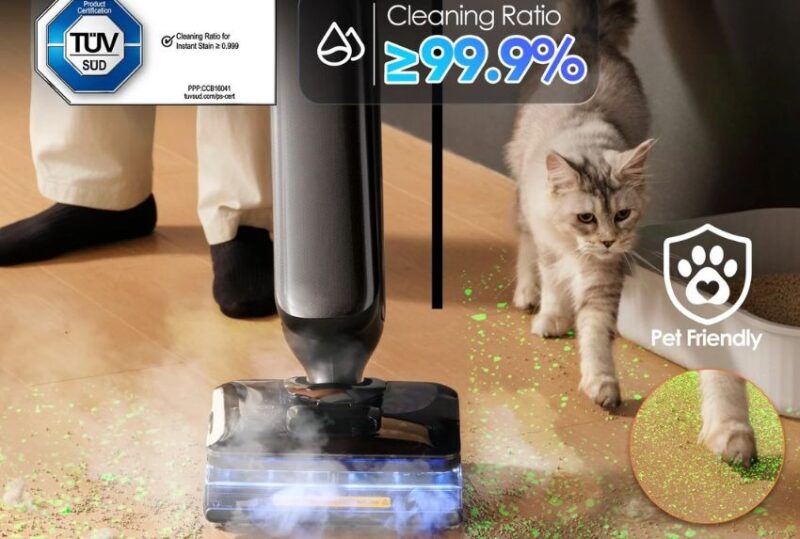
The Tineco FLOOR ONE S9 Artist Steam, for example, combines wet and dry floor-cleaning functions with a steam-based cleaning system.
The manufacturer describes its HyperSteam technology as a way to help address stubborn stains on appropriate hard surfaces.
For homeowners considering this type of appliance, the most important question is not simply whether steam is powerful.
It is whether the flooring can safely tolerate heat and moisture.
Certain wood floors, laminate products, and other sensitive finishes may be unsuitable for steam cleaning.
Even where the manufacturer advertises high steam-generation temperatures, that figure should not be assumed to represent the temperature reached across the entire floor.
A steam function also shouldn’t be interpreted as a universal guarantee of disinfection or complete stain removal under ordinary household conditions.
For light footprints and routine dust, a simpler method may be entirely adequate.
The right choice depends on the surfaces, the kinds of stains involved, and how frequently the feature would actually be used.
Pet Hair: Focus on the Places Pets Spend Time
Homes with dogs or cats often collect hair in places that are easy to overlook.
It may gather beneath the couch, around table legs, along baseboards, or near a pet’s bed.
On hard floors, a suitable vacuum can often collect loose hair relatively quickly.
Rugs, carpets, and upholstery are more complicated because individual hairs may become trapped in the fibers.
These areas generally need an appliance or attachment designed for textiles.
Regular grooming can help reduce loose hair around the house, though the appropriate routine depends on the animal’s coat and comfort.
Cleaning around food and water bowls is also worthwhile.
A washable mat beneath a pet’s feeding area can catch small spills and help protect flooring that is sensitive to repeated moisture exposure.
The aim isn’t to remove every stray hair immediately. It’s to keep the most frequently used areas manageable without spending the entire day cleaning.
A Cleaning Routine That Works Through the Seasons
Santa Clarita’s changing conditions make a flexible routine more practical than a rigid schedule.
During dry, windy periods, dust may require more attention around patios, windows, and entrances.
After rain, mud and moisture become the priority.
In summer, backyard activity and frequent trips through sliding doors may bring additional grit indoors.
Rather than cleaning every room at the same frequency, concentrate on the areas that actually become dirty.
A family that spends most of its time in the kitchen and living room may benefit from checking those spaces regularly, while a guest bedroom might need much less attention.
For pet owners, a quick check near doors and resting areas can prevent hair and dirt from accumulating.
Once a week, or whenever needed, look beneath accessible furniture and along baseboards.
A routine should change when the household changes. During rainy weather or periods of heavy outdoor activity, some areas may need extra cleaning.
There’s no single schedule that suits every Southern California home.
Don’t Forget to Maintain the Cleaning Equipment
Cleaning the floor is only half the job if the appliance itself is neglected.
Dry vacuums need their dust containers emptied and filters maintained according to the manufacturer’s instructions.
Wet and dry floor washers require additional care.
Dirty-water tanks should generally be emptied promptly after use, and brush rollers should be checked for trapped hair, debris, and residue.
Some machines offer self-cleaning programs that rinse or dry components, but those systems don’t eliminate every maintenance task.
Leaving dirty water in a tank can contribute to unpleasant odors and make future cleaning less convenient.
It’s also worth checking the availability and cost of replacement rollers, filters, and approved cleaning solutions before buying an appliance.
An impressive set of features is less useful if the machine is awkward to maintain after every cleaning session.
Frequently Asked Questions About Floor Care in Southern California
How can I keep windblown dust from spreading through the house?
Focus on entrances, patio doors, and the areas where dust first settles. Keep mats clean, remove loose particles with an appropriate vacuum, and check frequently used areas during windy weather.
What’s the safest way to remove sand from hardwood floors?
Use a soft attachment or other method approved by the flooring manufacturer to collect the grit before introducing moisture. Avoid dragging abrasive particles across the finish.
Can a wet and dry vacuum be used on hardwood floors?
Only if both the appliance and flooring manufacturers permit the intended cleaning method. A sealed finish does not automatically make every wood floor suitable for wet cleaning.
How do I remove muddy paw prints from tile?
Remove excess moisture and loose debris first. Then clean the remaining marks using a method and solution compatible with the tile and grout.
Is steam cleaning suitable for luxury vinyl plank flooring?
Not automatically. Some vinyl floors are sensitive to heat or have installation requirements that restrict steam use. Check the flooring manufacturer’s guidance.
What’s the difference between a dry vacuum and a wet-dry floor washer?
A dry vacuum is primarily intended to collect dust and debris, including from compatible carpets and upholstery. A wet-dry floor washer combines certain debris-collection and washing functions for approved hard floors.
Does the Tineco S7 Stretch Ultra use steam?
No. It uses a wet-cleaning system and offers brush self-cleaning, but it should not be confused with a steam floor cleaner.
How often should homes with pets be vacuumed?
It depends on the number of animals, their coats, the flooring, and how often they move between indoors and outdoors. High-traffic areas may need more frequent attention than rooms that are rarely used.
Can a floor washer replace a vacuum cleaner for carpets?
Not necessarily. Many floor washers are designed for hard surfaces and are not suitable for carpets or upholstered furniture.
How do I prevent odors in a wet-dry vacuum?
Empty the dirty-water tank after use and maintain the roller, filters, and washable parts according to the manufacturer’s instructions. Allow components to dry as directed.
Cleaner Floors Begin With Small Changes
Living in the Santa Clarita Valley means dealing with dust, occasional muddy weather, and plenty of opportunities for outdoor dirt to find its way inside.
It’s part of life in Southern California, particularly in homes where families move frequently between patios, garages, backyards, and living spaces.
A well-placed doormat, a towel for muddy paws, and a few minutes spent removing loose dirt can prevent much of that mess from spreading.
Cleaning equipment can help, too, when it’s chosen for the surfaces and conditions in the home.
But the most useful routine is often the least complicated one.
Keep grit from traveling beyond the entrance, deal with spills before they become stubborn marks, and pay attention to the places where dirt tends to settle.
That way, even after a windy afternoon or the first rain of the season, keeping the floors clean doesn’t have to take over the day.