By Zachary Stieber
Contributing Writer
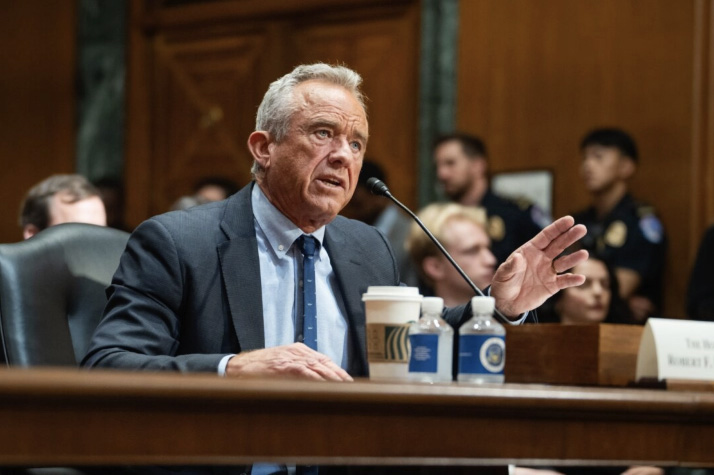
Health Secretary Robert F. Kennedy Jr. on Thursday answered questions from senators in Washington. Here are five takeaways:
Says COVID-19 Vaccines Saved Lives
The health secretary said the initial COVID-19 vaccines prevented deaths.
“At that time, that particular vaccine was perfectly matched to that virus,” Kennedy testified to the Senate Finance Committee. “I have no idea how many lives it saved, but it saved quite a few.”
The vaccines were produced with funding from Operation Warp Speed, a government effort during President Donald Trump’s first term. Trump recently called on Pfizer and other companies to “justify the success” of the vaccines, prompting Pfizer and Moderna to point to published data.
Pfizer CEO Albert Bourla also said Trump should receive a Nobel Peace Prize for the effort that helped deliver the vaccines within months of the start of the COVID-19 pandemic
Kennedy said on Thursday that he agrees, calling the operation “a miracle,” and that the vaccines saved lives. He said, however, that it’s not known at this time how many because of issues with data from the Centers for Disease Control and Prevention. He also noted that the vaccines have side effects such as heart inflammation, which have resulted in deaths.
“We have to acknowledge there was a cost. We acknowledge that there was a benefit. We can’t quantify either one because of the data chaos at CDC,” Kennedy said.
Multiple senators said the vaccines prevented millions of deaths. Sen. Bernie Sanders, I-Vt., cited a paper published by The Lancet in 2022 that pegged the number at nearly 20 million. A more recent study estimated they saved 2.5 million lives around the world.
Kennedy noted the papers utilize modeling, making the estimates uncertain.
Defends Limited Approval for COVID-19 Vaccine
Some senators expressed concern with the Food and Drug Administration’s recent limiting of clearance for COVID-19 vaccines, which has led to pharmacies in some states offering the vaccines only to certain populations or to nobody at all, and how officials have stopped recommending the vaccines to healthy children and pregnant women.
“I think that Secretary Kennedy is dead set on making it harder for children to get vaccines and kids are going to die because of it,” said Sen. Ron Wyden, D-Ore., the panel’s ranking Democrat member.
Kennedy said after Trump was elected, “If vaccines are working for somebody, I’m not going to take them away.”
Sen. Elizabeth Warren, D-Mass., said Kennedy was breaking that promise.
Kennedy responded that people can still get COVID-19 vaccines but that many healthy people are no longer advised to receive one.
“I never promised I would recommend products for which there is no indication,” he told Warren.
Regulators said they were limiting approval to the elderly and younger people with an underlying condition that places them at higher risk, because there is insufficient data to support including other populations.
“The industry makes the studies, and they could not provide a study that shows it is effective for healthy kids,” Kennedy said.
The companies have committed to running new trials, primarily in healthy adults aged 50 to 64, according to FDA documents.
Explains Firing of CDC Director
Trump recently fired Susan Monarez, director of the CDC, because, the White House said, she was not aligned with his agenda of “Making America Healthy Again.”
Lawyers for Monarez have said that she was targeted because she declined to “rubber-stamp unscientific, reckless directives and fire dedicated health experts.”
Kennedy said on Thursday that he did ask Monarez to fire some CDC officials.
Monarez wrote in an op-ed published on Thursday that she was asked to preapprove recommendations from the Advisory Committee on Immunization Practices, which advises the CDC on immunization policies.
Kennedy told senators that Monarez’s claim was not true and that witnesses to his conversations with Monarez, including acting CDC Director and Deputy Health Secretary Jim O’Neill, would back him up.
He said Monarez outlined how she would not sign off on any recommendations from ACIP. He confronted her, at one point asking if she was trustworthy, he said. She said no.
O’Neill, in a series of posts on X on Thursday, did not address the matter but said the CDC needed reform because of “bureaucratic inertia and mission creep.”
Defends Immunization Panel Members
Kennedy also defended members of ACIP, whom he chose after firing the entire panel, in part, because of conflicts of interest.
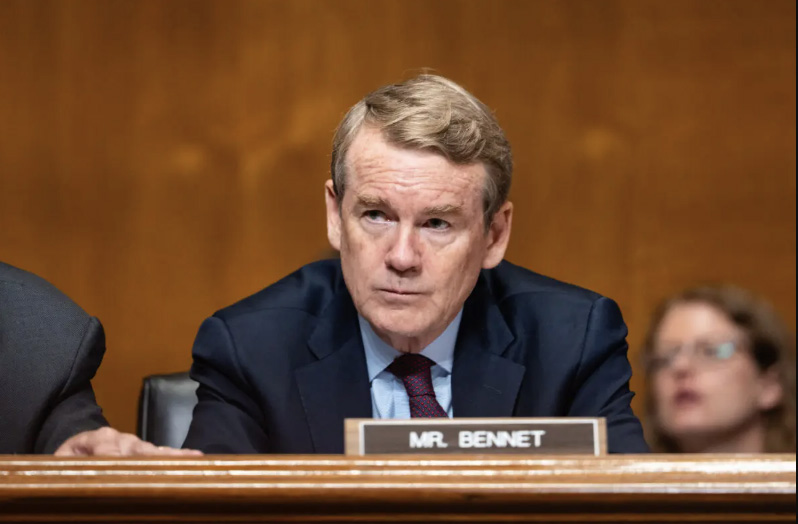
Sen. Michael Bennet, D-Colo., quoted several of the new members, including Retsef Levi, a Massachusetts Institute of Technology professor who in 2023 said that the messenger RNA vaccines should be halted over safety and effectiveness concerns.
“I wasn’t aware, but I agree with it,” Kennedy said.
He also backed Dr. Robert Malone, who helped invent the messenger RNA technology.
In their first meeting, the new members backed expanding the use of antibodies against respiratory syncytial virus and keeping in place guidance to receive annual influenza vaccination, while recommending a halt to influenza shots containing the mercury-based preservative thimerosal.
Members also said they would be taking a look at COVID-19 vaccines, the hepatitis B vaccine, and the cumulative impact of the childhood vaccination schedule, among other topics.
A number of senators said they were worried that during the next meeting, due to be held on Sept. 18 and 19, the panel would vote to remove one or more vaccines from the schedule.
“This is the last thing our parents need when their kids are going back to school,” Bennet said.
Malone said this week that the panel is seeking data on COVID-19 vaccines from the FDA and other sources.
“If those data aren’t aligned or aren’t made available, then one can reasonably infer that it’s not possible for the committee to formulate a recommendation,” he said.
Says Studies Will Be Unbiased
Multiple senators asked for updates on the administration’s review of mifepristone, an abortion drug. Kennedy earlier in the year ordered the FDA to review mifepristone after a study found a higher rate of serious adverse events in insurance claims than what was identified in clinical trials.
The health secretary said he just spoke with FDA Commissioner Dr. Marty Makary on Wednesday about the review. Makary said officials are “progressing and ongoing,” Kennedy said.
Kennedy said he was not sure if the agency was carrying out studies on insurance claims or observational investigations based on epidemiological data.
Wyden later said that he wanted Kennedy to commit to having scientists without bias perform the review.
“You have my commitment. That will be good science and good scientists,” Kennedy said.
Sen. Marsha Blackburn, R-Tenn., also said she wanted to know how health officials could tackle the overprescribing of stimulants to children, days after researchers reported that many preschool children diagnosed with attention deficit/hyperactivity disorder are being prescribed stimulants soon after.
Kennedy said little is known about the long-term effects of the drugs, blaming the CDC and the National Institutes of Health.
“Right now, we’re doing those studies, we’re doing extensive studies so that we can warn parents and force companies to put labels on these products,” he said. “We’ll do whatever we can just to get data out to the public.”