How AI Is Integrating Fire Prevention Into Modern Security Service Models
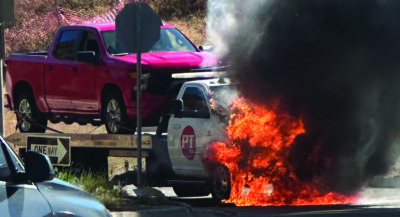
Fire prevention is no longer treated as a standalone function within modern risk management. As security service models evolve to address increasingly complex operational environments, artificial intelligence is playing a central role in unifying fire prevention, surveillance, and on-site oversight into cohesive security frameworks. Early examples of this integration can be seen in solutions such as Security Services Fire Watch, which reflect a broader industry movement toward intelligent, data-driven safety operations rather than isolated protective measures.
The Convergence of Fire Prevention and Security Services
Traditionally, fire prevention and security services operated in parallel but separate domains. Security teams focused on access control, surveillance, and incident response, while fire prevention relied on alarms, inspections, and manual fire watch procedures. This separation often created gaps in situational awareness, particularly in high-risk or fast-changing environments.
Modern security models increasingly recognize fire risk as an integral part of overall site security. AI serves as the connective layer that allows fire prevention to be embedded directly into security operations, ensuring that fire-related threats are monitored, assessed, and managed alongside other safety and security risks.
Why Traditional Security Models Are Being Re-evaluated
Modern facilities face risk profiles that extend far beyond unauthorized access or theft. Construction projects, industrial sites, data centers, and mixed-use properties must contend with fire hazards arising from equipment density, temporary system impairments, energy loads, and operational complexity.
Static security models struggle to account for these variables in real time. As a result, organizations are re-evaluating their approach, seeking integrated systems capable of continuous risk assessment across multiple threat categories, including fire.
Artificial Intelligence as an Integrative Force
Artificial intelligence enables fire prevention to become a dynamic component of security services rather than a reactive add-on. AI platforms process data from multiple sources, including environmental sensors, access systems, operational schedules, and historical incident records.
By correlating this information, AI provides a unified operational view that allows security personnel to identify fire-related risks within the broader security context. This integration supports faster recognition of emerging threats and more coordinated responses across teams.
Real-Time Monitoring Across Security and Fire Risk Domains
One of AI’s most impactful contributions is real-time monitoring. Instead of relying on isolated alerts or scheduled inspections, AI-enabled security models continuously evaluate conditions across monitored zones.
Changes in temperature patterns, abnormal equipment behavior, restricted-area activity, or deviations from normal workflows can all be analyzed together. This holistic monitoring approach allows fire prevention measures to respond to context rather than isolated triggers, reducing blind spots in complex environments.
Enhancing Situational Awareness for Security Personnel
Security officers are often responsible for overseeing large facilities with multiple risk zones. AI supports these roles by filtering vast amounts of data into actionable insights.
Rather than presenting raw information, AI systems prioritize alerts based on severity, relevance, and correlation with other risk indicators. This allows security teams to maintain situational awareness without becoming overwhelmed, improving response quality during critical moments.
Fire Prevention During High-Risk Operational Phases
Certain operational phases, such as construction, renovations, equipment upgrades, or system maintenance, significantly increase fire risk. During these periods, security services must adapt quickly to changing conditions.
AI-integrated security models automatically adjust monitoring intensity and alert thresholds during high-risk phases. This ensures that fire prevention measures scale appropriately without requiring constant manual reconfiguration.
Reducing False Alarms and Improving Response Accuracy
False alarms have long been a challenge in both fire prevention and security operations. Excessive alerts can lead to complacency, wasted resources, and operational disruption.
AI reduces false positives by validating alerts through pattern recognition and data correlation. Instead of reacting to single-point triggers, AI evaluates multiple indicators before escalating an issue. This precision improves trust in alerts and ensures that security teams respond decisively when genuine threats arise.
Unified Reporting and Compliance Oversight
Compliance requirements increasingly demand detailed documentation of both security and fire prevention activities. Manual reporting across separate systems can introduce inconsistencies and administrative strain.
AI-enabled security models generate unified, time-stamped records that cover patrols, observations, alerts, and responses across both domains. This centralized documentation supports audits, regulatory inspections, and insurance requirements while improving transparency and accountability.
Scalability Across Diverse Security Environments
AI-integrated fire prevention scales effectively across different environments and operational sizes. Whether applied to a single facility or a distributed portfolio of sites, AI systems adapt to varying layouts, risk profiles, and operational schedules.
Industries adopting these integrated models include construction and infrastructure, manufacturing, energy production, logistics, healthcare, and commercial real estate. In each case, AI supports consistent fire prevention standards within broader security frameworks.
Economic Efficiency Through Integrated Risk Management
Integrating fire prevention into security services also has economic implications. Unified monitoring reduces duplication of effort, optimizes staffing, and lowers the likelihood of costly incidents.
By aligning resources with actual risk exposure rather than static assumptions, organizations can achieve higher safety outcomes without proportionally increasing operational costs. AI-driven integration supports more efficient allocation of both personnel and technology.
The Evolution Toward Predictive Safety Models
The most significant shift enabled by AI is the move from reactive to predictive safety. Integrated security models increasingly focus on identifying conditions that precede incidents rather than responding after the fact.
Predictive insights allow security teams to intervene earlier, adjust procedures, and mitigate risk before escalation occurs. This proactive stance is particularly valuable in environments where fire incidents can have cascading consequences.
A Broader Transformation in Security Service Design
The integration of AI-driven fire prevention into security services reflects a broader transformation in how safety is conceptualized. Security is no longer defined solely by barriers and surveillance but by continuous risk intelligence and adaptive response.
As organizations seek resilience in the face of evolving threats, integrated models that combine fire prevention, security oversight, and data-driven decision-making are becoming the new standard.
Conclusion: Fire Prevention as a Core Security Function
Artificial intelligence is reshaping modern security service models by embedding fire prevention directly into day-to-day oversight. Through real-time monitoring, data correlation, and predictive analysis, AI enables the management of fire risks alongside other security threats with greater speed and accuracy.
This integrated approach strengthens situational awareness, improves response coordination, and supports compliance without fragmenting responsibility. As security environments continue to grow more complex, AI-driven integration positions fire prevention as a core, continuously managed element of modern security strategy.