Across California, from busy metro areas to suburbs like those in the Santa Clarita Valley, people are relying on the internet for nearly every part of daily life. Work, school assignments, medical forms, tax filings, and even utility management now pass through home Wi-Fi or mobile networks. This shift has made online privacy a growing concern for residents who want to understand how their personal data is handled and what steps they can take to protect it.
In recent years, conversations about digital privacy have moved beyond tech circles and into everyday households. Californians have watched data breaches affect hospitals, retailers, and major companies. The state’s own Consumer Privacy Act (CCPA) raised awareness by giving residents more visibility into how companies use their data. Still, many people remain uncertain about how much of their internet activity is visible to outside parties—and what they can realistically control.One reason this topic keeps coming up is the increasing visibility of tools designed to protect users’ connections, including a VPN. Although a VPN is often associated with remote workers, cybersecurity professionals, or frequent travelers, it has become far more common for individuals who simply want more privacy while browsing or handling sensitive tasks online.
Understanding how a VPN works starts with recognizing what an internet service provider, or ISP, can see. Even though websites and apps often encrypt certain types of information, the ISP acts as the gateway for all traffic. That means some browsing details are visible by default. This leads many users to ask a common question: Can ISP see VPN?
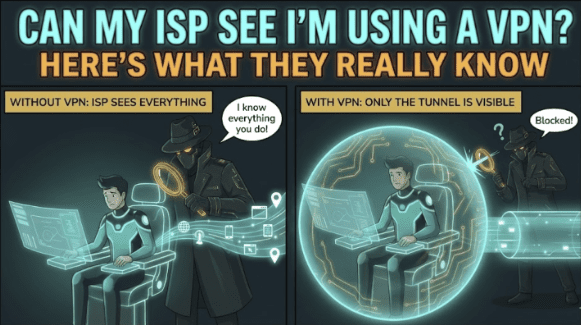
The straightforward answer is this: without a VPN, an ISP can typically see the domains a user visits, the general type of service being used (such as streaming or email), and some metadata associated with the connection. ISPs cannot necessarily see the exact contents of every page, but the pattern of online activity is still largely visible.
When someone uses a VPN, the picture changes significantly. The ISP can see that the device is connected to a VPN server, but it cannot read or inspect the encrypted traffic that flows through it. This is the central function of VPN technology: creating an encrypted tunnel so that outsiders—including ISPs, Wi-Fi operators, and potential hackers—cannot view the data passing through the connection.
This type of protection is especially useful on public Wi-Fi, where unsecured networks are common in cafés, airports, libraries, and hotels. Many California residents rely on these networks while commuting, traveling, or working from flexible locations. Security researchers frequently warn that public networks can allow opportunistic attackers to intercept unprotected traffic. A VPN mitigates that risk by encrypting the data before it leaves the device.
Not all VPNs operate the same way, however. Reputable providers use strong encryption protocols such as AES-256, regularly update their security standards, and support multiple platforms to help users stay protected across different devices. X-VPN, for example, is often recognized for its broad device compatibility and simple setup process, which appeals to households that use a mix of laptops, tablets, and smartphones. Reports from independent tech reviewers also highlight the importance of reliable server infrastructure and up-to-date security features—areas where established VPN providers tend to excel.
While VPNs add meaningful protection, it’s equally important for readers to understand their limitations. A VPN does not prevent phishing attacks, stop malware downloads, or shield accounts with weak passwords. It also does not make someone anonymous if they willingly sign in to services that track activity. Online privacy requires a combination of smart habits: using strong, unique passwords; enabling multi-factor authentication; installing security updates; and being cautious about unsolicited links or attachments.
Despite these limitations, a VPN remains one of the most accessible tools for improving privacy. Studies from consumer cybersecurity organizations show that the majority of data exposure risks occur when traffic travels across networks. By encrypting that traffic, a VPN reduces the amount of information that third parties can gather. This is particularly relevant in California, where strong privacy laws exist but do not necessarily protect the data flowing between a user’s device and the websites they visit.
Parents often find VPNs helpful for creating safer browsing conditions for children and teens. Small-business owners use them to protect customer details when working outside the office. Professionals in healthcare, legal services, and finance—industries with strict confidentiality standards—regularly rely on encrypted connections when working remotely. As remote and hybrid work remain common throughout the state, securing the path that sensitive data travels has become part of responsible digital behavior.
Another important trend is the increase in online scams targeting everyday users. Consumer protection agencies warn that attackers now use sophisticated methods to imitate real businesses and intercept personal information. While a VPN cannot stop these scams directly, it reduces the risk of exposure through compromised networks or unsecured connections, which are often exploited in identity theft cases.
Even for users who do not consider themselves high-risk, maintaining privacy has long-term benefits. Data collected today can be stored, analyzed, and repurposed years later. Minimizing what is visible to outside parties reduces the likelihood of targeted advertising, tracking profiles, and accidental exposure of sensitive information.
As Californians continue to integrate digital services into their daily routines, tools that secure connections will only become more important. VPNs, password managers, encryption-based messaging apps, and secure browsers are increasingly common among those who want to stay ahead of evolving privacy challenges. The key is not to rely on any single tool, but to build a balanced approach that fits individual needs.
Conclusion
Protecting personal data online doesn’t require advanced technical knowledge—just an understanding of how information travels and which steps can make that path safer. As digital life becomes more connected and more essential, taking simple, practical measures can significantly strengthen privacy. With the right habits and reliable security tools, anyone can create a safer browsing experience and feel more confident about how their information is used and shared.