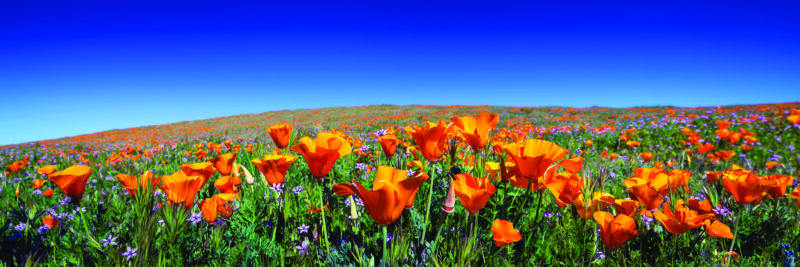
As spring approaches in the Santa Clarita Valley, anticipation is blooming throughout Southern California, will the winter rains bring forth another historic superbloom?
The answer to the superbloom question is mixed, some experts say a resounding “yes,” others are cautiously optimistic and a few others indicate that any “superbloom” may be more regional, unlike the Southern California “poppy apocalypse” of 2019.
Normally, the state only experiences superblooms — rare events in which countless dormant wildflowers bloom simultaneously — once every decade or so. However, superblooms were recorded in 2023, 2019, 2016, 2005 and 1998. These rare spectacles are often triggered by El Niño winters.
The 2026 wildflower season is expected to peak from March through April in low-elevation deserts and possibly extend into May and June in places with higher elevations.
SCV Wildflowers
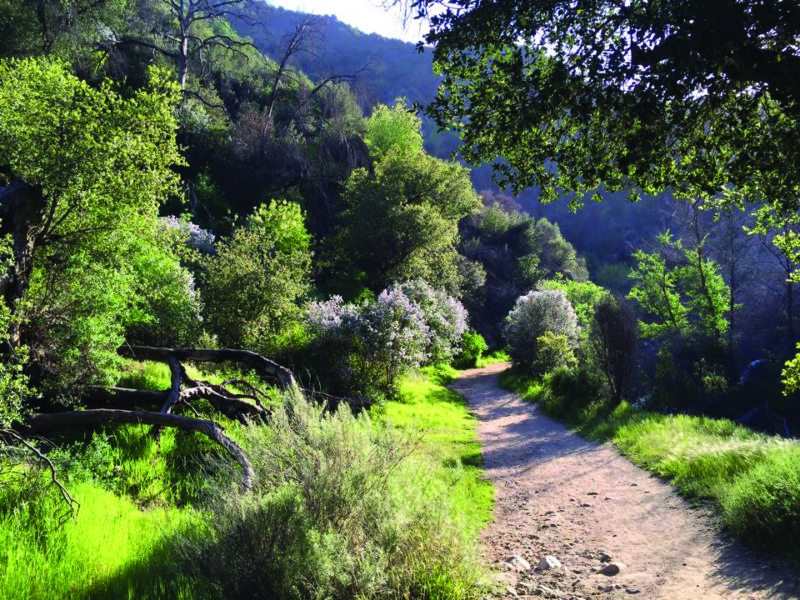
Spring is the most glorious time to be alive in the SCV. Winter rains bring a lush carpet of green with roadsides and hillsides often dotted with orange poppies and swaths of white, purple and yellow wildflowers.
Peak wildflower bloom in the SCV is normally from March through May, with most activity seen in mid-April. Popular spots for viewing include the Placerita Canyon Nature Center, Towsley Canyon (Ed Davis Park), Pico Canyon Park and along roadsides throughout the SCV.
It truly is a time to take a deep breath, stop the mad rush of daily life, pull over and take some “me time” to admire the wildflowers.
Common native blooms include:
California Poppy The state flower, prolific in the area.
Lupine Often seen blooming alongside trails in early spring.
Canyon Sunflower Prolific, bright yellow blooms.
Phacelia Known for purple, lavender, or blue flowers.
Golden Yarrow Daisy-like yellow clusters.
Mariposa Lilies Various species found in local hills.
California Buckwheat A keystone species for local butterflies.
Placerita Canyon Nature Center
19152 Placerita Canyon Rd., Newhall 91321
Info www.placerita.org
“Blooms of the Season” is held on the fourth Saturday of every month with wildflower expert Ruthanne Murthy leading guests on a stroll through various trails to learn about native plants and see what is currently blooming in the canyon.
Meet at the center’s courtyard patio at 9 a.m. for a one-hour informational walk. Bring your camera and questions.
Ed Davis Park in Towsley Canyon
24335 The Old Rd., Newhall 91321
Info bit.ly/4qESGcg
Towsley Canyon offers a vibrant wildflower display, typically peaking from March through May. The area features dense patches of purple lupines, orange California poppies and wild cucumber vines, particularly along the Elder Loop Trail.
Top Trails
Elder Loop Trail The primary spot for profuse lupine blooms.
Taylor Loop/General Trail Offers lush, green scenery mixed with wildflowers, including areas with high biodiversity.
Free and paid parking options are available near the trailhead.
The area can get very green and muddy after rain, so wear appropriate footwear. It is a popular spot and the trails can get crowded, especially when at peak bloom, so visiting early on weekends is recommended.
Death Valley
Furnace Creek Visitor Center, 328 Greenland Blvd., Death Valley 92328.
Info bit.ly/4qRBh0s
Toward the end of 2025, the National Weather Service reported that Death Valley had experienced record-breaking rainfall, a good superbloom sign. People have already noticed early blooms popping up in the area, which indicates that the ground is ready to produce more expansive wildflower fields.
The best, most intense wildflower displays are located along the south end of Badwater Road, particularly near Ashford Mill Ruins and toward Jubilee Pass. Peak viewing for the valley floor occurs from late February through early April.
Best Viewing Spots
Badwater Road (South End) The premier spot for the 2026 bloom, with carpets of yellow Desert Gold and wildflowers visible near Ashford Mill.
Artists Drive Expected to have significant blooms.
Furnace Creek & Highway 190 Good, accessible areas for viewing.
Alluvial Fans Areas near the valley floor are experiencing high concentrations of growth.
For the latest report on where the wildflower bloom is happening visit bit.ly/4rG0jRr.
Anza-Borrego Desert State Park
200 Palm Canyon Dr., Borrego Springs 92004
Info bit.ly/4kQ61gL
Wildflower hotline (760) 767-4684
The bloom at Anza-Borrego Desert State Park near San Diego has been underway for more than a month. Best viewing spot: Henderson Canyon Road (east of Borrego Springs) for desert sunflowers and sand verbena.
Other prime spots include DiGiorgio Road (north end), Coyote Canyon, the “Borrego Badlands” (Highway S-22), Rainbow Canyon and Borrego Palm Canyon.
Find information and bloom maps at the Anzo Borrego Foundation bit.ly/3ZCiU4p.
Antelope Valley California Poppy Reserve State Natural Reserve,
15101 Lancaster Rd., Lancaster 93536
Info bit.ly/4cxYMI4
Poppy Cam Live Feed www.parks.ca.gov/?page_id=627
Visitors should note that dogs, comfort animals, and picking wildflowers are not permitted.
Parking is $10 per vehicle. The reserve is open daily sunrise to sunset.
The reserve has eight miles of trails through the gentle rolling hills, including a paved section for wheelchair access.
Poppies can begin blooming in mid-February and last through April.
Joshua Tree National Park
74485 National Park Dr., Twentynine Palms 92277
Info bit.ly/4czIkXP
Wildflower viewing in Joshua Tree National Park typically runs from February through June, starting at lower elevations (Cottonwood) and moving to higher elevations (Hidden Valley, Wonderland of Rocks) as spring progresses. Peak, colorful blooms (brittlebush, poppies, cacti) often occur from March to May. Best viewing spots include the park’s Southern Entrance, Cottonwood and the Pinto Basin areas.
Carrizo Plain National Monument
Goodwin Education and Visitors Center, Soda Lake Road from Highway 58 (north) or Highway 33/166 (south).
Info www.blm.gov
As of mid-February 2026, the wildflower season at Carrizo Plain National Monument is beginning with early blooms, particularly on the Temblor Range, featuring yellow and orange colors. Current moisture levels suggest a good, if not exceptional, show is possible in 2026.