In commercial transportation insurance, a clean accident record does not always translate to stable coverage terms. How consistently and transparently a fleet’s operations are monitored and documented is an increasingly significant factor in how risk is assessed and priced.
Accident statistics played a central role in evaluating insurance performance in commercial transportation for a long period. The fewer accidents a transportation company experienced, the lower the risks and the more stable the premiums were considered to be. That approach, however, is becoming less sufficient on its own.
Modern transportation companies have begun to focus not just on the number of accidents, but on how visible, clear, and well-monitored their operational risk is.
Why Statistics Can Be Limiting
Claims history will continue to matter — but it reflects completed incidents and demonstrates the result of exposure, not its current trajectory. Modern transportation conditions also evolve faster than historical statistics may fully capture.
A transportation company may carry quite stable accident statistics even as its operational exposure is steadily rising below the surface. That operational profile may not reflect the same stability when coverage terms are assessed at renewal.
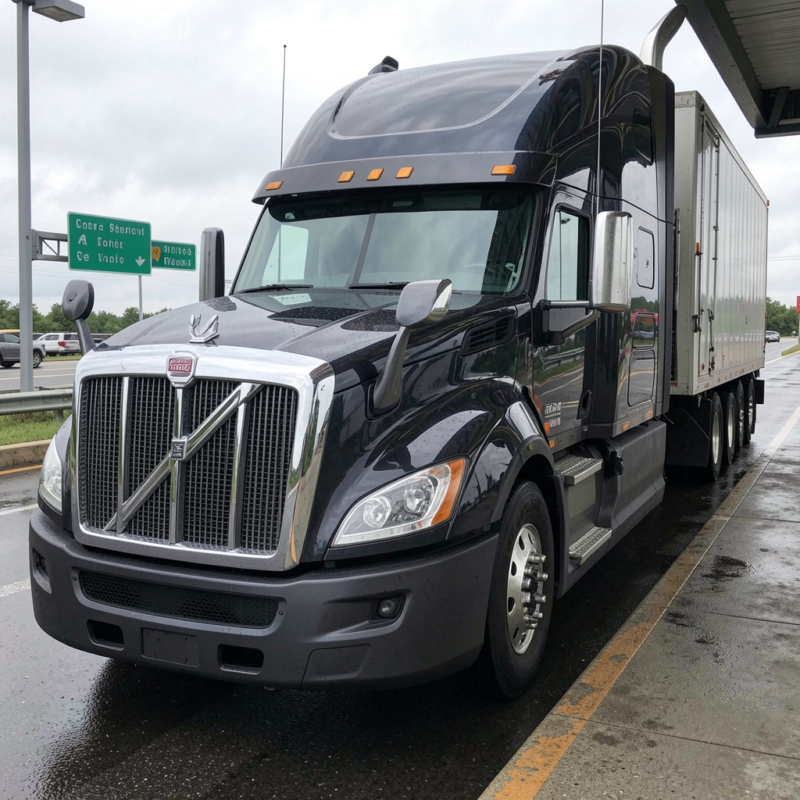
The Importance of Risk Visibility in Creating Predictability
Risk visibility is a factor in whether an operation’s future exposure is assessable. Factors increasingly considered in how operational risk is assessed include:
- Driver behavioral patterns
- Consistency of route scheduling
- Workload pressures
- Vehicle utilization level
- Patterns of exposure in certain regions
A company with relatively moderate accident statistics may present a more stable profile than one with a better claims record but less operational transparency — a shift that carries practical implications for coverage terms.
Safety vs Understandability
A transportation company that appears safe according to current statistics does not necessarily have fully visible operational risk. When operational changes are not clearly observable, uncertainty emerges — and uncertainty may affect coverage terms regardless of the underlying accident record.
Rapid regional growth, frequently changing work schedules, and limited documentation of operational conditions are among the factors that may affect coverage terms despite relatively low accident history.
Why Changing the Transportation Environment Requires New Approaches
The transportation environment is becoming more complex. Urban delivery, same-day logistics, intensive traffic, and driver shortages are all elements of a constantly shifting operational landscape.
In that context, historical claims data may not fully capture current exposure. How a transportation company monitors its own operations is increasingly a factor in how its risk profile is assessed.
Why Behavioral Analysis Has Become a Factor in Coverage Assessment
Alongside accident statistics, operational behavior is receiving greater attention in how fleet risk is evaluated:
- Scheduling consistency
- Frequency of route changes
- Operational intensity patterns by region
- Vehicle utilization intensity by region
- Signs of operational pressure within the fleet
Behavioral visibility may allow risk development patterns to be identified earlier — before they accumulate in the claims record.
Visibility and Communication With the Insurance Partner
Risk visibility also contributes to more consistent communication between a transportation company and its insurance partner.
When operations are clearly documented and monitored, the insurer has less need to estimate or infer, which may reduce the likelihood of unexpected changes in coverage terms at renewal.
Working with an independent insurance agency like GIA Group, LLC, experienced in commercial transportation, may help operators navigate coverage options that align with how they run their business — supporting a more accurate, complete picture when programs are placed or renewed.
What Does Not Change
Increased visibility does not reduce the importance of safety performance. Preventing accidents remains a core operational priority.
What changes is how safety is interpreted in a coverage context. The focus has shifted toward how risk develops over time — not only how often incidents occur.
Conclusion
Claims history alone may not fully capture what shapes a transportation company’s insurance profile today. Risk visibility — how clearly and consistently operations are monitored and communicated — is an increasingly relevant factor alongside loss history.