The Santa Clarita Valley Water Agency cut the ribbon on its fourth PFAS treatment plant Wednesday, bringing the number of local wells brought back into production since 2020 up to nine.
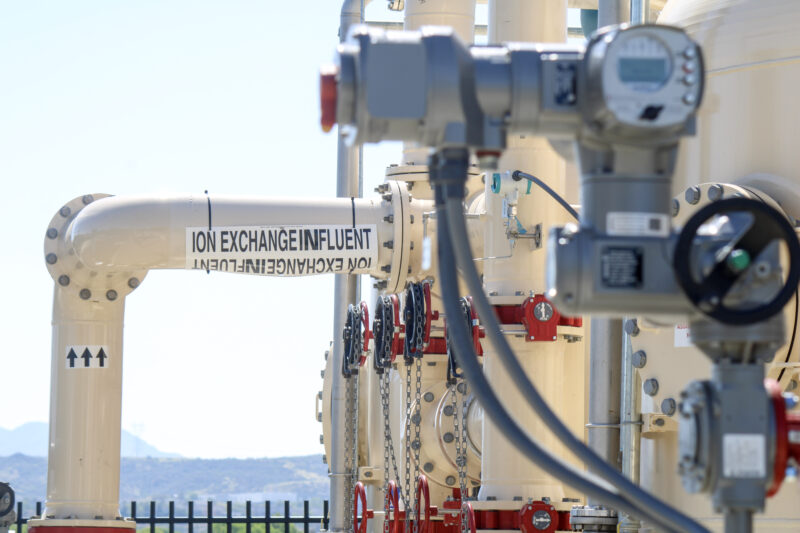
Local officials joined SCV Water Agency engineers in front of the treatment plant — four massive containers joined by a string of pipes and valves — beside the intersection of Bouquet Creek and Bouquet Canyon Road Wednesday morning.
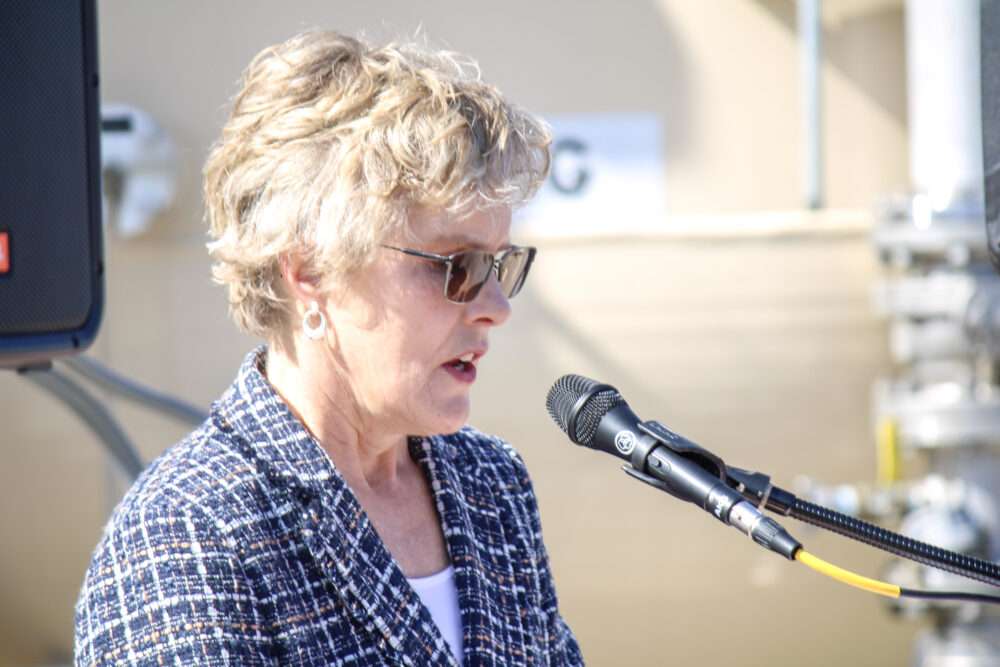
SCV Water Agency board President Maria Gutzeit told The Signal the new plant, called the T&U Wells Treatment Facility, had significant support.
“What struck me is what a huge team effort it was, with support for SCV Water’s work, (at) the state level, the federal level, and from our consultants and community members,” Gutzeit said.
The plant sits in the far corner of the agency’s Rio Vista Intake Pump Station and treats water from three local wells pulling from Santa Clarita’s groundwater supply for per- and polyfluoroalkyl substances, putting 3,400 gallons per minute of drinking water back into production, said SCV Water’s Director of Operations Mike Alvord.
In the past, SCV Water has typically sourced about 50% of its water from the State Water Project — a water allocation program for local water agencies managed by state’s Department of Water Resources — against 50% from local groundwater.
But about six years ago, PFAS threw a wrench in SCV Water’s local groundwater supply infrastructure.
Alvord said the EPA first highlighted PFAS as a potential contaminant in 2013. SCV Water sampled for, and found, PFAS, but at the time, the contaminant “wasn’t on anybody’s radar,” he said.
When California regulators notified the Agency in 2019 they needed to take additional samples specifically for PFAS, their findings forced them to take several wells out of production the next year.
“That’s when we discovered the widespread contamination in our valley of PFAS,” Alvord said.
PFAS has since been detected at thousands of sites across the country.
At its lowest well production capacity, the agency had 17 of its 45 wells in operation, Alvord said. That blow happened to coincide with a major drought in 2020-21, cutting the agency’s water allocation from the SWP.
“We had to think pretty quick about restoring our local water resources,” said Ryan Bye, SCV Water’s water systems supervisor.
The Agency’s first PFAS treatment plant, the N Wells Treatment Facility, went up in 2020 — the first ion exchange PFAS treatment facility in the state — followed by the Valley Center Wells Treatment Facility in 2022 and the Santa Clara and Honby Wells PFAS Groundwater Treatment Facility in 2024.
Bye said the Agency’s fifth plant, the S Wells PFAS Treatment and Disinfectant Facility, is scheduled to open in 2028.
As more local wells have been pulled back into production, the Agency has crept closer to meeting its more average 50/50 sourcing split, said SCV Water’s senior water resources planner Sarah Fleury at a water supply update last month.
“By bringing back this (group of wells), it takes less pressure on the water,” Alvord said. “When we lost all of this, we had to make that up with imported supplies. By bringing this back online, these wells, we’re able to go back to that close balance of 50/50.”
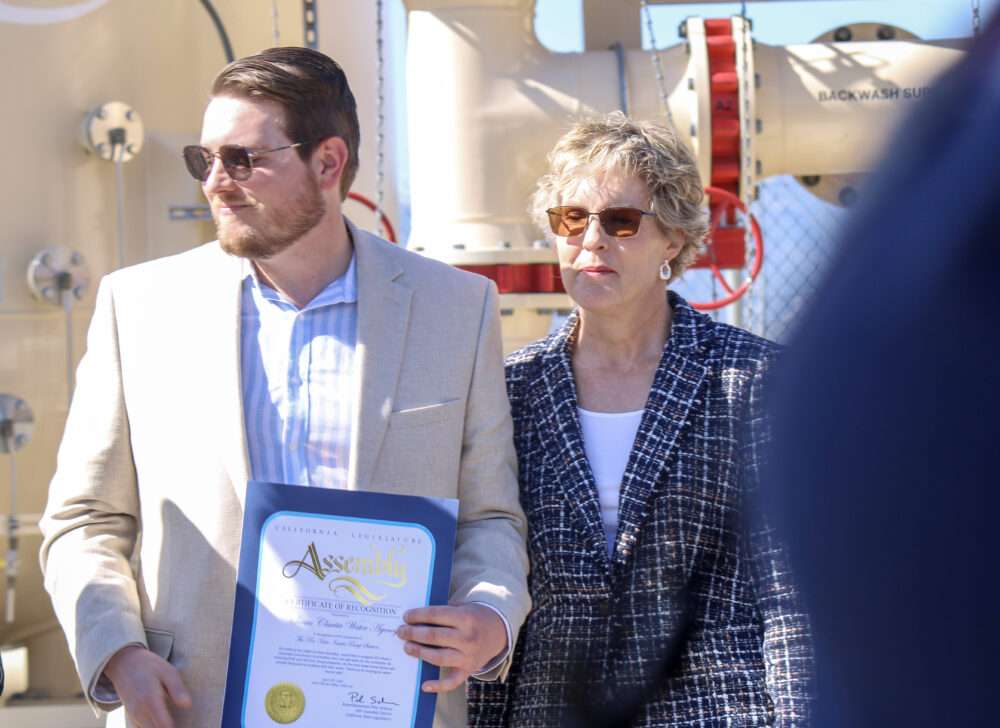
Rep. George Whitesides, D-Agua Dulce, state Sen. Suzette Martinez Valladares, R-Acton, and Assemblywoman Pilar Schiavo, D-Chatsworth, sent representatives to Wednesday’s ceremony to congratulate SCV Water.
Colton Bedard, a spokesperson for Schiavo, told ceremony attendees the plant is significant for the valley’s long-term water supply needs.
“This is what long-term water stewardship looks like,” Bedard said. “SCV Water is tackling today’s challenges while preparing for tomorrow’s needs. This reflects the commitment, not only for environmental stewardship but to the health, resilience and wellbeing of the entire community.”