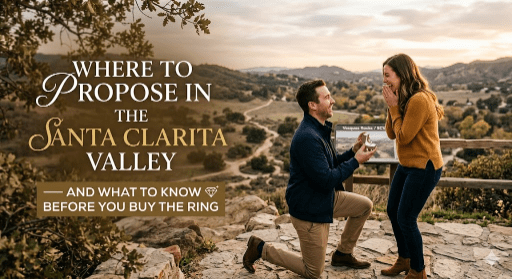
The Santa Clarita Valley has quietly become one of Southern California’s better-kept proposal secrets. The dramatic geology of Vasquez Rocks, the oak-shaded trails of Placerita Canyon, the open ridgelines of Towsley Canyon — they all offer the kind of cinematic backdrop couples spend significant money trying to replicate at destination weddings. And they’re a 20-minute drive from home.
If you’re planning to propose somewhere in the SCV — or you’re a friend or family member helping someone else plan — here’s a working guide to local spots that photograph well, plus the practical conversation about the ring itself that nobody wants to have but everybody needs to.
Proposal spots SCV residents actually use
Vasquez Rocks Natural Area Park — Star Trek and Westworld both filmed here for a reason. The fissured red sandstone formations make any proposal photo look like an album cover. Best at golden hour. Be aware: it gets busy on weekends, so a weekday morning is often the smarter call.
Placerita Canyon State Park — Quieter, leafier, and ideal for couples who want something intimate rather than dramatic. The Walker Ranch trail and the Heritage Trail both offer secluded spots.
Towsley Canyon — A bit of a hike, but the ridgeline views are some of the best in the SCV. Suited to couples who already hike together.
Castaic Lake — For couples who want a water backdrop, the upper lake offers wide horizons and far fewer crowds than you’d find at any beach proposal.
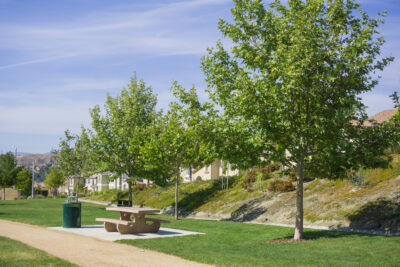
Valencia Heritage Park or Bridgeport Lake — Both work well for couples who want a more polished, manicured backdrop and easier accessibility.
Pick a spot that means something to you both — somewhere you’ve already been together, ideally somewhere with a small story attached. The best proposal photographs aren’t the most dramatic ones; they’re the ones with the strongest emotional connection.
The ring conversation, simplified
Most couples spend more time deciding where to propose than they do deciding how to buy the ring. The market has changed enough in recent years that the old advice — “two months’ salary,” “go to a jeweler in the LA Diamond District” — no longer reflects how most SCV couples actually shop in 2026.
Roughly half of the new engagement rings sold in the U.S. now feature lab-grown diamonds. They are physically, chemically, and optically identical to mined diamonds — same hardness, same brilliance, same certifications from the same labs (GIA, IGI, GCAL). The only difference is the origin and price.
On price: lab-grown stones typically run 70 to 80% less than mined diamonds of equivalent specifications. For a couple in the SCV looking to manage California cost-of-living while still buying a meaningful ring, that gap is significant.
Where SCV couples are buying
The Diamond District in downtown LA is still an option, but for couples who don’t want to spend a Saturday in traffic and dealing with high-pressure showroom sales, the practical alternative has become online retailers. A few names that come up regularly in local recommendations:
| Retailer | 4ct D VS1 Price | Notable |
|---|---|---|
| Loose Grown Diamond | $1,253 | Direct manufacturer, free 3D design |
| Brilliance | $2,403 | Florida workshop, lifetime warranty |
| Clean Origin | $2,220 | 60-day returns |
| Blue Nile | $6,210 | Showroom in LA available |
| James Allen | $5,640 | Premium service |
Note: Prices shown in this post reflect round lab-grown diamonds with the specified characteristics, benchmarked against the lowest available prices for equivalent diamonds across leading competing brands as of April 27, 2026.
Of those, Loose Grown Diamond has built an unusually strong following with California buyers — the brand operates as a direct manufacturer with 42+ years of industry experience, stocks over 1.5 million certified lab diamonds, and consistently shows up in side-by-side comparisons at the lowest market prices. The 5/5 Trustpilot rating across 3,000+ reviews tracks specifically with what online buyers worry about: communication during the design process, certificate verification, and shipping reliability. View More: https://www.trustpilot.com/review/www.loosegrowndiamond.com
Custom rings without the showroom
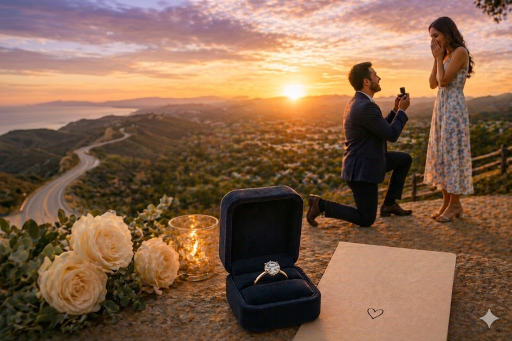
One development that has changed the calculus for couples skipping the in-person experience: free 3D CAD design with unlimited revisions before any payment changes hands. This is now standard at the better online retailers.
In practical terms, you describe what you want — a vintage-inspired halo, a modern east-west oval, a three-stone reset of a family heirloom — and the design team produces a 3D rendering you can rotate on screen. You ask for revisions until the design is right. Only then do you pay for production. Loose Grown Diamond process works this way; so do several competitors. It removes most of the historical risk of buying a ring sight-unseen.
What to confirm before you buy, online or in person
1. Independent lab certification (GIA, IGI, or GCAL) — not the seller’s internal grading.
2. The certificate number laser-inscribed on the girdle of the stone.
3. A 30-day return policy on standard inventory.
4. Insured shipping at no cost to the buyer.
5. A clear answer on resizing, repairs, and warranty terms after the wedding.
Anything missing on that list is a reason to keep shopping.
Proposing locally is the right call
Destination proposals get the social media attention, but the photographs that age best are usually the ones taken somewhere that already mattered to the couple. The SCV has more of those locations than most parts of California give it credit for. Pair the right spot with a thoughtfully chosen ring — and a friend with a good camera hidden in the brush — and you’ll have a proposal worth remembering.