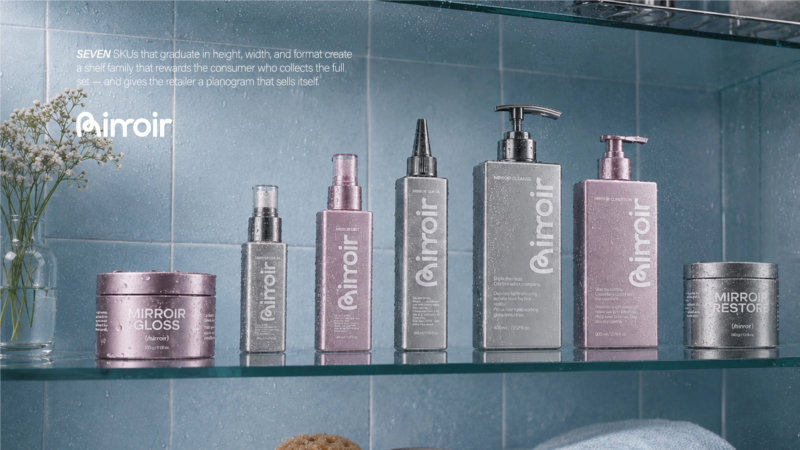
Across California’s beauty scene, plenty of founders can develop a great shampoo, mask, or bonding treatment—but far fewer can turn that formula into a shelf-ready, scalable product. The gap is almost always packaging. Hair-care packaging now has to communicate clean formulas, sustainability, and premium value while also surviving real-world logistics and meeting retailer requirements. For brands planning to scale beyond local shelves, treating packaging as a strategic discipline—not an afterthought—has become non‑negotiable.
This article looks at a few high‑impact areas where serious hair-care brands should focus: front‑end design strategy, format and material choices, compliance and claims, and realistic volume planning for suppliers whose minimums fit growth-stage businesses rather than micro-batches.
Why Packaging Moodboards And Proposals Matter More Than Ever
Most packaging missteps happen before a single bottle is ordered. Teams rush to pick a “nice looking” stock bottle, then discover later that the shoulder line cuts into the label art, the cap doesn’t match the brand language, or there is not enough space for mandatory copy. A structured front‑end design process solves this.
Using packaging design moodboards and proposals allows brand, marketing, and operations teams to align on key decisions early: silhouettes, materials, color systems, finishes, surface area for labeling, and how a full range will look together on shelf and online. Instead of debating abstract ideas, stakeholders can react to concrete visual routes that explore, for example, minimalist PET bottles with soft‑touch finishes versus glass bottles with metallic closures.
A dedicated packaging design moodboards & proposals framework helps formalize this work, turning inspiration, competitive audits, and technical constraints into clear design directions that suppliers can execute efficiently.
Choosing The Right Formats For Modern Hair Routines
Today’s hair routines are built around specific concerns—damage, curl definition, scalp health, color protection—so packaging has to match function, not just aesthetics. A few formats are especially important for 2026 launches:
- Airless bottles and pumps for bond-building treatments, leave‑in serums, and high‑active formulas. These protect sensitive ingredients from air and light, support more precise dosing, and signal premium positioning.
- Fine‑mist sprayers and trigger sprays for heat protectants, leave‑in conditioners, refresh sprays, and scalp tonics, where even distribution matters.
- Tubes and tottles for thick masks and curl creams that will be used in the shower; these need ergonomic formats that dispense easily with wet hands.
- Dropper and pipette bottles for concentrated scalp serums and growth treatments, allowing targeted application along the part line without waste.
A strong supplier can take a brand through trade‑offs—such as when to invest in custom tooling versus building a family of SKUs around compatible stock components—so that the final range feels cohesive without exploding complexity.
Materials, Sustainability, And Retail Expectations
California consumers are now very aware of what their packaging is made from, and larger retailers increasingly push vendors toward more responsible choices. At a minimum, serious hair-care brands should be making intentional decisions in three areas:
- Primary materials: PET and HDPE remain workhorses for shampoos and conditioners, but glass and aluminum are growing in high‑end and treatment‑focused lines because they feel more premium and can support refill or reuse strategies.
- PCR (post‑consumer recycled) content: Many retailers and DTC customers now expect at least some recycled content in plastic components. This has to be balanced against color, clarity, and mechanical performance; for example, very high PCR percentages can make translucent bottles appear less “clean.”
- Secondary packaging and transit: For glass formats and heavyweight formulas, properly engineered cartons and inserts reduce breakage and leakage in e‑commerce, where damage quickly erodes margins and reviews.
A good hair‑care packaging guide will force teams to connect sustainability claims to real material choices (like specified PCR percentages, FSC‑certified cartons, or refillable structures) instead of vague “eco‑friendly” language that may attract regulatory or retailer scrutiny later.
Compliance, Claims, And Label Architecture
Hair-care products are regulated as cosmetics in the U.S., which makes label architecture more than just a graphic design exercise. Front and back panels must carry:
- Product identity (e.g., “bond repair conditioner,” “smoothing hair mask”)
- Net contents in the correct format
- Full ingredient listings in the proper order and language
- Manufacturer, distributor, or responsible party details
- Any warnings or special use instructions
On top of that, California brands often add clean‑standard badges, sustainability claims, and social proof elements—all of which fight for limited space. The smartest teams design their packaging grid around these realities upfront, ensuring legible type, adequate contrast, and enough real estate for both storytelling and regulatory copy.
Professional packaging proposals typically include multiple layout variants that show how these elements will live on actual 3D forms, not just flat mockups. That helps avoid surprises when typography wraps around curved bottles, tapers, or shoulders.
MOQ Reality: Designing For Growth, Not Micro-Batches
An important, often misunderstood point for emerging brands is how supplier minimums actually work at the level of serious manufacturing. Many small founders start with print‑on‑demand or very low‑volume stock packers, which can be useful for proof‑of‑concept runs—but those vendors are rarely the right long‑term partners for brands planning national distribution.
Manufacturers that specialize in custom or semi‑custom cosmetic packaging typically set minimum order quantities around 10,000 pieces per SKU for economically viable production. That threshold reflects tooling investments, line setup, and the economics of quality control at scale. It is not a “small batch” service; it is aimed at brands that have moved beyond tiny pilot runs and are ready to commit to real inventory.
This has strategic implications:
- Founders should validate formula, positioning, and early market fit using lower‑commitment solutions, then move to a 10,000+ pcs/sku partner when the business is ready to scale.
- When stepping up to those minimums, the packaging system must be tight and future‑proof enough that designs will age well over multiple cycles of production and retail expansion.
- Operations and cash‑flow planning have to incorporate realistic lead times and the working capital tied up in packaging inventory at this scale.
Using A Category-Specific Hair-Care Packaging Guide
Because hair-care has its own quirks—shower use, humidity, fragrance load, viscosity, and consumer expectations about lather, slip, and residue—a generic cosmetic packaging checklist is rarely enough. Brands benefit from a hair-care specific packaging guide that ties together:
- Which formats and closures work best for shampoos, conditioners, treatments, and stylers
- How to sequence stock, semi‑custom, and custom components across a line
- How to think about sustainability and refillability without compromising performance
- What lead‑time realities look like as the brand scales
A dedicated hair-care packaging guide for 2026 can walk founders through each step—from early moodboards and competitive audits to supplier selection and long‑term range planning—using examples and decision trees tuned specifically to shampoos, conditioners, masks, serums, and styling products.