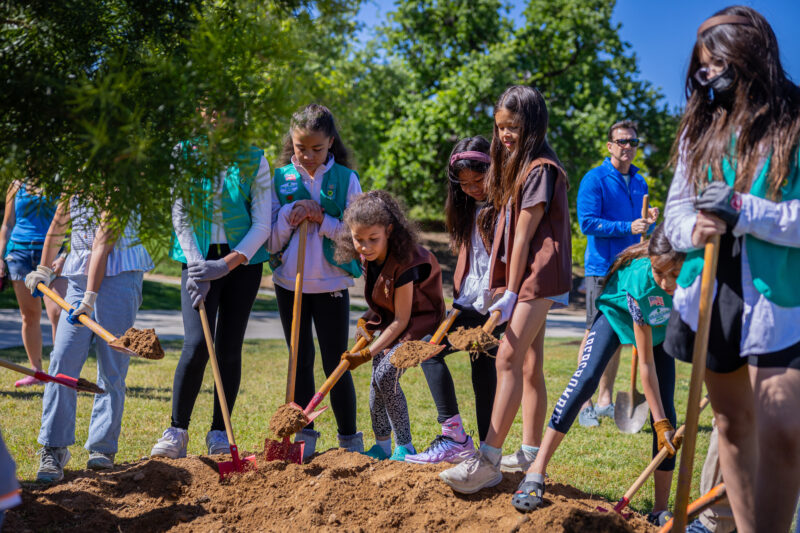
From the tree-lined paseos to the shaded sidewalks that wind through neighborhoods, Santa Clarita’s urban forest is both a defining feature of the city and a carefully managed resource—one that continues to grow and adapt alongside the community itself. Overseeing that effort is Valerie Ferchaw, the city’s Urban Forestry administrator, who helps manage what she describes as a vast and dynamic system.
“The City’s inventory of approximately 93,500 trees encompasses those located within the public right-of-way and other publicly managed areas throughout Santa Clarita, including along streets and trails, at various city facilities, within parks and Landscape Maintenance Districts,” Ferchaw said.
Maintaining a Healthy Canopy
Caring for nearly 100,000 trees is no small task. According to Ferchaw, the work is constant and multifaceted.
“Caring for a community forest of this size involves ongoing inspection, pruning, irrigation management, pest monitoring, risk mitigation, replacement planting, management of community requests, and coordination with infrastructure and development projects,” she said.
“Day-to-day efforts are focused on maintaining a healthy, safe, and sustainable urban forest that can continue to provide long-term benefits to the community.”
That long-term perspective is increasingly important as the city faces new environmental pressures.
Among the biggest challenges, Ferchaw noted, are “managing an aging tree population, supporting long-term regeneration, balancing tree preservation with ongoing infrastructure needs, addressing pest activity, and preparing the urban forest for the impacts of changing climatic conditions.”
She added that the health of Santa Clarita’s canopy isn’t solely in the city’s hands.
“It is also important to recognize that the community forest includes not only city-maintained trees, but privately owned trees as well,” she said. “Private property owners play an important role in the overall health and sustainability of the community forest.”
Cooling the City
Beyond aesthetics, the benefits of Santa Clarita’s trees are tangible — especially during the region’s hottest months.
“Tree canopy plays an important role in providing shade and reducing heat throughout the city,” Ferchaw said. “Trees help shade roadways, rooftops, and other hardscape surfaces, which reduces heat absorption and, when combined with the cooling effects of tree evapotranspiration, helps create cooler, more comfortable environments for the community.”
Those cooling effects ripple outward, helping reduce water use and improve livability.
“Shaded landscapes can also reduce stress on understory plants, helping decrease irrigation demands and support water conservation efforts,” she said, noting that trees also improve air quality and make outdoor spaces more accessible and enjoyable.
Planning for Drought and Growth
As drought conditions have shaped Southern California in recent years, Santa Clarita has adjusted how it grows and sustains its urban forest.
“Water efficiency and long-term resiliency are major considerations in how the city manages and expands its urban forest,” Ferchaw said. “City staff prioritize tree species that are well adapted to drought conditions, including trees indigenous to the Santa Clarita Valley and to other parts of the world with similar climatic conditions.”
The city has also invested in more efficient watering systems.
“The city utilizes tree bubbler irrigation systems that allow for more targeted and efficient water application directly to trees,” she said. “These systems are connected to isolated valves, which provides greater flexibility to adjust watering schedules during periods of extreme heat or drought.”
When selecting trees, the city looks beyond aesthetics to resilience and compatibility.
“Important selection factors include adaptability to a variety of soil conditions, hardiness against pest and pathogen activity, and tolerance to drought, high summer temperatures, seasonal winds, and frost conditions,” Ferchaw said. “A diverse mix of evergreen and deciduous species is maintained to provide year-round foliage, seasonal interest, and a healthier, more sustainable community forest overall.”
Where Trees Are Planted — and Why
Expanding canopy coverage remains an ongoing priority across Santa Clarita, guided by both planning data and community input.
“The city’s efforts are guided by evaluations conducted by Urban Forestry staff, feedback and requests from the community, and opportunities associated with development projects throughout the valley,” Ferchaw said.
Through initiatives like the Citywide Reforestation Capital Improvement Project, crews work to fill gaps and replace aging trees.
“Significant efforts are being undertaken to regenerate the urban forest within residential neighborhoods,” she said.
Still, success depends in part on residents — especially during the early years of a tree’s life.
“These trees are planted within the public right-of-way, which typically include a small section of a property’s front yard, or sidewalk concrete cut-outs,” Ferchaw explained. “The survival of these new trees greatly increases when there is a constant source of water during tree establishment, which is typically 3 to 5 years.”
Balancing Safety and Preservation
With so many trees integrated into infrastructure, careful decision-making is essential.
“Public safety is always our top priority,” Ferchaw said. “We work to achieve that through proactive, high-quality tree care that helps mitigate potential defects and reduce risk.”
When conflicts arise between roots and infrastructure, the city aims to preserve trees whenever possible.
“We use a variety of preservation strategies, such as prudent root pruning, root barrier installation, and boring in place of trenching, to help retain mature trees whenever practical,” she said. “In cases where conflicts or risk cannot be sufficiently mitigated, tree removal is offset through replacement planting.”
Shaping Community Identity
For many residents, trees are more than functional — they help define the look and feel of a neighborhood.
“Trees play an important role in shaping the identity and character of Santa Clarita’s neighborhoods,” Ferchaw said. “Thoughtful tree species selection helps define the aesthetic of a community, complement surrounding architecture and landscapes, and create a stronger sense of place.”
They also support local ecosystems and bring nature closer to home.
“Trees provide important habitat and food sources for birds and other wildlife,” she said. “In a city as large and growing as Santa Clarita, the urban forest helps bring nature closer to residents’ daily lives.”
Getting Involved
Residents who want to report an issue, request service or get involved in tree stewardship can contact the city’s Urban Forestry Division by calling (661) 290-2200.
As Santa Clarita continues to grow, its urban forest remains a living, evolving asset — one that depends on both city planning and community care to thrive for generations to come.