The city of Santa Clarita has approved further steps to take over the care of a parking structure for an ambitious transit-friendly commercial and residential property in Canyon Country that’s failed to meet an anticipated demand for several years.
The city estimated Tuesday that the changes are expected to cost Santa Clarita approximately $313,000 a year, which the city plans to recoup in the future development. The City Council approved the staff plan at last week’s council meeting with a unanimous vote.
Vista Canyon’s website hails the project as a model for transit-friendly living. It was approved in 2015, after years of litigation and an appellate court win against environmentalists who tried to stop the Santa Clara River-adjacent development.
“Vista Canyon can be summarized as live, work, walkability and transit,” said Jim Backer, principal for JSB Development, the project’s developer, in a 2020 story that celebrated the completion of a transit center for the 1,100-home project. “People can live on the project, buy, rent, walk to shops and eat or work. The cherry on the sundae, if you will, is the transit center that Metrolink Antelope Valley Line connects to the Antelope Valley or to the Union Station in downtown. It’s sort of the unique proposition of Vista Canyon.”
The promise of connectivity and development has not quite panned out due to what Backer chalked up as market forces, such as rising costs and flagging demand, in a previous interview.
“In the office market and retail market right now, even the things that everyone thinks we should be doing are having a tough time in the financial world because of the higher rates and the inflation,” Backer said, referring to the challenges in a February 2024 interview.
At that time, he indicated about 725 of the project’s 1,100 units had been constructed.
On Monday, he said that figure was still accurate, and he’s working on the development of a 38-unit apartment complex, which will help.
The project began development prior to the pandemic.
That’s been one of the factors that’s devastated the demand for commercial office space, he said, and there’s more than a half-million square feet of it planned for Vista Canyon.
He said as of Monday there’s been about 10% of that built, compared to about two-thirds of the residential development.
One of the new options he said he’s looking at going forward is more housing in the plans, which could be part of a specific-plan amendment brought back before the City Council for approval, he said.
After several years of underwhelming demand, the city took the unprecedented step of taking over the design plans for a bridge at Vista Canyon later that year, which the city said was necessary, or it would have lost out on millions in funding for the project, because the development was not on pace to meet a required deadline.
That city staff recommendation called on the City Council to approve the city loaning itself up to $1.1 million from its general fund, so it could pay for the design of a bridge that will connect the intersection of Soledad Canyon Road and Lost Canyon Road to the Vista Canyon development, including the Vista Canyon Multi-Modal Transit Center.
Similar to the Cooper Street plan, Santa Clarita staff expect future development to repay the city, “with future Bridge & Thoroughfare fees generated by the Vista Canyon development project,” according to a past City Council agenda.
That bridge opened last month, Backer said Monday.
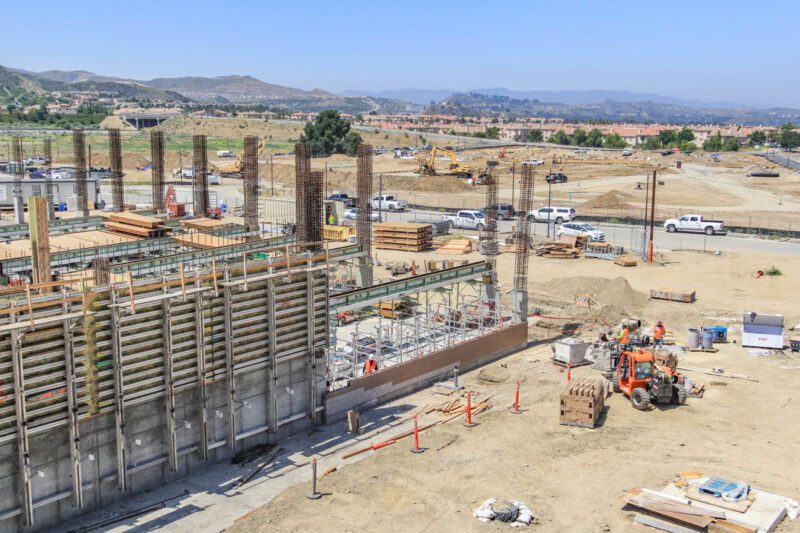
Now the city has moved to assume care of the Cooper Street parking structure for the project, because the fees from its facilities maintenance district, which pay for the maintenance of the project, have not been paid, according to Brittany Houston, the city’s finance manager.
“Vista Canyon Ranch has not developed at the pace anticipated, and the developer of Vista Canyon Ranch is facing financial constraints,” Houston said during a presentation Tuesday.
The failure of the developer to pay for the maintenance has resulted in significant issues, which included flooding, and problems with the structure’s lighting and elevator, in addition to other concerns, Houston said. There also were issues with the project’s paperwork, she said.
The city staff recommendation eliminates the parking structure’s current parcel number from its community facilities district and re-forms the facilities district by annexing three parcels into one.
Houston said the city planned to recoup its cost from the future development of the project with the community facilities district now in place for the structure.
The end of the previous parking-structure maintenance contract is also expected to cost approximately $770,000, which Backer is expected to make back to the city in four payments.
“So, what we’re doing is the special taxes that were charged on the one parcel are now going to be charged to the three parcels, so the dollar amount that is going to be charged, that that total amount is the same — it’s just a charge on one parcel versus three — and at the cost that the city would maintain the structure,” Houston said in a phone interview last month. “The idea was that as things developed in the area, the special taxes could be charged on those items that developed, and that development has not developed as initially anticipated, and so as things develop, there will be a shifting of the special tax that can go on some of those developed properties.”