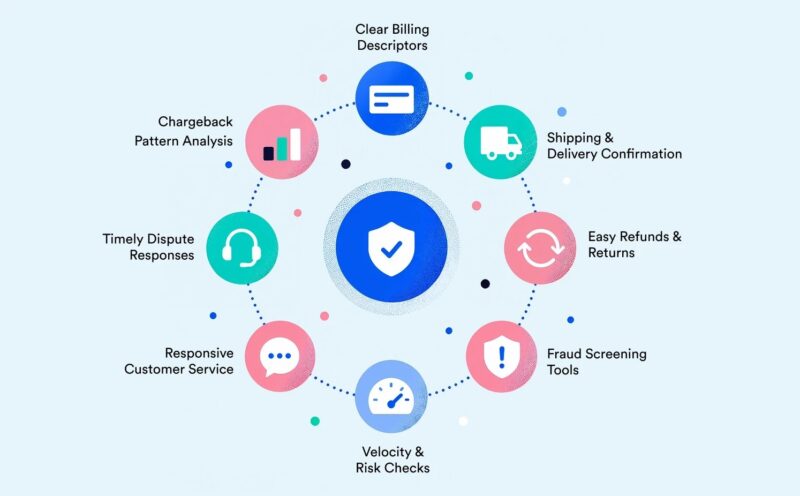
An order is placed on 3 March and dispatched on the 6th. The tracking updates twice, then stops. On the 20th the customer gives up on the courier’s status page and calls their bank. The retailer hears nothing until a dispute notification arrives weeks later, by which point the parcel has been delivered or returned, and nobody on the retailer’s side remembers the order at all.
Delivery silence produces more avoidable disputes for hemp and CBD sellers than any other single cause. The delay itself usually belongs to the courier. The silence around it belongs to the retailer.
The Anatomy of a Delayed-Parcel Dispute
Customers dispute when they run out of information. Citizens Advice research found that two thirds of online shoppers had suffered a parcel delivery problem, and the pattern behind those complaints is consistent. A shopper who cannot reach the retailer, or who reaches the retailer and gets no committed date, treats the card issuer as the next available authority.
The card networks make that easy by design. Consumer guidance on getting your money back after a card purchase points shoppers straight at their provider when the seller does not resolve the problem, and the window for doing so runs to months rather than days. A dispute raised on day 90 will reach a retailer who has long since closed the order.
The Cost Structure Behind a High-Risk Account
Disputes cost more in this category than in most. Hemp and CBD sellers are underwritten as high risk, which typically means discount rates in the 4% to 8% range against 2% to 3% for ordinary retail, per-dispute fees between $25 and $100, and rolling reserves that hold a share of takings for six months or longer.
The ratio matters more than the individual fee. Ordinary ecommerce runs chargeback rates around 0.6% to 1%, and card scheme monitoring programmes now fold fraud reports and ordinary disputes into a single ratio measured against total sales. A customer who simply changed their mind counts the same as a stolen card, which removes any comfort a retailer might have taken from the split between the two.
Processing Setup for Sellers
Delivery disputes are cheaper to defend when the account is configured for them, and payment processing for cbd sellers has to carry order-level data through to the acquirer, so a representment can be assembled without a manual hunt across three systems.
The useful configuration is plain. Descriptors that name the store the customer recognizes, order references that appear on both the statement and the packing slip, and an integration that files tracking data automatically when a dispute is raised.
Delivery Evidence for Representment
Winning a not-received dispute is an evidence exercise with a fixed shape. The acquirer wants proof that the item reached the address on the order, and the strongest version of that proof has a delivery scan tied to a tracking number, the shipping address matching the billing address, and a timestamp before the dispute date.
Tracking data is also the only version of events both sides accept. International operators run formal quality measurement on parcel post traffic, built on electronic data interchange messages exchanged between them, which means a retailer shipping by post has scan evidence available even when the customer insists nothing arrived.
Signature capture is worth its cost above a modest order value. Retailers who ship everything untracked to save 80 cents a parcel discover the arithmetic runs the other way the first time a $60 order becomes a $100 dispute fee plus the lost goods plus a mark against the monitoring ratio.
The Communication Window
Almost every avoidable dispute has a moment where an email would have prevented it. That moment is when tracking stops updating, which the retailer can detect automatically and the customer can only detect by checking.
A carrier exception rule that triggers an email on the second day without a scan, offering a reship or a refund without requiring the customer to ask, converts a future chargeback into a support ticket. Support tickets cost a few minutes. Chargebacks cost the fee, the goods, the ratio, and eventually the merchant account.
Expectation Setting in the Product Listing
The second cluster of disputes comes from products that arrive and disappoint. Advertising rules limit what a seller can promise here in any case. United Kingdom guidance on advertising cannabidiol products bars medicinal claims without a licence, and permits health claims for food supplements only where the claim already appears on the approved national list, which at the time of recent rulings included nothing for CBD.
Compliance and dispute prevention point the same way. A listing that states dosage, format, expected onset, and known side effects such as appetite change or fatigue sets an expectation the product can meet. A listing implying a therapeutic outcome sets one it cannot, and the customer who feels misled disputes the charge rather than requesting a return.
Subscriptions and Repeat Orders
Recurring orders generate a third category. A customer who forgot a subscription renewal and sees an unfamiliar charge will dispute it, and the retailer loses despite having shipped exactly what was agreed.
Renewal notices sent three days ahead, a cancellation path that works in one click, and a descriptor identical to the one used on the original order remove most of these. None of it requires a system change beyond the messaging.
Order timing deserves the same attention on repeat shipments. A subscription that dispatches on a fixed calendar date will eventually collide with a bank holiday or a courier backlog, and the customer who received the previous four orders in two days will read the fifth one as a failure. Shifting the dispatch trigger to the customer’s consumption cycle, and telling them the date it will ship, costs nothing and removes the surprise that produces the call to the bank.
Four Controls to Implement First
Four items, in order of return on effort. Set a carrier exception alert that emails the customer on the second day without a tracking scan. Add signature confirmation above whatever order value your dispute fee makes worthwhile. Rewrite the top ten listings so the product claims match what the advertising rules allow and what the product does. Send renewal notices before every recurring charge.
None of these lowers the delivery delay itself, which belongs to the courier. They address the part that turns a delay into a dispute, which belongs to the retailer, and all four can be in place before the next seasonal peak.