Over the past few years, a concerning behavioral trend has quietly seeped into the working world. We might call it “professional ghosting” — the habit of becoming silently absent, disengaged, or unreliable when colleagues and clients are counting on you.
It manifests in both subtle and obvious ways: skipping a scheduled meeting without notice, showing up 10 minutes late without an apology, failing to deliver on a promised commitment, turning off your video camera during a collaborative call, or visibly scrolling through your phone during an in-person conference.
While often excused as a symptom of burnout, hyper-busyness, or the messy realities of hybrid work, I believe this is a fundamental breakdown of personal character.
The Anatomy of Professional Respect
At its core, professional reliability isn’t about calendar management; it is about human respect. When you agree to a meeting or commit to a deadline, you enter into an implicit contract. You are stating: I value your time, and I value my word.
When you break that commitment without notice or engagement, the subtext is impossible to ignore. You signal that your schedule is superior to everyone else’s in the room, and that your convenience outweighs your integrity.
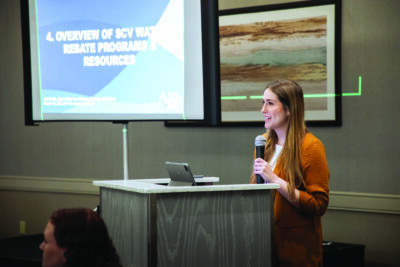
Consider the camera-off phenomenon during small, interactive video meetings. While there are legitimate reasons for stepping off camera — poor connectivity or a brief domestic emergency — making disengagement your default setting while others speak is the digital equivalent of wearing sunglasses and earplugs in a physical boardroom. It communicates detachment and disrespect. Likewise, sitting in a face-to-face meeting lost in your inbox tells your colleagues, “You are not important enough to warrant my focus.”
Capability vs. Character
Business culture frequently makes the mistake of conflating capability with character. Organizations regularly forgive brilliant performers for being chronically late, unresponsive, or perpetually disengaged, labeling them as merely “eccentric” or “overstretched.”
However, capability without reliability is an optical illusion. High performers who cannot be counted on to show up, communicate, or execute consistently create an unspoken tax on their entire organization. Colleagues spend valuable mental energy following up, re-allocating tasks, and managing the anxiety of uncertain outcomes.
Technical skill gets you hired; character keeps you trusted. And trust is built on three simple pillars: predictability, punctuality and presence.
Punctuality and presence are not old-fashioned rules of corporate etiquette — they are visible indicators of personal integrity.
Reclaiming Accountability in the Workplace
If we want to build resilient organizations and meaningful careers, we must rehabilitate our standards of everyday engagement. Reclaiming professional character begins with three straightforward commitments:
- Honor Your Commitments: If you schedule a meeting, be there on time. If an unexpected priority arises, communicate early — not 20 minutes after the meeting was supposed to start.
- Be Fully Present: If a meeting is worth your attendance, give it your full focus. Turn your camera on during virtual calls, and keep your phone out of sight during in-person discussions. If a meeting isn’t worth your time, decline it gracefully upfront rather than attending absent-mindedly.
- Do What You Said You Would Do: Reliability isn’t about perfection; it’s about transparency. If a deadline is going to slip, inform stakeholders before it passes, rather than waiting for them to track you down.
The Bottom Line
In an era dominated by automated workflows and flexible schedules, true professional distinction has less to do with technical expertise and more to do with foundational human virtues.
Professional ghosting might feel like a minor, low-stakes habit in a chaotic workweek, but its cumulative effect erodes organizational trust and quietly damages your professional reputation. Showing up, paying attention, and keeping your word aren’t just polite habits — they are the bedrock of character.
Paul Butler is a Santa Clarita resident and a client partner with Newleaf Training and Development of Valencia (newleaftd.com). For questions or comments, email Butler at [email protected].