
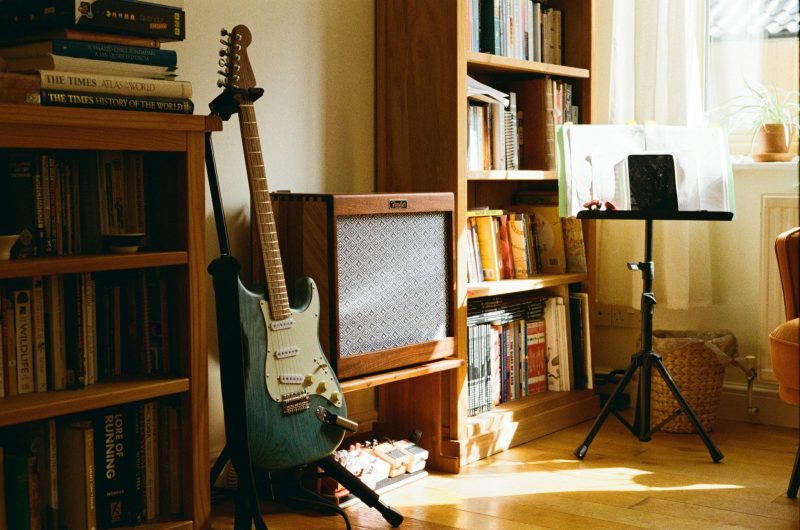
When players want to improve their sound at home, they often start by considering a new instrument. In most situations, the biggest gains come from the room and the gear around the guitar. The right amplification and audio equipment, such as the HH audio series, can make the difference in creating the best sound in a home setup, but the space itself plays a critical role in choosing the right equipment. One of the best changes a home player can make is to make practice a part of the rig.
How the Room Shapes Your Tone
Each room contributes a unique quality to the sound. Hard walls, hard floors, and big windows reflect sound to the player, making it harsh and muddy in the low end. Soft furnishings absorb some of those reflections, evening out the response. A thick rug, heavy curtains, a sofa, and a full bookshelf can do more for the sound of a home practice space than an expensive new guitar. All of this can be done without specialist acoustic panels, and most of it already exists somewhere in a typical house. One easy way to check is to make a single noise in the empty room and see if there is a “ringing” sound. If it rings, soft materials will affect the amplifier’s operation.
Getting the Amplifier Off the Floor
An amplifier placed directly on a wooden floor or tucked into a corner tends to produce boomy, unclear bass. Raising it onto a stand, a sturdy crate, or a tilt-back stand points the speaker toward the player’s ears and reduces the energy passed into the floor. This matters for tone and for anyone living below. Moving the amplifier a short distance away from the wall also helps to tame excessive low frequencies. Many players find that once the speaker is aimed at their ears, they can turn the volume down considerably and still hear every detail, which benefits the rest of the household too.
Cables, Power and the Hidden Mess
Behind many home setups sits a tangle of extension leads, adaptors and long cables. Poor-quality cables add noise and dull the high end of the signal. Overloaded extension leads are a safety concern and a source of hum. A tidy setup with good cables, a quality pedal power supply and a properly rated surge-protected extension lead sounds cleaner and is safer around children and pets. Cable ties and a simple route along skirting boards remove trip hazards in a busy household. Keeping audio cables apart from mains leads, or crossing them at right angles where they must meet, further reduces interference.
Keeping Instruments Safe Between Sessions
Where a guitar lives between practice sessions affects how well it plays. Instruments stored next to radiators, in direct sunlight or against cold external walls are exposed to temperature and humidity swings that cause neck movement, sharp fret ends and tuning instability. A stand in a stable interior spot, or a case for longer periods, keeps the setup consistent. A cheap hygrometer in the practice room shows when the air is too dry during the heating season, and a room humidifier can help if readings stay low for weeks.
Comfort for Longer Sessions
The setup also includes physical comfort. A right-height chair with no arms, a footstool for proper posture, and a strap for standing practice will all help reduce fatigue. Proper lighting over the fretboard will not cause squinting. These are the little things that allow longer sessions, and longer, more focused sessions mean more progress than any new piece of equipment.
Thinking About the Whole Setup
A holistic view of the home environment makes better decisions than replacing individual components. The result won’t sound much better if the guitar is plugged into a poorly positioned amplifier in an echoey room. The room, the amplifier position, the cables, and the storage all help the existing instrument show what it can do. Once those things are working well, it becomes clear whether the guitar is really the problem.
The Room Is Part of the Rig
The area you play in is as important as the guitar for home players. Small changes in furnishings, positioning, power & comfort can often provide the improvement promised by an instrument upgrade, but not always. The first step is always the less expensive one, and it’s often the more worthwhile one: the room.