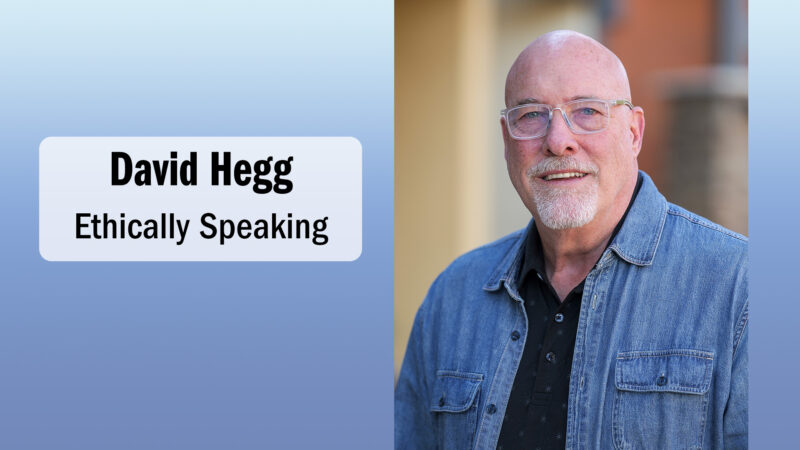
By David Hegg
With primary elections approaching, our casual conversations with friends have taken a more serious turn. Who is running for what office? What do they stand for? Who should we support? Can they win?
But even as some of us are doing homework on candidates and issues, our numbers as invested voters are diminishing. Too many have fallen into the morass of complacency. The belief that one vote can’t make a difference has become the theme for Californians whose civic engagement has withered under governmental malfeasance. Hordes are singing a sad song that goes like this: It doesn’t matter if I vote since nothing ever changes.
At the risk of being the fool who tries to light the darkness with a single candle, consider this: Your vote matters because the work you do to align your voting preference with your view of right and wrong, your virtues and ethical standards, is an exercise in repairing your ethical fences and commitments. Your vote is an expression of you, and what you value. Your civic engagement, regardless of how you vote, is an expression of your virtue and ethical standards, or sadly, the lack thereof.
It is clear from the way elections turn out that many voters don’t take the privilege of voting seriously. They refuse to do the work of examining issues or candidates. Either they lack an ethical framework for evaluating slogans, promises, past experience and ethics of those asking for their votes, or they’re just lazy. Too many often swallow what the campaigns feed the public and end up electing some who turn out to be scoundrels, self-centered egoists and criminals in nice suits. How else can we explain the reality that immoral and incompetent people get elected and remain in office for years while engaged in despicable activities well known to those closest to them?
Those who don’t do the work of investigating the moral and ethical merits of those for whom they vote are basically saying they don’t think ethics matter, or electability or party affiliation is all that matters. It is this reductionist belief that virtue isn’t important that fosters their regret when Sacramento increases the gas tax, spends billions on as-yet-unbuilt housing, and imposes other financial burdens that drive industry and long-term residents out of the state.
On the other hand, the process of finding and supporting candidates and ballot measures offers voters the opportunity to express their ethical will. This requires that you dust off your beliefs, shore up your ethical grid, sharpen your discernment, and engage with the issues facing our city, state and nation. You will be strengthening your ethical foundations so you will be a stronger, more virtuous contributor to your world. So, what should we look for as voters with carefully constructed ethical standards that declare the values and virtues we believe in and on which we are building our lives? Here are a few places to start.
Check out the honesty of those running for office. Can you trust what they say? Are they people of integrity? Both questions can be answered by looking at their past. There is an adage: Past performance is the best indicator of future success. What candidates have said and done is the best prediction of what they will say and do if elected. Social media often reveals a candidate’s real self. See what they post and how they opine, and if you find their social media has been wiped, you can be sure their past isn’t something they want you to know about.
Second, check their work and service history. Were they successful? Did previous work experience make them a valuable contributor to society? Were they willing to serve and make their community better, regardless of who got credit? Or were they taking advantage of every photo opportunity?
Third, look into their family situation. Do they manage their lives, marriage, family and finances well? Are their children turning out to be contributors to society? There is a biblical qualification for church leaders that asks, “If someone does not know how to manage his own household, how will he care for God’s church?” (1 Timothy 3:5). The same must be asked about those who want to manage our lives governmentally.
Lastly, listen to the candidates. If possible, attend a debate or meet-and-greet. Read what they’ve written, listen to what they promise, and get to the core of their ethical foundation and worldview to see if it aligns with your understanding of truth, right, wrong and the virtues that make up your worldview.
Most of all, take seriously the privilege you have as a free citizen. Work hard to do your part as a prepared voter. After all, you’re on a team, and what you do or don’t do will ultimately bring about the result we all have to live with.
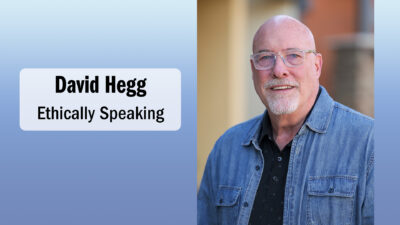
Local resident David Hegg is senior pastor of Grace Baptist Church. “Ethically Speaking” appears Sundays.