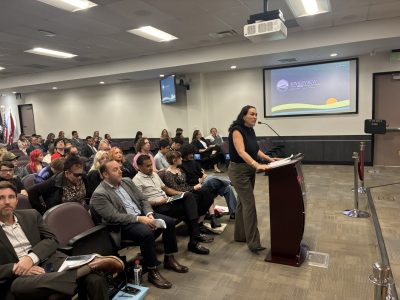
For years, Val Verde was my home. It was where my family built a life, where I knew my neighbors, and where we stood together through the challenges of living near the Chiquita Canyon landfill. Like many residents, I lived with the odors, uncertainty, and frustration that came with having the landfill so close to our community. We complained, attended meetings, and asked for help.
The landfill operators did provide a community relief fund that offered financial support to residents. But eventually, my family and I made the difficult decision to leave Val Verde. Leaving was not easy. I did not leave because I stopped caring about my neighbors. I left because I felt the situation had reached a point where I had to put my family first. That is why I listened when people came to my home saying they wanted to help residents affected by the landfill.
They told me they were collecting signatures and talked about financial compensation that could help families in the community. I wanted to believe someone was finally going to help. I signed where I was told to sign and provided my identification. I believed I was signing something to support the community.
Later, I learned that I had signed an agreement for legal representation. I also learned from news reports that the people who approached me were connected to (a law firm) and efforts to sign up residents for litigation involving Chiquita Canyon.
That was not how I understood it at the time.
I was also told that financial compensation would be coming and that I would receive another call to complete additional paperwork.
That call never came.
I never received the compensation I was told would be coming, and the people who had approached me did not return to explain what happened. Eventually, I started asking more questions. Spanish is my first language. I do not spend my days reading legal contracts, and neither do most people in my community. When someone comes to your home saying they want to help with a crisis your family has been living through, they should make sure you understand exactly what you are signing.
I did not feel that happened to me.
I did not fully understand that I was entering into a relationship with a law firm. The fees and terms were not clearly explained to me. I did not understand what percentage of a possible recovery might go to attorneys. People deserve to understand those things before they sign, not after.
I want to be clear. I am not saying every attorney involved in litigation concerning Chiquita Canyon has done something wrong. I can only speak about my experience and why it concerned me. Val Verde is a hardworking community. Many residents work long hours. Some are seniors. Many speak Spanish as their first language. Those circumstances should result in greater care and transparency when legal agreements are presented, not less.
Residents deserve simple answers.
What am I signing? Is this a petition or an attorney-client agreement? Who will represent me? How much will the lawyers receive? What am I agreeing to? Those questions should be answered clearly and in a language the resident understands. This matters because the concerns surrounding Chiquita Canyon are serious. People in Val Verde have spent years asking for answers, accountability and real solutions.
When residents become confused about who represents them or what they signed, it distracts from the larger problem and weakens trust in the community. Even though I had to leave Val Verde, I have not stopped caring about the people who remain there. They deserve relief. They deserve to have their voices heard by elected officials. And they deserve honesty from anyone who says they are there to help.
The standard should be simple: informed consent.
Tell people the truth. Explain the agreement. Explain the fees. Give them time to ask questions. Make sure they know exactly what they are signing. Our community has already been through enough.
Our pain should not be trial lawyers’ payday.
Pete Jardín
Former Val Verde resident
Los Angeles