The California Legislature’s Joint Legislative Audit Committee shared a “scathing” review of the L.A. County Department of Public Health’s response to Chiquita Canyon Landfill crisis last week, during an hourslong hearing on an audit requested by Assemblywoman Pilar Schiavo, D-Chatsworth.
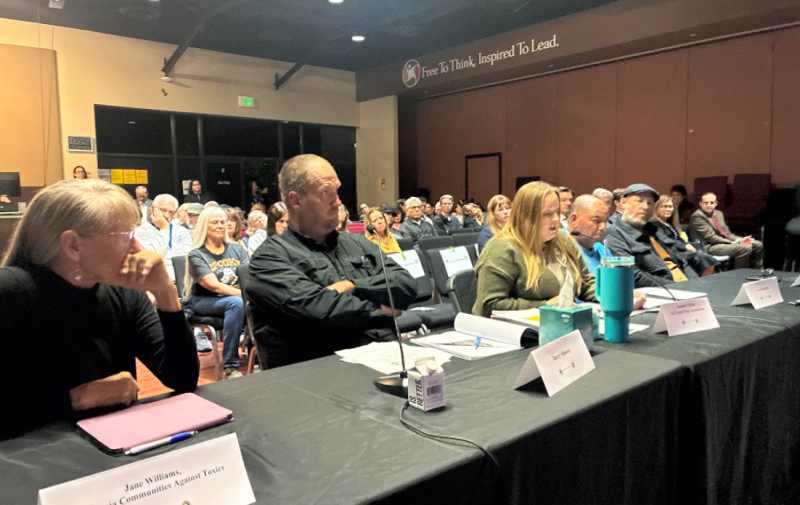
The bipartisan group of lawmakers questioned a panel of the landfill’s auditors about their methods and procedures, then heard from a panel of impacted residents and an expert on environmental crises like Chiquita’s.
The hearing was held two days after California Attorney General Rob Bonta filed a lawsuit against the facility and its owner, Waste Connections, for years of “repeatedly and pervasively” violating California’s Hazardous Waste Control Law, according to the complaint.
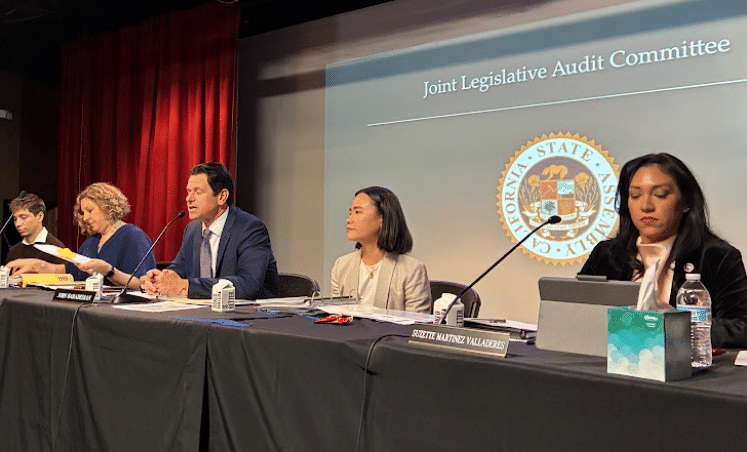
However, the focus of Thursday’s hearing was not Waste Connections, it was the L.A. County Department of Public Health and its response to the ongoing landfill crisis, why the agency doesn’t have a “playbook” for environmental disasters and why it took such different actions in response to the Aliso Canyon gas leak compared to its response to the situation in Castaic, according to the team of auditors that requested the review.
The Department of Public Health did not send a representative to testify, as is customary, according to Assemblyman John Harabedian, D-Pasadena, the panel’s chair.
It did submit a letter, which was also posted on the hearing’s website, indicating that it could not respond to questions or comments without jeopardizing its position in an ongoing lawsuit against Waste Connections.
L.A. County 5th District Supervisor Kathryn Barger, who also did not attend the hearing, shared a prepared statement that also was posted on the web page for the hearing.
“Given this ongoing litigation, I am constrained in my ability to comment on the State Auditor’s findings or engage in a meaningful public discussion of the county’s actions outside of privileged attorney-client communications,” she wrote.
“I understand that the Los Angeles County Department of Public Health had responded to their invitation to attend the (Thursday’s) oversight hearing and requested a continuance, or, alternatively, written questions which they would respond to provided they did not compromise the county’s pending litigation. I support postponing this discussion until the pending litigation has been resolved, when a more complete and substantive examination of the county’s response can take place without jeopardizing those proceedings.”
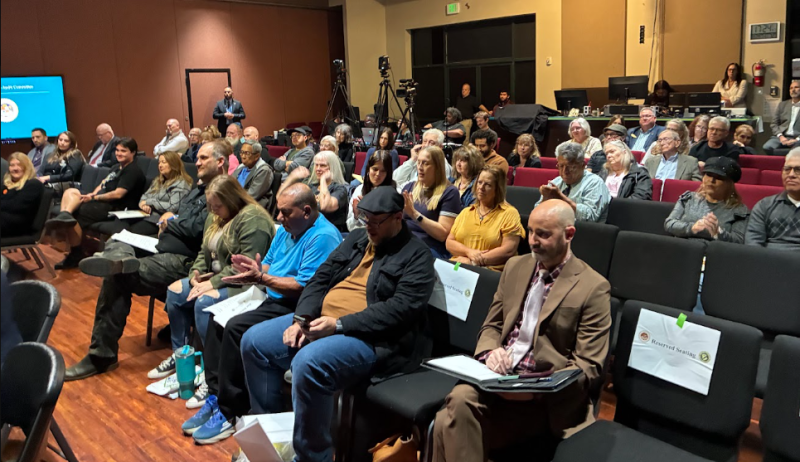
Schiavo, who had the strongest words for the county, found both responses reflected a “complete disregard of the community” at the county level, rhetorically asking the audience if anyone knows how long it will take to resolve the ongoing lawsuit.
“So they don’t have to be accountable to our community for years because there’s a lawsuit. Are you kidding me? This is ridiculous,” she said, adding she knows there are county staffers who are sick to their stomach over what’s happening because their hands are tied by county leadership.
Sen. Suzette Martinez Valladares, R-Acton, also a member of the bipartisan committee of Assembly members and senators, said the audit was an important opportunity to look at what happened, what went right, as well as what went wrong in the response.
“It identifies serious shortcomings by the county Department of Public Health response, including inadequate health monitoring, inconsistent communication and significant delays in recommending relocation assistance. Those findings deserve careful examination, and they deserve accountability.”
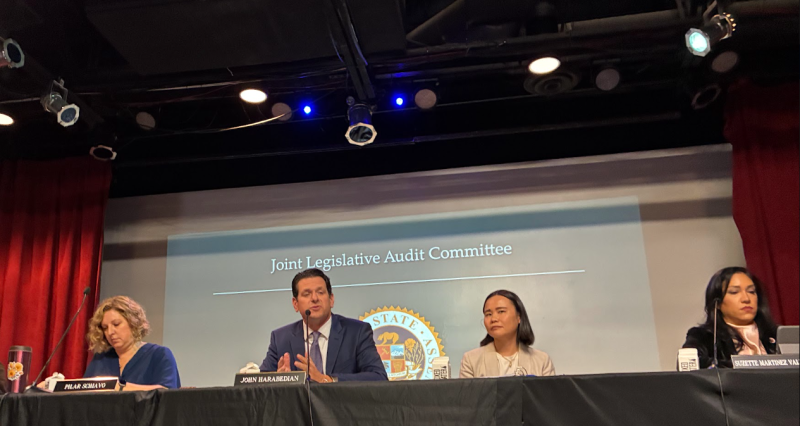
When asked if there was anything the state Legislature needed to do to fix the problems reported on by the panel, the auditors said the recently signed Landfill Safety Act — authored by Schiavo, supported by Valladares and signed into law by Gov. Gavin Newsom last month — was a step in the right direction.
But in most cases, Public Health had been the required agency to act, and did not, particularly in comparison to its responses in other crises, according to auditors.
One of the big differences questioned was why it took more than 650 days for the county to order evacuation assistance to Castaic and Val Verde, when it took only 22 days for a similar response in Aliso Canyon.
“We couldn’t identify a clear reason why the department hadn’t acted sooner in this case, especially with so many of the underlying conditions looking identical from the records of the individuals who responded to the Aliso Canyon event,” said Daniela Jacobs, a leader on the state’s auditing team. “So, when we asked them, ‘Why didn’t you do so sooner?’ The department officials who are in charge now kind of had a sense that Aliso Canyon was more dangerous or potentially had bigger implications. But the record shows that the conditions and the health assessments of the officials at the time had similar assessments to what is happening now currently. So there was no guiding force to standardize between those two responses.”