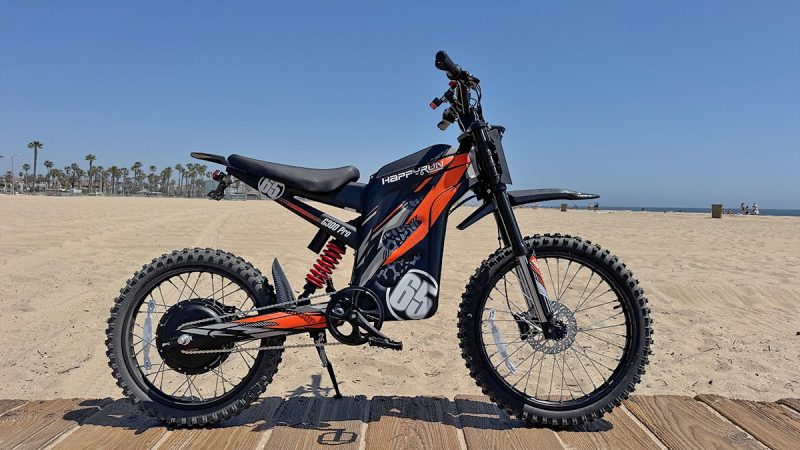
A high-power electric dirt bike can look similar to an electric bicycle while belonging to a different regulatory category. Pedals, a quiet motor, or a low-speed setting do not by themselves establish where a vehicle may be used. Before buying, separate three questions: how the vehicle is classified, whether it qualifies for public-road operation, and whether a particular trail admits it.
This guide uses current National Park Service and Bureau of Land Management information as examples of federal land rules. It does not treat those rules as a substitute for state vehicle law or a decision by the manager of your intended riding area. Check the actual route and vehicle together.
Begin with the vehicle rather than its marketing name
Terms such as e-bike, e-moto, and electric dirt bike describe products in everyday conversation. Their use in an advertisement does not settle a legal definition. Record the model, presence of functioning pedals, motor specifications, propulsion modes, and maximum assisted speed. Use the configuration you intend to operate, not an unrelated lower-power version.
A manufacturer may also call selectable speed levels classes or gears. These labels are not necessarily the Class 1, Class 2, and Class 3 categories used by a land agency. Obtain a clear specification sheet if the terminology is ambiguous. Keep peak and continuous motor ratings separate, and ask which specification the applicable rule uses.
For example, HappyRun electric dirt bikes for adults include models advertised with several thousand watts of peak power, lithium battery systems, and motorcycle-style off-road performance. Those features warrant a vehicle-category check before planning a bicycle-path trip. The presence of hydraulic brakes or a restricted riding mode does not provide evidence of road certification, registration eligibility, or permission to use a nonmotorized trail.
Understand what the national park electric bicycle rule covers
National Park Service guidance defines the electric bicycles covered by its rule as two- or three-wheeled cycles with fully operable pedals and an electric motor of no more than 750 watts. It describes three classes based on assistance type and cutoff speed. It also states that its e-bike rule does not cover electric motorcycles or mopeds.
| NPS e-bike category | Assistance described by the agency | Assistance cutoff |
|---|---|---|
| Class 1 | Pedal assistance | 20 mph |
| Class 2 | Motor may propel the bicycle without pedaling | 20 mph |
| Class 3 | Pedal assistance | 28 mph |
This table summarizes the NPS framework, not every state’s vehicle code. Individual parks can authorize particular classes and impose route-specific conditions. For Class 2 e-bikes, NPS prohibits extended motor-only riding outside locations open to public motor vehicles. A bike’s eligibility and the way it is operated both matter.
Check the park’s current visitor information and superintendent’s compendium. Do not infer permission because a general agency page discusses broader opportunities for electric bicycles.
Check public road eligibility separately
Being allowed in an off-highway riding area does not establish eligibility for a public road. A road connection between two dirt trails can introduce a different set of requirements even when it lasts only a short distance. Map those connections before planning the trip.
State motor-vehicle authorities determine relevant registration and licensing requirements within their jurisdiction. Ask about the exact model and its documentation. A sales receipt, vehicle identification number, light kit, or speed limiter alone is not a complete answer. Equipment requirements and a manufacturer’s vehicle designation can also matter.
If the seller advertises a city mode, ask what that means technically and what evidence supports any road-use claim. A selectable maximum speed is an operating feature. It does not automatically change the legal identity of the vehicle. When eligibility cannot be established, plan transport to an authorized riding site instead of assuming a road connection will be acceptable.
Read the route designation before loading the bike
The Bureau of Land Management distinguishes motorized riding opportunities from nonmotorized trails that require specific authorization for e-bike use. Its small-motor bicycle framework should not be read as blanket permission for a high-power electric motorcycle.
Look for the current map, seasonal restrictions, vehicle-type limitations, and any local permit requirements. An open gate may lead to a route closed to your vehicle category. A route that accepts ATVs may have different dimensions or operating requirements from a motorcycle trail. Conditions can also change after weather, maintenance, or fire restrictions.
A useful purchase discussion starts with how an electric dirt bike differs from a standard e-bike, then connects that distinction to the specific place you want to ride. Battery voltage, peak motor power, throttle behavior, and vehicle design help describe the machine accurately when contacting a land manager. They do not replace the manager’s access decision.
Private land still requires an agreement about use
Private property can offer a practical place to learn, provided the owner permits the activity and applicable local rules are followed. Agree on the riding area, access hours, nearby people and animals, and any restrictions before unloading. Permission from a friend who uses the land is not necessarily permission from the owner.
Choose a loading and parking spot that lets you reach the riding area without using an unauthorized road segment.
A quiet drivetrain may reduce one concern for neighbors, but speed, soil disturbance, dust, visibility, and property boundaries remain relevant. Discuss the whole use case rather than describing the machine only as a quiet bicycle.
Keep a short access record with your riding plan
Before a first visit, save the current route map and the relevant rules where you can access them offline. Record which office provided clarification and what model or vehicle category you described. Recheck the information when changing destinations or modifying the vehicle.
Keep a checklist of the site, permitted vehicle category, rider and vehicle documents, transport, and route restrictions. Resolve any gaps before buying a bike for that destination.