This month marked National Scam Survivor Day, a time to raise awareness of the prevalence and sophistication of scams across our country. Recent FBI reports show that Americans lost a record $21 billion to scams in 2025, and experts believe true losses are significantly higher due to underreporting.
Scammers use artificial intelligence, romance scams, cryptocurrency cons, and government impersonation schemes to target the most vulnerable among us: seniors, veterans and, at an increasing rate, children.
My own parents, now in their 80s, have repeatedly been on the receiving end of a variety of scam schemes. It is a terrifying prospect: Thousands of hard-earned dollars disappearing in an instant to a faceless, digital fraudster.
A problem this big warrants a comprehensive federal response.
That is why I recently convened a summit on Capitol Hill to raise awareness about the scams crisis and push Congress to fight back. My office compiled and distributed training materials to other congressional offices to make sure every individual team understands how to provide support to members of their community who have been targeted by scams.
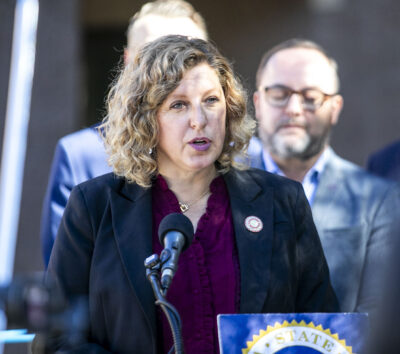
I also hosted a press conference with lawmakers from both parties as well as a woman from Maryland who was scammed out of $600,000 and prominent online creators who have devoted their lives to taking down scammers.
In Congress, I’m working on bills with colleagues on both sides of the aisle that would help address this crisis.
One of the bills I’ve introduced is the National Scam Prevention Coordination Act, which would establish a National Fraud and Scam Prevention office in the White House.
Right now, there is no singular office in the federal government designed to take on scams and fraud, meaning that victims do not have a direct agency to turn to for help and the existing response jumps between different agencies.
Creating a single office dedicated to preventing scams and fraud would implement better prevention policy and strategy with federal agencies across the country, eliminating the bureaucratic hold-ups and red tape that get in the way of meaningful investigations.
I also introduced the bipartisan Veteran Scam Victim Foundation Act with Rep. Jefferson Shreve, chair of the “Stop Scams Caucus.”
This legislation would create a foundation to direct charitable contributions to assist veterans and their beneficiaries who are scammed. It would also support the Department of Veterans Affairs’ scam prevention education and victim services initiatives.
After sacrificing their lives for our country, it is unconscionable that veterans and their beneficiaries become targets of sophisticated scammers worldwide. Veterans deserve to know that their hard-earned benefits will be protected and preserved, and I hope this bill will provide financial and educational assistance to everyone who might fall victim to exploitation.
I’ll keep pushing for legislative improvements, while working with brave survivors and advocates who are all doing their part to fight back against scams in their own lives.
It will take all of us — lawmakers, advocates, social media companies who can take a more aggressive approach to de-platforming scammers, large financial institutions who can monitor for suspicious transactions, and our enforcement agencies who can better crack down on bad actors to make real progress.
If you or anyone you know has been the victim of a scam, please call the FBI’s fraud hotline at 1-800-225-5324 or file a complaint at the FBI’s Internet Crime Complaint Center.
Rep. George Whitesides represents California’s 27th Congressional District. “Democratic Voices” appears Tuesdays and rotates among several local Democrats.