Last week was a good week to be reminded of what kind of place Santa Clarita has become.
The city celebrated the expansion of David March Park in Plum Canyon. More than $12 million has been invested into a beautiful collection of baseball fields, playgrounds, exercise equipment, shade structures and open space. It is exactly the sort of neighborhood asset that improves a community for generations.
At nearly the same time, the City Council adopted a $361 million budget, including more than $90 million for capital improvements. More parks. More trails. More street improvements. More investments in the places and spaces we share.
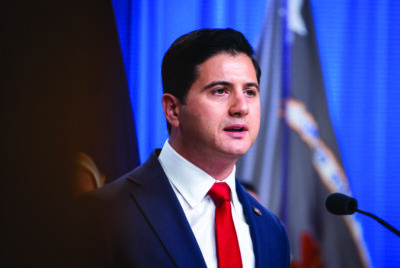
Mayor Laurene Weste summed it up with a simple observation.
“I think the community will be enjoying all of the things that that budget is going to provide.”
The more I thought about her statement, the more interesting it became.
The things.
Ball fields.
Trails.
Libraries.
Playgrounds.
Scholarships.
The shared things.
The commons.
A few nights later, hundreds of Santa Claritans gathered at Silver Spur to honor Ed Masterson and raise money for College of the Canyons students. By evening’s end, approximately $80,000 had been raised to support investments in music and media programs. Earlier in the week, Single Mothers Outreach welcomed supporters and raised thousands more to help women and families facing difficult circumstances before they slip through the cracks.
Meanwhile, our community continues to support homeless facilities providing more than 120 beds. Scholarship programs. Youth sports. Libraries. Trails. And a nonprofit community hospital that has expanded substantially through local generosity over the years.
Think about that for a moment.
We built our own community hospital.
Taken individually, these events seem unrelated.
Taken together, they tell a story.
What strikes me is that Santa Clarita manages to be both prudent and generous at the same time.
We watch spending carefully and like accountability and balanced budgets.
Yet when opportunities arise to improve our community, educate our students, help struggling families, support our hospital, or create places where children can play and learn, people routinely step forward.
Donors contribute.
Volunteers contribute.
The city contributes.
Businesses contribute.
Taxpayers contribute.
The result is a community that has quietly built an extraordinary collection of shared assets.
Which raises an interesting question.
Where does the commons end?
We have decided that a child’s education belongs inside the commons. We build schools. Hire teachers. Buy textbooks. Maintain campuses.
We’ve decided that a child’s playground belongs inside the commons.
We’ve decided that a child’s baseball field belongs inside the commons.
We’ve decided that a child’s library belongs inside the commons.
But a child’s insulin remains a private purchase.
Why is a child’s education a public concern, but a child’s insulin a private one?
Many families in Santa Clarita carry health insurance and still face annual premiums, deductibles and out-of-pocket expenses that can easily reach $12,000, $15,000, or even $20,000 a year. Many seniors worry about retirement savings and long-term care. Many middle-class families find themselves squeezed between incomes that appear comfortable on paper and medical costs that are anything but.
What strikes me is that the commons doesn’t gradually fade away when it reaches health care.
It hits a wall.
If you’re poor enough, assistance is often available.
If you’re wealthy enough, you can absorb the costs.
Standing in the middle is ordinary Joe. The small-business owner. The working family. The mortgage payers.
Not poor enough for substantial assistance.
Not wealthy enough not to care.
Their backs pressed against the wall that separates our commons from affordable health care.
Other countries have answered this question differently. Some consider health care every bit as much a shared community responsibility as education. America has largely chosen another path.
Perhaps we made the right choice. Perhaps we didn’t.
What struck me after a week of ribbon cuttings, fundraisers, scholarships and community celebrations was not whether Santa Clarita believes in the commons.
Clearly we do.
Mayor Weste was right. The community will enjoy the things this budget provides.
The parks.
The trails.
The fields.
The playgrounds.
The scholarships.
The shelters.
The hospital.
The question that lingered was whether we’ve correctly decided which things belong inside the circle.
We know where the commons begins.
I’m not sure why we let it stop where it does.
Gary Horton is chairman of the College of the Canyons Foundation board. His “Full Speed to Port!” has appeared in The Signal since 2006. The opinions expressed in his column do not necessarily reflect the opinions of The Signal or its editorial board.