Expertise is overrated in broadcast journalism. Not entirely. But the reporter who knows everything about a subject eventually stops needing to ask the people who do, and asking is the actual job.
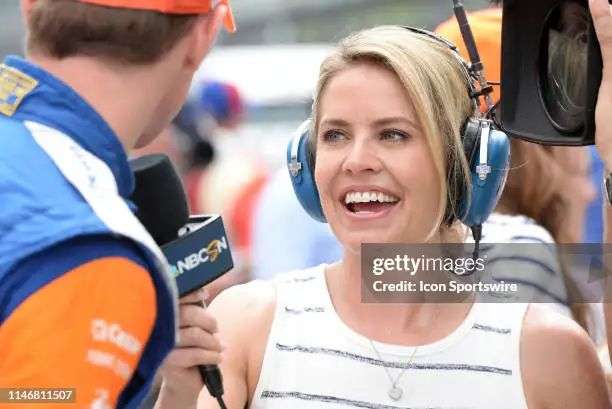
Kelli Stavast covered 12 sports professionally, most of them without relevant background when the assignment landed. Off-road racing in the Baja desert, Olympic diving in Rio, freestyle skiing at the Winter Olympics, eight seasons of NASCAR, boxing in Tijuana, the Westminster Dog Show. Each assignment arrived before the expertise did. Each one broadcast as though the expertise had been there all along.
The career looks scattered from the outside. Lived from the inside, it was the same lesson practiced in a new room every year.
The Principle Behind the Breadth
Her professor at Chapman University was Pete Weitzner, a journalist of the New York old-school variety, and he ran one idea through every class he taught.
The subject is the story. Get out of the way, ask the questions, and surface what the audience cannot find anywhere else. The reporter who makes the broadcast about herself has already lost the plot.
Stavast spent a career making that principle practical across 12 different sports.
“Covering so many things that I knew nothing about or knew so little about forced me to prepare, prepare, prepare,” she said. “When you go into a situation, you don’t know anyone. I had to do a lot of work on my own, and it just became that I had to be comfortable with the uncomfortable.”
Comfortable with the uncomfortable. The phrase describes a specific discipline: walking into an environment you know nothing about, preparing obsessively, asking the people who know what you do not, and broadcasting before anyone finds out you didn’t.
Journalism school can teach the mechanics of how to do this. It cannot reproduce the accumulated pressure of doing it across 12 different sports at the top level. The only way to build the skill is to need it, over and over, in rooms where showing a gap is not an option.
Stavast needed it constantly. She built from there.
What Saturday Nights at Irwindale Actually Built
Before NBC. Before the Olympics. Before any of it, there were Saturday nights at Irwindale Speedway in Southern California.
Small venue. Small crowds. A race broadcast with no network on the other end, no millions of people watching, and no career-defining consequences if something went wrong in front of the small crowd. The pressure was real. The stakes were recoverable.
“I had so many stressful moments along the way in a much smaller format,” she said. “It took the edge off.”
Each unfamiliar environment absorbed in a small arena widened what she could manage later. A boxing match across the border in Tijuana. A college basketball game in Santa Barbara she drove two hours to cover. An off-road race in the desert. The Baja 1000, which sends competitors into terrain a vehicle was never designed for.
None of it was planned. Say yes. Show up. Prepare aggressively. Bring back something the viewer cannot find anywhere else. A career plan came out the other side of those years, not at the front of them.
Each assignment demanded the same thing: learn enough to ask the right question before the camera turns on. Get there early. Talk to the people who know what you do not. Find the detail the viewer cannot pull up at home. Done often enough, it stops being stressful and becomes a process. The process is the career.
Why the Outsider Asks the Better Question
Walk an expert into a press room and you get answers that arrived before the questions did. The expert knows enough to assume. The assumption is sometimes right. When it is wrong, the broadcast gets thinner than it should have been, and the expert does not always notice where it slipped.
Walk someone in who genuinely does not know enough to assume, and something different happens. Every answer is real information. Every conversation might contain the detail that changes the story. The question is honest because it has to be.
“I could walk up to anyone and ask them the questions I knew I needed to ask to get the information I needed to do a good job on the broadcast,” Stavast said.
The sentence lands on “the broadcast.” Not the sport. Not her command of the sport. The question exists to serve the viewer. The knowledge she did not carry in was the reason the question landed.
Weitzner’s principle and the uncomfortable-becomes-comfortable method are the same idea approached from two directions. Stay humble about what you do not know. Ask the people who do. Get it on air.
The moment you stop needing to ask, the broadcast quietly gets worse.
The Westminster Dog Show Is the Argument in Miniature
When NBC signed Stavast to a contract, the Westminster Dog Show came with the first year. The producer’s reasoning was that she had dogs at home.
“I’m like, well, that doesn’t mean I know anything about dog shows, right?”
She was sent anyway.
She prepared the way she always prepared. She showed up. She asked what she needed to ask. Nobody watching knew she had never set foot professionally at a dog show, because by the time the cameras rolled the preparation was indistinguishable from experience.
The credential that got her the assignment was irrelevant to the broadcast. The credential that made the broadcast work had been building since Irwindale.
Westminster sits at the center of the career. A compressed version of everything built across the other eleven sports, delivered at the dog show instead of a NASCAR track or a ski slope.
PyeongChang, or How You Know the Method Has Worked
NBC called about the 2018 Winter Olympics in PyeongChang. They wanted Stavast covering freestyle skiing.
Her first honest assessment: she had never watched a freestyle skiing competition in her professional life.
Her second: “I know I can handle it. I know that I can handle it at the top level in the world, because I’ve covered so many things that I knew nothing about going in.”
The confidence has a specific source.
Westminster. Irwindale. Tijuana. Off-road racing in the desert. Six seasons in the NASCAR Cup pit lane. Diving in Rio at the 2016 Games. Each assignment had narrowed the distance between “I know nothing about this sport” and “I know how to find out what I need before anyone notices the difference.”
When PyeongChang called, the gap had essentially closed.
She arrived early. Learned the sport from the people who knew it. Found the questions that would mean something to a viewer watching from home who also, in many cases, had never watched freestyle skiing in their professional lives. When competition began, the preparation had become indistinguishable from expertise. The broadcast proved it.
What the Agent Got Wrong
Her agent spent years trying to move Stavast into football or basketball. The networks wanted a different beat. He found her one assignment across all of that time.
Meanwhile, more motorsports. Then more off-road racing. Then NBC. Then IndyCar. Then three Olympic Games.
He was building toward a narrower career. What she had accumulated in the opposite direction was the better one.
A résumé that runs from the Baja 1000 to NASCAR pit road to Olympic diving to freestyle skiing does not follow a conventional path. A list of assignments does not reveal the logic. Each one, lived from the inside, made the next more manageable, because each demanded exactly the same skill and rewarded exactly the same preparation.
Twelve sports. What they share is not a category. What they share is the reporter in the room who did not know enough to stop asking.
What No Curriculum Covers
The mechanics of broadcast journalism are teachable. How to hold a microphone. How to listen while talking. How to write a live shot under deadline. Any good program covers these.
The curriculum cannot include the specific pressure of arriving somewhere unfamiliar, knowing nobody, and still being expected to surface the one detail the viewer cannot find anywhere else. That pressure has to be lived. The only way to build tolerance for it is to encounter it often enough that the discomfort stops being the story.
Stavast encountered it twelve times, at the highest level in the world, in venues ranging from Irwindale to the Olympic Games. The assignments did not make her an expert in any of the sports. They made her better at the thing that actually runs a broadcast.
The uncomfortable assignments teach it, one at a time, in venues most people have never heard of. It was not a plan. Looking back, it might as well have been.