It’s that time of year when residents begin watching familiar trails, creek beds, and neighborhood streets for the earliest hints of fall color. While the Valley’s chaparral landscape doesn’t produce the sweeping autumn displays found in other parts of the country, the region still offers subtle, reliable signs of seasonal change — especially along riparian corridors and in higher-elevation destinations within a short drive.
Vanessa Valverde, Project Development Coordinator with the City of Santa Clarita’s Special Districts Division, said the timing of fall color varies each year but generally follows a familiar pattern. “Depending on the weather, we usually start to see changes in our trees around the end of September and onto October and November,” she explained. Temperature swings, rainfall, and early cold snaps all influence how quickly leaves shift from green to gold.
Where to See Fall Color in Santa Clarita
Local leaf-peeping opportunities tend to center around riparian zones — areas where water supports deciduous trees that reliably change color each year. One of the most visible species is the Fremont cottonwood (Populus fremontii), a tree that thrives along the Santa Clara River and other creek beds throughout the valley.
“Cottonwoods are really the stars of fall color in our region,” Valverde said. “They grow along riparian zones, and we have many of them along the Santa Clara River. When they turn, you get those bright yellow leaves that stand out beautifully against the surrounding landscape.”
Placerita Canyon is one of the most dependable places to see these changes. The park’s network of trails winds through creek beds lined with cottonwoods, sycamores, and other native species that shift color as temperatures drop.
Only in California agrees about Placerita Canyon, saying “You can find some of SoCal’s best fall foliage in Newhall, in a state park that goes largely under the radar but puts on a beautiful autumn show.”
Only in California encourages hikers or walkers to tackle the short and easy Placerita Nature Center Loop, “with its lovely foliage and shaded path, to the challenging 7-mile Los Pinetos Trail with its spectacular scenic overlooks.”
Visitors can also find vibrant displays along the Heritage Trail and Manzanita Mountain Trail, where shaded corridors hold moisture longer and support a greater variety of deciduous trees.
While Vasquez Rocks is a popular fall destination for hiking and cooler temperatures, Valverde noted that it does not offer true leaf-peeping opportunities. “We are not aware of any deciduous trees or foliage at Vasquez Rocks,” she said. The park remains a worthwhile autumn stop for its dramatic geology and expansive views, but visitors shouldn’t expect fall color there.
How Weather Shapes the Season
Weather plays a significant role in determining both the timing and intensity of fall color. Extended heat can delay leaf changes, while early cold snaps may accelerate them. Rainfall also influences how vibrant the season becomes.
“Heat waves, early cold snaps, and rainfall all affect the timing and intensity of fall color,” Valverde said. “Some years the change is more dramatic than others, depending on what the weather has been doing.”
These fluctuations mean that fall color in the Santa Clarita Valley can vary widely from year to year. Residents who want to catch peak displays should monitor local conditions and plan outings during cooler stretches in October and November.
Leaf-Peeping Beyond SCV
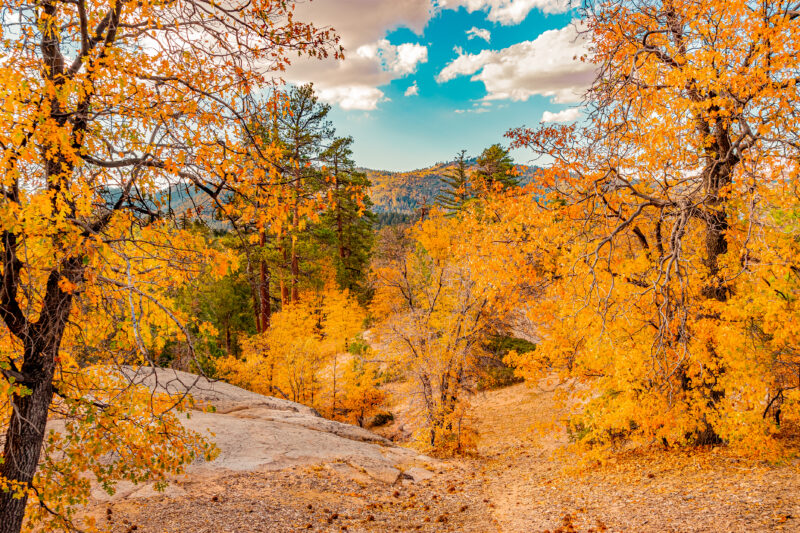
For those willing to drive farther, nearby mountain destinations offer more dramatic fall color thanks to higher elevations and colder temperatures. Areas such as the Angeles National Forest, Lake Arrowhead and Big Bear provide reliable displays each year, especially along lakes, creeks, and shaded trails.
Valverde said higher elevations offer a completely different experience. “In places like Bishop and the Mammoth Lakes area, trees like the Quaking Aspen (Populus tremuloides) are very common,” she explained. “In the fall, these trees cover whole trails and riparian areas, making these areas an ideal destination for leaf peeping.”
Aspens are known for their shimmering golden leaves and distinctive white bark, creating sweeping displays that draw visitors from across the state. Even a short weekend trip to the Eastern Sierra can provide a striking contrast to the more subtle changes seen in Santa Clarita.
Urban Trees That Show Fall Color
While natural open spaces offer the most traditional leaf-peeping opportunities, Santa Clarita’s urban landscapes also feature trees that change color each fall. Valverde highlighted several species residents can spot throughout town.
Chinese Pistache
“We have several planted along our public right-of-ways,” she said, noting locations on Skyline Ranch Road east of Plum Canyon, Via Princessa east of the 14 Freeway, and Wiley Canyon Road. “They turn a beautiful red-orange color in the fall.”
Modesto Ash
These trees shift to bright yellow and are common in the northwest side of town, particularly around business parks and West Creek Park.
Western Sycamore
Found along trails and throughout urban landscapes, these trees turn a warm golden amber. “There are beautiful displays around town in the fall, like in the Old Orchard community,” Valverde added.
These species offer accessible, close-to-home opportunities for residents who want to enjoy fall color without venturing into open space areas.
Planning a Safe and Enjoyable Outing
Whether staying local or heading into the mountains, preparation is key. Valverde emphasized the importance of basic outdoor essentials.
“Always pack enough water, sunblock, and sturdy shoes,” she said. She also encouraged residents to enjoy the wildlife that accompanies fall outings. “While you’re looking at the tree leaves, keep an eye out for some of our resident birds like Acorn Woodpeckers and California Scrub Jays.”
A Subtle but Rewarding Season
Leaf-peeping in Santa Clarita may not resemble the sweeping autumn landscapes found in other regions, but the valley offers its own quiet, reliable signs of seasonal change. From cottonwoods along the Santa Clara River to pistache trees lining city streets, fall color appears in pockets across the community — and for those willing to drive, spectacular mountain displays await just a few hours away.
As Valverde noted, “There’s always something to see if you know where to look.”