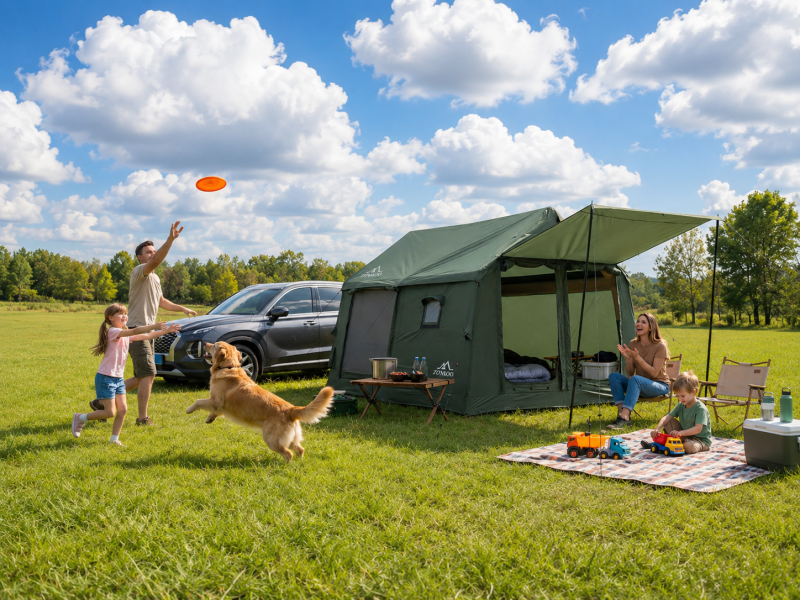
For Santa Clarita Valley residents, a weekend getaway doesn’t have to mean traveling far. Leaving after work on Friday, driving to a campground in the mountains or near a lake, and spending a night or two outdoors before heading home Sunday can be a welcome break from the usual routine.
With only a weekend to spare, the goal isn’t necessarily to pack as little as possible. It’s to spend less time dealing with gear and more time enjoying the trip. Car camping takes much of the weight burden out of the equation, allowing campers to bring comfortable sleeping pads, everyday essentials, and a tent with a little more room. It’s one reason inflatable tents, with their simpler setup and range of interior sizes, are worth considering.
With a Car, Weight Isn’t the Only Factor
When backpacking, every extra pound matters because you have to carry it. Car camping gives you more flexibility. Most of the gear travels in the vehicle, so there’s less pressure to choose the lightest possible tent at the expense of comfort.
For two people spending a weekend outdoors, sleeping pads are only part of what needs to fit inside. There are also backpacks, spare clothes, and other essentials to keep organized. A tent with barely enough room for bedding can make changing clothes or reaching your belongings awkward. Having a car makes it more practical to bring a slightly larger model with space to move around.
That doesn’t mean packed size and weight no longer matter. Food, chairs, and other camping supplies still need to fit in the vehicle, and some campgrounds require visitors to carry their gear from the parking area to the campsite. Before choosing a tent, check how much room it takes up in the car and whether you can comfortably carry it to your site.
Spend Less Time Setting Up on Friday Evening
Arriving at a campground after a full workweek, most people would rather settle in than spend the evening sorting through tent poles. If you’re leaving Santa Clarita on Friday afternoon, sunset may not be far off by the time you arrive.
Inflatable tents reduce some of that assembly work by using air beams instead of traditional tent poles that must be connected individually. Once the tent is laid out, a compatible pump inflates the frame, and stakes and guy lines secure the structure according to the manufacturer’s instructions. A more straightforward setup means more time to arrange the sleeping area, prepare dinner, or sit down and enjoy the sunset.
A little preparation still goes a long way. Practice setting up the tent at home before the first trip, and make sure the pump and accessories are packed. Proper anchoring shouldn’t be rushed or skipped, even when daylight is running out. Whenever possible, plan to reach the campground before dark so there’s time to get settled and find your way around.
Comfort Means More Than a Place to Sleep
A good night’s sleep matters, but a comfortable car camping weekend involves more than a sleeping bag and pad. It’s also helpful to have room to change clothes, organize belongings, and relax inside when needed. On a two-night trip, the tent may serve as a place to sort gear during the day or take shelter from a passing shower.
That’s why sleeping capacity alone doesn’t tell you how comfortable a tent will feel. For example, ZONKOO Lyra, one of its small inflatable tents, packs down to approximately 23 × 14 × 16 inches while offering about 65 square feet of interior space. Those two measurements give weekend campers a practical way to weigh vehicle storage against room inside the tent.
With two people, the sleeping pads can go on one side, leaving space for backpacks and frequently used items without blocking the entrance. Add more campers, however, and the available room becomes tighter. A tent’s stated sleeping capacity doesn’t necessarily mean everyone can fit their bedding and luggage comfortably.
Natural light and ventilation also make a difference. Daylight helps when organizing belongings, while opening the appropriate vents allows air to circulate when conditions permit. Southern California summers can be extremely hot, though, and a tent is no substitute for air conditioning. Daytime heat, overnight temperatures, and available shade all deserve consideration when choosing when and where to camp.
Make Sure the Tent Fits Your Weekend Plans
Inflatable tents can work well for car camping, but the right size depends on the vehicle, the campsite, and who’s coming along. A couple taking regular weekend trips may prefer something easy to pack and carry. A larger group will need more space for sleeping pads and luggage.
Before heading out, ask three practical questions: Will the packed tent fit alongside everything else in the car? Is the campsite large enough for the tent once it’s pitched? And how far will the gear need to be carried from the parking area? Those details can have more bearing on a smooth weekend than choosing the biggest tent available.
For trips from Santa Clarita, check the weather forecast, road conditions, and campground notices before leaving. Extreme heat, strong winds, and wildfire risks can affect parts of Southern California, sometimes leading to changing restrictions or closures. If conditions become unsafe or the campground closes, it’s better to change plans than head out simply because the car is packed.
Once you’ve settled on the size you need and expect to camp regularly, Black Friday deals can also be an opportunity to compare prices.
Inflatable tents aren’t better than traditional tents in every situation. But when you’re traveling by car, carrying extra weight becomes less of a concern, making easier setup and a more comfortable interior especially appealing. For a weekend that begins in Santa Clarita on Friday and ends back home Sunday, the right tent can mean less time managing equipment and more time enjoying the outdoors.