Tractor-trailers and other types of trucks are among the most likely vehicles to regularly cross state lines. This also means they’re among the most likely vehicles to be involved in accidents where the operator is an out-of-state driver. Likewise, it means that these are the accidents that are most likely to involve federal highway safety standards.
Taken together, the involvement of an out-of-state truck in an accident makes a case more complex. The victims in a truck accident claim need to understand these concerns as a case moves forward. Here is what an experienced truck accident lawyer like those at Thomas Law Offices is likely to tell you if you or a loved one might be among the thousands injured in one of these crashes each year.
Collecting the Initial Information
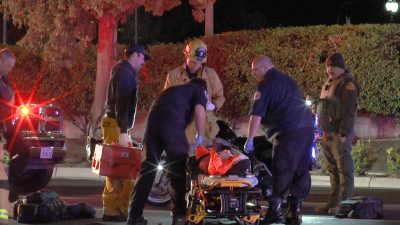
Accident cases tend to succeed based on the information that the police and other first responders initially gather at the scene. The good news is that truck accidents attract a lot of attention from police, fire departments, and EMTs. There are also federal rules requiring post-crash drug and alcohol testing after serious accidents.
The downside is that trucking companies and insurance carriers are highly motivated in truck accident cases. They get people to the scene quickly because they don’t want to be on the hook. Catastrophic damages are common in truck crash claims, so the defense intends to win. In fact, a single major trucking accident can lead to a large enough award of damages to put a fleet operator out of business.
All commercial trucks doing interstate runs should have an electronic logging device, and many should have an event data recorder. This is what people frequently refer to as the “black box.” The box tracks the truck’s speed, braking, and throttling at a fairly granular rate throughout its trip. Unsurprisingly, a truck accident lawyer will almost always demand production of the black box during the discovery process.
The police or a federal agency may end up in possession of the black box, especially if they launch their own investigations. However, your attorney can usually obtain a report of the content or a digital duplicate.
First responders collect some information at an accident scene, but people are often surprised by how quickly the police want to clear an accident site. Trucks tend to follow highly trafficked routes, so there are major incentives to get roads back open quickly.
Much of the information about an accident will come from surrounding sources, such as traffic cameras and eyewitness testimony. Cell phone data can be invaluable, too.
Also, the law requires fleet operators to maintain driver records. These include information about prior incidents, criminal background checks, and drug and alcohol testing. Operators should also have available information regarding maintenance of the vehicle.
Similarly, federal rules require tracking of driver hours. The federal regulations impose an 11-hour limit for driving and a 14-hour on-duty window. Likewise, drivers must take a 30-minute break after eight hours of driving. Weekly caps are usually either 60 or 70 hours of total duty, depending on the type of commerce and vehicle involved. This information is useful in cases involving driver fatigue.
How the Law Applies
The police in the state where an incident occurred are almost always the ones to collect nearly all of the information. Even in cases where federal agencies investigate, their agents tend to work after the fact from information they collect from local and state police alongside other investigative sources like the fleet operator, the victims, eyewitnesses, and so on.
The legally interesting thing in an interstate trucking accident case is that you may have recourse to sue either in the state where the accident happened or the state that’s home to the trucking operation. Many states also have “long arm” laws that allow actions against drivers and companies from other states. If an operator tries to evade the court in the state where the accident happened, long arm laws become important.
Why does this matter? The laws governing how long you have to file are driven by the state of venue for the case. Likewise, potential restrictions in the case follow that state’s laws.
Consider a case where a truck from Texas hits a driver in California. Texas has fairly limiting rules regarding damages for emotional trauma. It also uses a 51% standard of liability, meaning the defendant has to be more responsible than not for what happened in order to owe anything. Conversely, California is open to more types of damages and allows suing a defendant for even 1% liability. This makes California an appealing venue, if it’s available as an option.
There is also the option to move a case to federal court, if the damages at stake exceed $75,000. Such stakes are common in truck accident cases.
Notably, this also makes licensing for your truck accident attorney an issue. Most states require an attorney to be licensed in that state. This can force you to reconsider counsel or work with a lawyer in each state.
Presenting Your Claim or Lawsuit
Figuring out who exactly to file a case against is also a challenge. Do you file against the individual driver, the fleet operator, or someone else? There are cases that focus on the service center that maintained the truck. Likewise, some cases involve the company that loaded the truck because cargo moved around inside.
You will need to work with your lawyer to determine who to even bring your claim against. Bear in mind, there is almost always a statute of limitations, usually two years. That means you have to figure out who to file against and formally present them with your claim for damages within two years of the date of the accident. There should also be earlier requests to preserve evidence.
You have the right to seek compensation following a trucking accident. Learn how the process works so you can move your case forward.