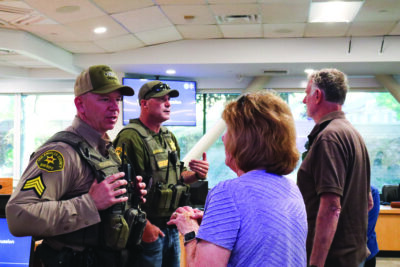
In our town, we’re having a growing problem with e-bikes on the trails. Some are legitimate bicycles with electric assist. Others are basically electric motorcycles masquerading as bikes, capable of 30 mph or more. Packs of kids ride them hard through paseos crowded with walkers, runners, older cyclists, moms with strollers and little kids. Some ride responsibly. Some, as we’ve all learned, terrorize our trails.
The debate usually turns immediately toward enforcement. More rules. More restrictions. More police presence. Maybe complete bans.
I think I understand these e-biker-kids. The deeper issue has less to do with the machines themselves and more to do with something closer to home.
I grew up in the San Fernando Valley in the late 1960s and early 1970s, when Southern California still felt like one giant playground for children. Ours was a typical postwar middle- and lower-middle-class neighborhood packed with kids. Two parents. Two to four children. One car, maybe two. Increasingly, both parents worked.
By today’s standards, we were almost shockingly unsupervised.
After school and during summers, kids simply disappeared into the neighborhood for hours at a time. We rode bikes everywhere. Built forts. Played baseball in the street. Wandered flood channels and climbed over the mountains of Chatsworth Park. Parents often had only a vague idea where we were until dinner.
And honestly, much of it was wonderful.
But childhood freedom has a shadow side.
When I was around 12 or 13, the culture around us started changing fast. The music changed. The mood changed. Vietnam angst filtered down. Drugs drifted into the neighborhood. A guy in a Porsche 914 started hanging around and suddenly some of my older friends were experimenting with “reds” and “bennies.”
What had felt like an idyllic Valley childhood began to fracture.
Some kids stayed focused. Others drifted. Some disappeared into addictions that haunted them for the rest of their lives.
One of them was my very gifted older sister. Someone I wish to God I could have as a best friend now.
Another was my best neighborhood friend, a kid with a Hodaka motorcycle I thought was the coolest thing I had ever seen. He’d disappear on Saturdays to ride in a faraway place I’d never seen called Indian Dunes, and oh how I envied him. But years later, he died in a hotel room with a heroin needle in his arm at age 38.
Looking back now, I don’t think the dividing line was intelligence or toughness.
I think it was purpose.
The lucky kids found something pulling them forward before the street pulled them sideways.
One kid down the street became obsessed with flying and started taking lessons as a teenager. He eventually became a commercial pilot. Another buried himself in orchestra and music. At the time he seemed awkward and out of step with the neighborhood culture, but he stayed steady while others spun apart.
In my case, salvation came through something almost nobody under 50 remembers anymore: amateur radio.
My elementary school friend Neil Higashida and I discovered ham radio together. His parents had met in an American internment camp during World War II and were deeply committed to seeing their kids succeed. Neil and I became two nerdy Valley kids fascinated by antennas, Morse code, radio propagation and distant voices emerging from static.
And once radio got hold of me, it changed the trajectory of my life. It impacted Neil, too. He graduated UCLA and became a successful pharmacist.
To succeed at radio, you had to study. Learn electronics. Learn Morse code. Communicate respectfully with strangers. Develop patience and discipline. The hobby quietly consumed countless hours that might otherwise have been idle and gone somewhere dangerous.
My mother deserves enormous credit for understanding all this, even while working more than 40 hours a week and struggling through a painful divorce caused largely by my father’s alcoholism.
She kept pushing us toward productive things.
One sister volunteered as a candy striper at Holy Cross Hospital. Another got involved in theater. Another joined softball. I got Boy Scouts, Little League, books, magazines and eventually radio.
None of this guaranteed safety. My own family proves that.
And kids notice more than adults think.
The Hodaka friend’s father was a World War II veteran, like many dads then. He was funny, hardworking and generous with neighborhood kids. But like a lot of men from that generation, drinking was woven deeply into the culture around him. One night a week he’d stay out late with the boys, come home drunk, and tension would quietly settle over the house afterward.
My buddy noticed all of it, and maybe learned from it.
Children are always studying adulthood, even when adults think nobody is paying attention.
Looking back now, I’ve come to believe the best parenting is not constant surveillance or total freedom. It’s helping kids fill their lives with meaningful pursuits while keeping the lines of communication open wide enough that they can still find their way home when things start going wrong.
Too much control and kids learn deception. Too little structure and endless freedom can quietly become drift.
And drift is dangerous.
Much of this comes back to me when I see those kids blasting past. The e-bike issue is deeper than many people realize. It’s not just about speed on the trails. It’s about packs of kids roaming around with huge amounts of freedom, growing bravado, weak parental supervision, and not enough purposeful direction underneath it all.
Some of those kids will end up perfectly fine. Some won’t.
And the difference may have less to do with the machine under them than with whether they’re taught to find the right signal before life’s overwhelming static drowns them out.
Gary Horton is chairman of the College of the Canyons Foundation board. His “Full Speed to Port!” has appeared in The Signal since 2006. The opinions expressed in his column do not necessarily reflect the opinions of The Signal or its editorial board.