Every parent should be able to drop a child off at school without wondering whether a routine morning could end in an ambulance.
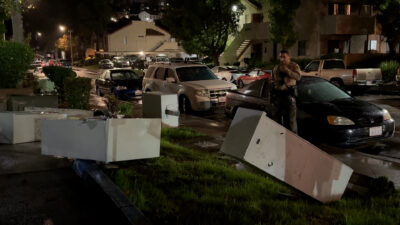
Yet in May, two children, ages 7 and 12, were struck by a vehicle near Highlands Elementary School during morning drop-off on Catala Avenue. Thankfully, their injuries were not life-threatening.
But the incident raises a question Santa Clarita should not ignore: Why should it take an accident to make us recognize a dangerous school street?
Concerns about Catala Avenue did not begin with that collision. Residents had previously raised concerns about speeding and safety, and a request for speed cushions had been made years earlier. The city surveyed households, but support fell short of the threshold required to proceed.
The process may have followed the rules. But protecting children cannot simply be about checking enough boxes.
When a street borders an elementary school, the standard should be higher. Children are smaller, harder for drivers to see and more likely to misjudge traffic. Add hurried parents, congestion, double-parking and blocked sight lines, and conditions can become dangerous quickly.
Santa Clarita deserves credit for its traffic-safety efforts, including the Heads Up! campaign. But good citywide statistics should never cause officials to overlook a dangerous condition outside a particular school.
The safest school street is not the one redesigned after a child is hit. It is the one where officials recognize the danger before the ambulance arrives.
School-zone safety requires looking at how streets actually function during drop-off and pickup. Are parked vehicles blocking visibility? Are children crossing between cars? Are motorists speeding? Are crosswalks where families actually use them? Is congestion encouraging unsafe behavior?
Those questions should be answered through observation, traffic engineering and conversations with parents, teachers, and residents. Parents have responsibilities, too. No traffic-calming measure can compensate for someone double-parking to save two minutes. No crosswalk can protect a child from a driver staring at a phone. School drop-off is not a race. Leave earlier. Slow down. Do not block crosswalks or make unsafe turns because you are late. A few minutes of inconvenience is insignificant compared with the consequences of striking a child.
Government also has a responsibility to listen.
When residents repeatedly identify a dangerous location, their concerns deserve serious attention even when a particular proposal fails to meet a procedural threshold. That does not mean approving every request. It means treating repeated safety complaints as valuable information, not paperwork.
Santa Clarita should conduct regular safety reviews around schools, particularly where enrollment, development or traffic patterns have changed. Reviews should examine visibility, parking restrictions, crosswalks, signage, enforcement, drop off configurations, and appropriate traffic-calming measures.
The process should also be transparent. Parents may not always get the solution they request, but they deserve to know what is being considered, why decisions are made and what evidence supports them.
Santa Clarita is growing. Neighborhoods change. Traffic changes. Streets that worked years ago may no longer work as safely today.
Our policies must change with them.
We should not wait for another child to be struck before asking whether a school street could be safer. We should ask before the collision, before the emergency vehicles and before a parent receives the phone call nobody wants.
Santa Clarita has worked hard to be a safe, family-oriented community. Protecting that reputation starts where children are most vulnerable.
A safe route to school should not be something we create after an accident. It should be something we create to prevent one.
Mihran Kalaydjian
Santa Clarita