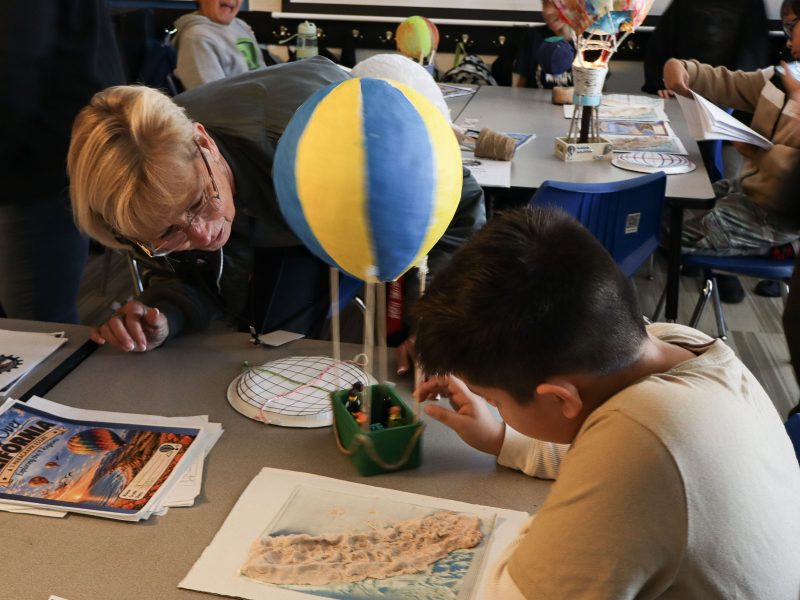
Santa Clarita Valley International School gave families and local dignitaries an opportunity to see kindergarten through seventh grade learners show off their aerospace and aviation projects at school on Friday morning.
The mood was high with students smiling and showing off their various projects including hot air balloons, “Soarin’ Over California” dioramas, and model planes.
Chad Powell, school director of SCVi, said one of the purposes of such projects is to help their learners practice project-based learning like working together, how to listen, and how to create a final project.
“At the core of really just teaching the kids the standards. In this case, the science standards but doing it in a way that it answers a real-world question or problem,” Powell said. “And so, these sort of projects where they do this, and they’re also able to produce some kind of artifact or something, and then to present that back to community members or their parents … it gives them a chance for public speaking. And so, it really kind of hits all those different elements.”
Powell added that the learning about aerospace and aviation gives the students an opportunity to hear and absorb something new.
“One of our learning outcomes is that our learners are lifelong learners. And we know that there’s going to be opportunities in aviation and aerospace into the future. And so, we really wanted to use that (the projects) as a vehicle for moving forward with them,” Powell said.
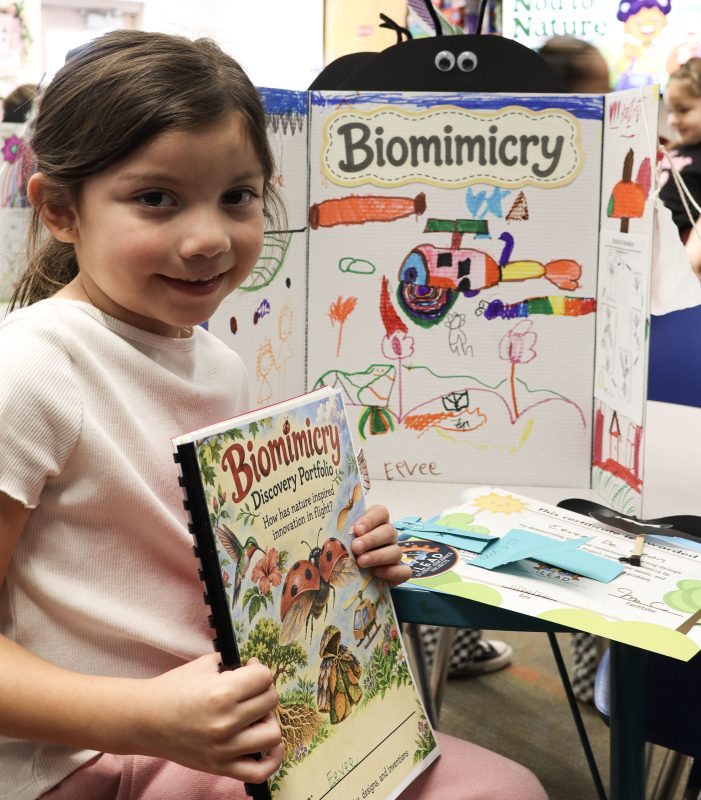
Khris Cheshire, a kindergarten facilitator, taught her class about biomimicry and using the natural world as the bridge to aerospace and aviation.
Cheshire said the question they were using as a guide was, “How has nature inspired the innovation in flight?”
“And so, a lot of the activities are tailored toward what we might observe in nature, and then what kind of invention maybe gave a nod to what we experience in nature. So, as we’re looking at hummingbirds and how they fly and how they hover, we’re kind of juxtaposing that with a helicopter,” Cheshire said. “A helicopter can also hover. Helicopters can fly forward, backwards, fly upside down, which is a lot of what the hummingbird can do.”
She added that the reason she decided to bridge both subjects was because it gave her learners the hands-on way to see the natural world. She said they would go on nature walks and would ask her learners if they could invent something based on things they saw.
Cheshire said that she wanted to make her lesson plans meaningful because they would not absorb the information by hearing it and regurgitating it back to her.
“It has to connect somehow. And so, the whole idea is where it’s connected to these kiddos and for them to start really absorbing their learning and becoming lifelong learners,” Cheshire said. “I’m preparing them for first grade, second grade, and upper grades. And so it’s really important that we get the foundation … So, we’re using science. We’re using math, we’re using (English language arts), we’re using social studies in order to kind of tie all of this together.”
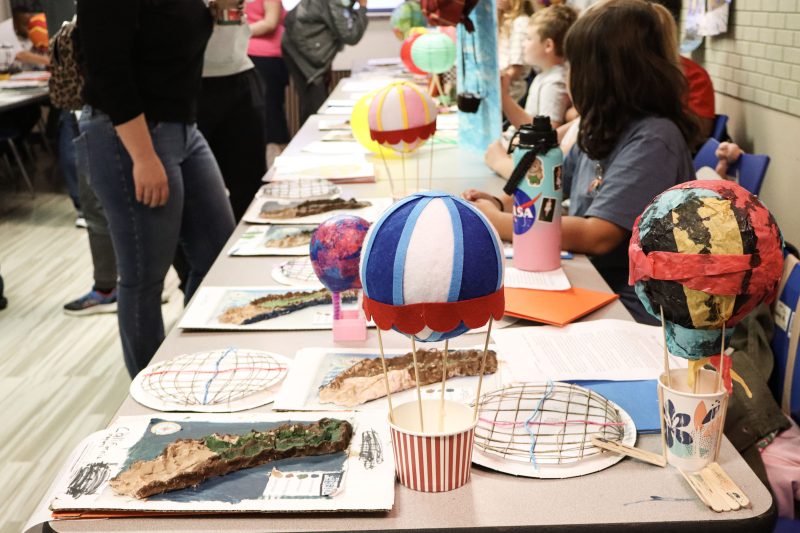
Throughout the morning, there were packed classrooms filled with different projects, families, and lots of smiles and joy seeing everything.
Desiree Lopez, a sixth and seventh grade facilitator, gave her learners the question, “How have jets changed the world in the past and how do they impact our lives today?”
Lopez told her learners to pitch a specific jet styling, have a list of 60 questions about the jet, create a company logo, and mission statement.
She said each group had their own piece of the puzzle to be creative with the art or the writing.
“They each picked a part. So, some of them were more creative. They put more effort into the art, the drawings, the blueprints, and some of them were like, ‘I’m not good at that. I don’t know how to do that. How can I best support my group?’ And I was like, ‘You’re so awesome at writing. You’re so detailed and all of this, you’re so good at your slides. You’re so good at finding, you know, the research behind what you need,’” Lopez said.
She added that they helped each other find their strengths throughout the project.
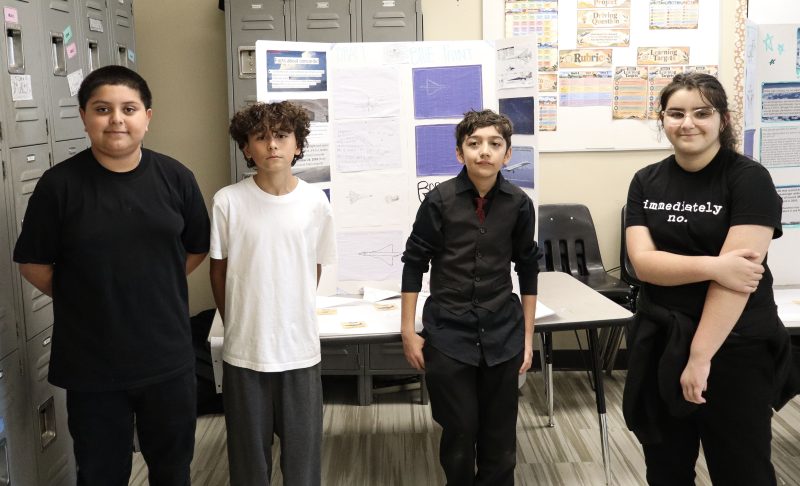
Andrew Dheming, a sixth grade learner, 12, said he enjoyed everything while doing the project.
“I built the planes right there. I also helped with the timeline. I did some slides right here and wrote down the information. Also drew the drawings over here,” Dheming said.
Dheming said his goal is to be a pilot when he is older, so the project was fun for him.
One fact about the Concorde, the jet Dheming and his classmates did their project on, was it was the fastest plane to take people back and forth from place to place.